
EV Engineering News
Japan’s EXEDY Corporation has officially approved the acquisition of Protean Electric, a leading UK-based developer of advanced in-wheel motor technology. This strategic move is designed to significantly enhance EXEDY’s capabilities in electrification, aligning with the automotive industry’s rapid transition towards connected, autonomous, shared, and electric (CASE) vehicle architectures.
Strategic Rationale Behind the Acquisition
Protean Electric’s innovative in-wheel motors are integrated directly into a vehicle’s wheels, offering a distinct advantage in enhancing vehicle control through rapid response times. Furthermore, this technology promises to unlock greater design freedom for automotive manufacturers.

EXEDY highlighted that Protean’s in-wheel motor technology has the potential to fundamentally influence conventional drivetrain architectures. It is also seen as a key enabler for addressing complex integration challenges often associated with software-defined vehicles, a growing trend in modern automotive development.
“Protean Electric’s in-wheel motor technology is expected to contribute to improved vehicle control performance through fast response characteristics and to increase freedom in vehicle design,” stated EXEDY in its announcement.
Financial Details of the Transaction
The acquisition involves EXEDY purchasing 9,086,213 shares of Protean Electric. The total transaction is valued at JPY 5.07 billion, which translates to approximately $35 million USD. An additional estimated JPY 100 million (about $700,000 USD) will be allocated for advisory fees, bringing the total estimated outlay for EXEDY to JPY 5.17 billion (approximately $35.7 million USD).
The shares are being acquired from BD Auto and Energy. EXEDY anticipates the final signing and closing of the deal to occur on February 26, 2026. This timeline underscores the swift nature of the strategic integration planned by EXEDY.
Protean Electric’s Technological Edge
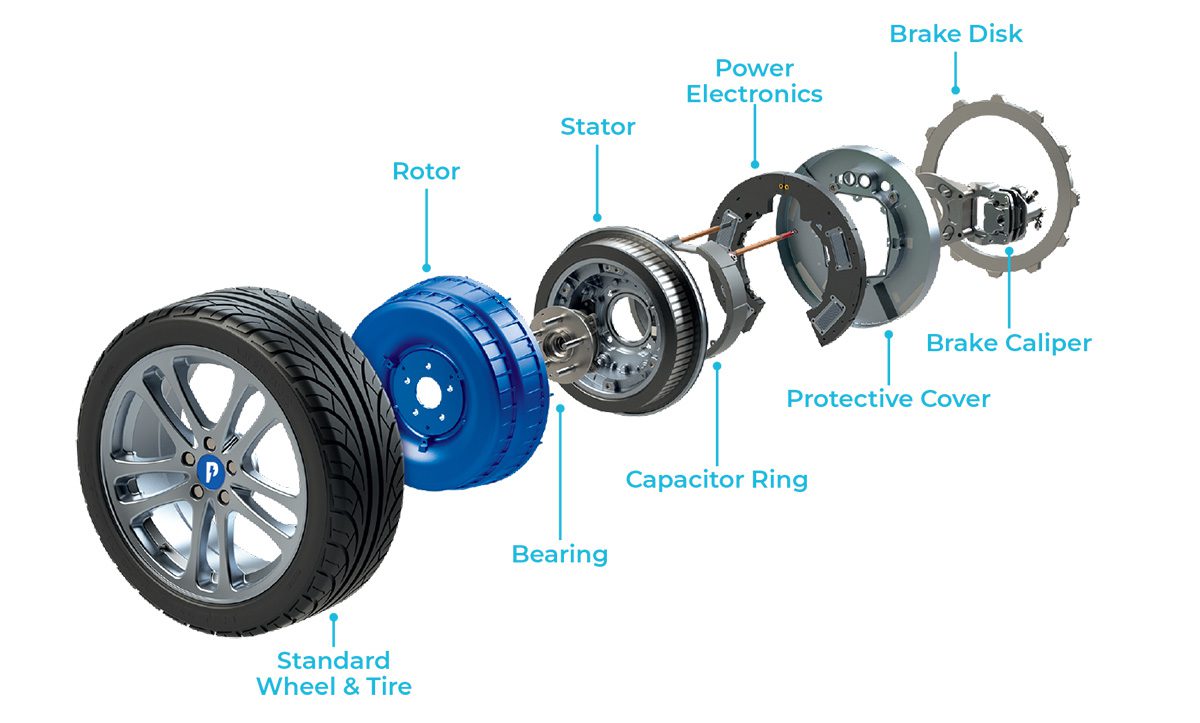
Protean Electric has established itself as a pioneer in the development of in-wheel drive motors. These compact and powerful units contain the motor, power electronics, and braking system within the wheel assembly. This integration eliminates the need for traditional transmissions, differentials, and axles, leading to a more efficient and flexible vehicle platform.
The benefits of such a system are manifold. For vehicle dynamics, the direct drive nature of in-wheel motors allows for precise torque vectoring, enabling enhanced traction, stability, and maneuverability. This granular control is particularly advantageous for autonomous driving systems, where split-second adjustments are critical for safety and performance.
From a design perspective, the elimination of bulky central drivetrain components frees up significant interior and under-vehicle space. This can lead to innovative vehicle packaging, such as flat floors, improved cabin spaciousness, and the potential for entirely new vehicle forms, including purpose-built electric platforms.
EXEDY’s Strategic Vision in Electrification
The acquisition of Protean Electric marks a significant step in EXEDY’s broader strategy to adapt and thrive in the evolving automotive landscape. The company, historically a major player in clutch and drivetrain technologies for internal combustion engine vehicles, is clearly signaling its commitment to electrification.
By integrating Protean’s in-wheel motor technology, EXEDY aims to offer a comprehensive suite of electrification solutions. This move positions the company to capture a larger share of the rapidly growing electric vehicle market, catering to the increasing demand for advanced EV powertrains.
The company’s focus on technologies that support CASE trends indicates an understanding of the future direction of mobility. Connected and autonomous features, shared mobility services, and the overarching shift to electric power are key drivers of innovation, and EXEDY appears poised to capitalize on these trends.
Implications for the Electric Vehicle Industry
This acquisition is likely to accelerate the development and adoption of in-wheel motor technology within the EV sector. Protean Electric’s expertise, combined with EXEDY’s manufacturing scale and automotive industry relationships, could lead to more widespread implementation of this advanced powertrain solution.
Industry analysts suggest that in-wheel motors offer a compelling alternative to conventional EV architectures, particularly for certain vehicle segments. While challenges remain in areas such as unsprung weight management and thermal dissipation, ongoing technological advancements are steadily addressing these concerns.
The integration of sophisticated control systems, as mentioned by EXEDY, is also crucial. As vehicles become increasingly defined by their software, the ability of in-wheel motors to offer precise, independently controllable drive to each wheel presents a significant advantage for advanced driver-assistance systems (ADAS) and fully autonomous driving capabilities.
The deal, expected to close by the end of February 2026, represents a significant investment by EXEDY, underscoring the perceived value and future potential of in-wheel motor technology in the global transition to electric mobility.
Source: EXEDY