
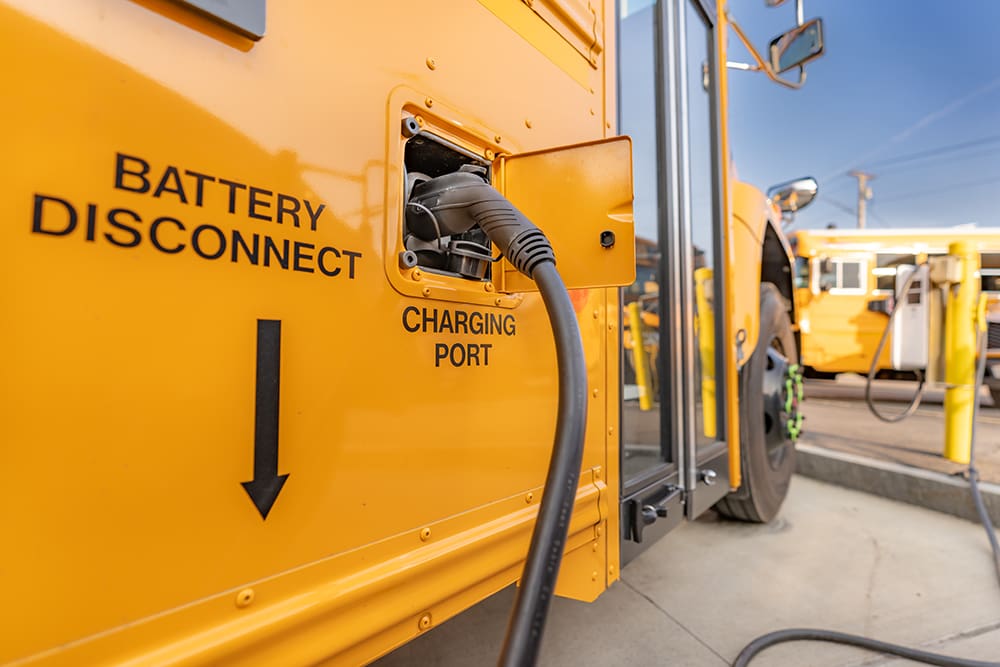
Maryland’s electric utility, Potomac Edison, has secured approval from the Maryland Public Service Commission to launch an ambitious pilot program designed to accelerate the adoption of zero-emission school buses. The initiative, serving approximately 285,000 customers across Maryland, aims to overcome significant financial and logistical hurdles faced by local school systems in transitioning to electric fleets.
Addressing the Transition to Electric School Buses
The pilot program is a direct response to Maryland’s Climate Solutions Now Act of 2022, which mandates that public school systems transition to zero-emission vehicles. A primary challenge identified in this transition is the substantial upfront cost difference between traditional diesel buses and their electric counterparts.

Potomac Edison’s program is structured to alleviate this financial burden. The utility will subsidize the cost differential for electric school buses, contributing up to $250,000 per unit. This financial assistance extends beyond the vehicles themselves, also covering the costs associated with installing necessary charging infrastructure and any required electrical system upgrades at school facilities.
Program Scope and Support
With a total budget of $11.1 million, the pilot program is set to support the deployment of up to 28 electric school buses within Potomac Edison’s Maryland service territory. The initiative is comprehensive, offering not just financial aid but also crucial technical and administrative support to participating school systems.
This support includes guidance on planning optimal charging locations, assistance with the installation of charging equipment, and training for personnel who will operate and maintain the new electric fleet. The goal is to provide a holistic approach that facilitates a smooth and efficient integration of electric buses into school transportation systems.

Exploring Vehicle-to-Grid (V2G) Technology
A key innovative component of the pilot program is the integration of vehicle-to-grid (V2G) technology. This feature will allow Potomac Edison to explore the potential of using the large battery storage capacity of parked electric school buses to support the stability and reliability of the electricity grid.
During periods when the buses are not in operation, the stored energy within their batteries can be fed back into the grid. This capability could prove valuable for managing peak electricity demand and enhancing overall grid resilience, representing a significant advancement beyond the primary function of transportation.
A Practical Approach to Electrification
Jim Myers, FirstEnergy’s President of West Virginia and Maryland, emphasized the program’s practical design. “This program is designed to help make [the EV] transition more practical and affordable,” he stated. “We’re reducing upfront costs and offering hands-on support to help school systems integrate electric buses smoothly.”
Myers further highlighted the dual benefit of the initiative: “At the same time, we’re exploring how these buses can support grid reliability through innovative technology.” This underscores the program’s objective to not only meet regulatory requirements but also to leverage new technologies for broader utility and community benefit.
The pilot program represents a significant step for Maryland’s school districts as they navigate the complexities of electrifying their fleets, supported by a utility committed to making the transition feasible and beneficial.