
For electric vehicle (EV) owners living in rental properties, securing reliable home charging can present a unique set of challenges. Without the ability to install dedicated charging stations, many renters find themselves reliant on public charging networks. However, one Tesla owner, facing this common dilemma in a rented townhouse, has detailed a practical solution that bypasses the need for permanent infrastructure.
The Renter’s Charging Conundrum
The author, a Tesla Model Y Premium All-Wheel-Drive owner, initially sought to avoid complete dependence on Tesla’s Supercharger network. After approximately six months of ownership, the need for a consistent home charging solution became pressing. The primary obstacle was the nature of his rental agreement and the community’s parking arrangements.

Before purchasing the vehicle, inquiries were made to the leasing office about potential EV charging installations. Despite offering expertise and highlighting the benefits for the community, no immediate plans were confirmed. This led to the purchase of the Tesla with the understanding that a charging solution would need to be independently devised.
Navigating Parking and Power Limitations
The complexities of parking in a rented community, where assigned spots may not align directly with the residence, posed a significant hurdle. The author’s assigned parking spot was not directly in front of his unit, but rather staggered, placing his vehicle in front of a neighbor’s door.
An initial arrangement involved parking in a neighbor’s vacant daytime spot. However, this solution was not conducive to the required overnight charging needed for sufficient battery replenishment, especially before long trips or extensive use.
Furthermore, upgrading the existing 110v-120v outlet to the more standard and recommended 220v-240v was not feasible in a rental property without landlord or significant community approval.
Exploring Charging Options
Faced with these limitations, the owner evaluated several charging strategies. The primary goal was to enable charging from his designated parking spot without requiring permanent modifications or relying on potentially unavailable temporary arrangements.
The first option considered was utilizing the Tesla Mobile Connector, which comes with a 20-foot cable, and parking in the neighbor’s spot when available. However, this was deemed an unreliable and inconvenient long-term solution.
Another avenue explored was the use of a heavy-duty extension cord, specifically a 10-gauge cable, which electricians often recommend for such applications. This option offered a more accessible and potentially less expensive route. However, it presented a significant drawback: the Tesla Mobile Connector would need to be placed on the ground or grass. The owner expressed concern about exposing the $300 connector to environmental factors like dew, potential damage from pets, or other outdoor elements.
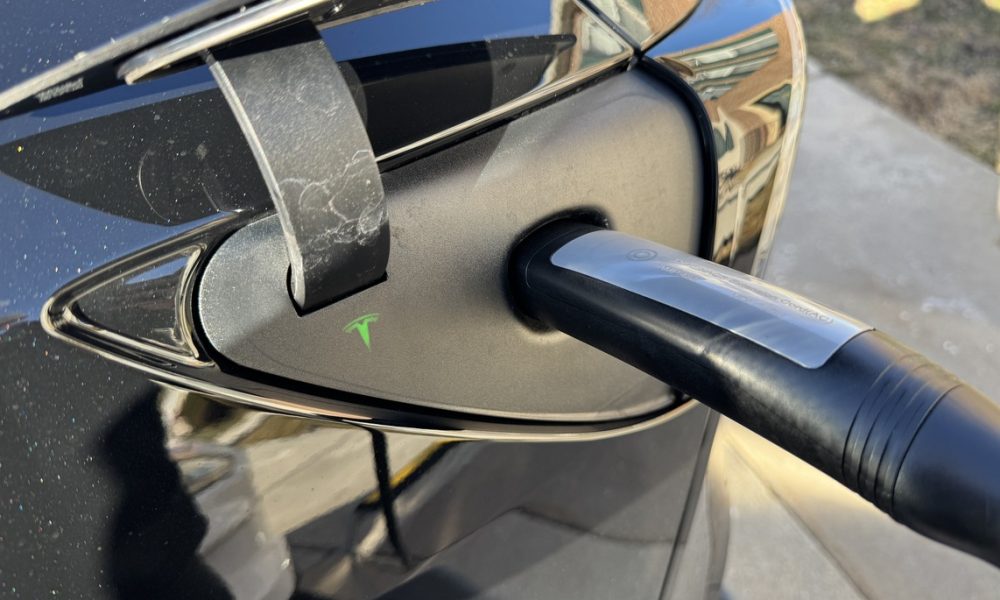
The third and ultimately chosen solution involved a specialized NACS (North American Charging Standard) to NACS extension cord. These cords are designed to extend the reach of the Mobile Connector while maintaining a secure connection and keeping the equipment off the ground. After researching various options, the owner selected a product from A2Z, a brand recommended by other Tesla owners, citing their positive reputation and the product’s ability to provide an additional 16 feet of reach.
Implementing the NACS Extension Solution
The chosen method proved to be straightforward in its setup. The Tesla Mobile Connector was plugged into the home’s power source, the NACS extension cord was connected to the Mobile Connector, and finally, the extension cord was plugged into the vehicle.
The system functioned immediately, but the owner highlighted crucial considerations for others adopting a similar approach. A primary concern is the potential for cable theft, especially in areas where copper wiring is a target. The owner advises securing the cables when not in use and being mindful of their visibility, noting that a Ring camera at his residence provides some surveillance.
For cables that must cross public pathways like sidewalks, the use of cable covers is strongly recommended. The owner purchased a heavy-duty cable cover to safely conceal the thicker gauge NACS extension cord, ensuring it doesn’t pose a tripping hazard and protecting it from damage.
Understanding Charging Speeds and Limitations
It is important for users to understand the charging capabilities of this setup. Tesla states that the Mobile Connector typically provides between 3 to 5 miles of range per hour when connected to a standard wall outlet. The author confirmed experiencing similar charging speeds.
Consequently, a full charge, for instance, from 30% to 80% battery capacity, can take well over 24 hours. While slow, this method offers a consistent way to add range, which the owner finds significantly more beneficial than relying solely on public chargers.
The owner plans to provide further updates on his experience, including details on any troubleshooting, the impact on his electricity bill, and any interactions with neighbors or the leasing office regarding his charging setup.
For prospective EV buyers or current Tesla owners facing similar rental accommodation challenges, this NACS extension cord solution offers a viable alternative to exclusively using Superchargers. It addresses convenience, potential battery wear from frequent fast charging, and the overall cost associated with public charging infrastructure.