
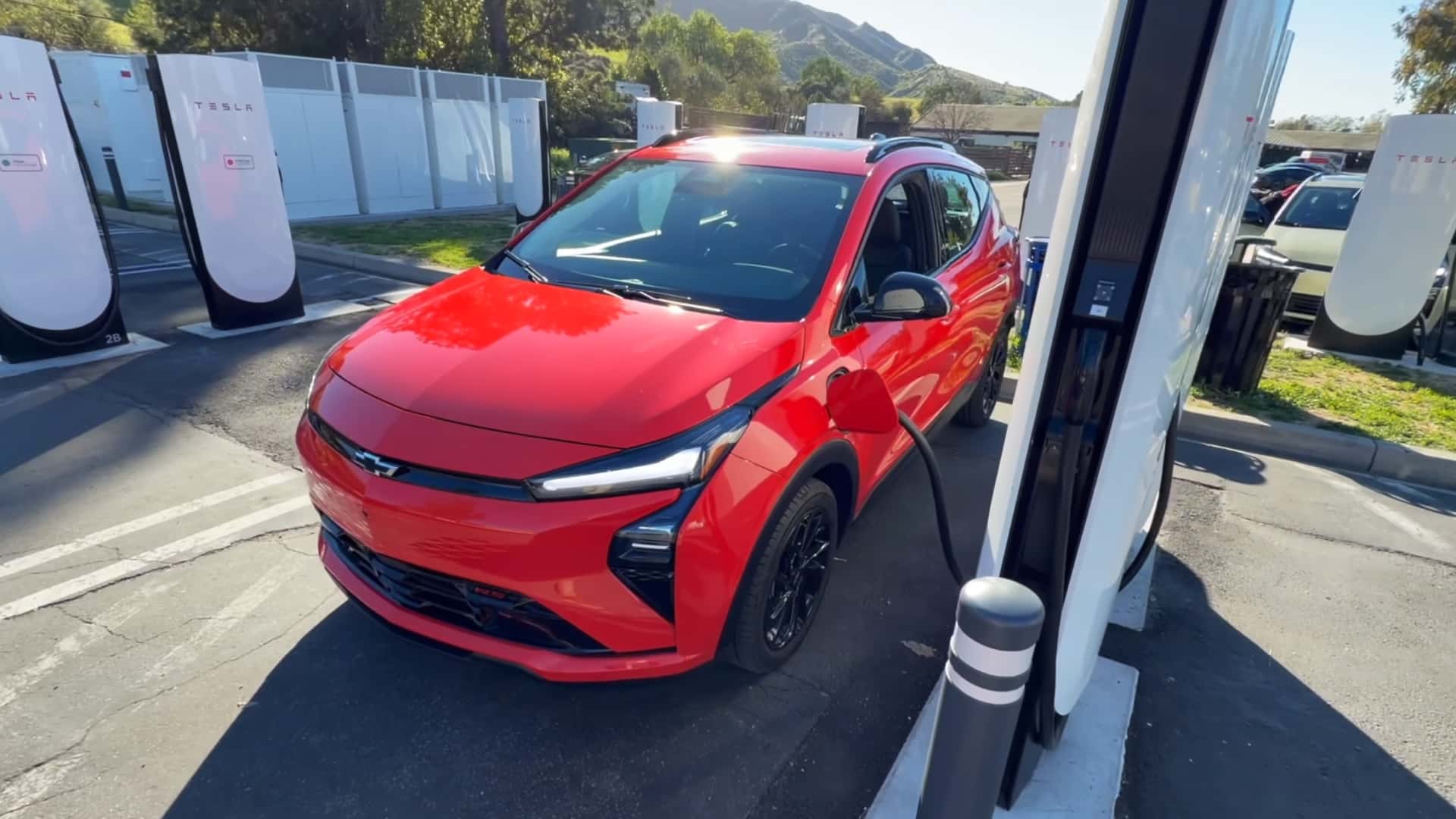
The highly anticipated 2027 Chevrolet Bolt EV has undergone initial testing, demonstrating a substantial improvement in charging capabilities compared to its predecessor. Early results suggest that General Motors has successfully addressed key consumer concerns regarding EV charging times and range for smaller electric vehicles.
Substantial Charging Speed Enhancements
The 2027 Bolt EV is set to deliver a significant charging boost, reportedly reaching speeds three times faster than the outgoing model. This upgrade addresses a primary area of concern for electric vehicle owners, promising a more convenient and efficient charging experience.
Recent tests indicate that the new Bolt EV can achieve a 10% to 80% state of charge in under 30 minutes. This rapid charging session not only saves time but also adds an impressive estimated 191 miles of range to the vehicle. These figures are particularly noteworthy for an electric car designed for urban environments and offered at an accessible price point.
The previous generation of the Chevrolet Bolt EV, equipped with a 65 kWh nickel-rich lithium battery, was limited to a DC fast charging speed of 55 kW. This meant that achieving approximately 150 miles of range required about an hour of charging. The new LFP (lithium iron phosphate) powered Bolt EV represents a considerable leap forward in performance and practicality.
Real-World Charging Performance
Testing conducted by Out of Spec Testing utilized a Tesla Supercharger to evaluate the 2027 Bolt EV’s DC fast charging capabilities. Before plugging in, the vehicle’s battery was preconditioned for optimal performance. The test began at a 10% state of charge, with an estimated 22 miles of range remaining, under favorable ambient conditions of 75°F.
The charging session quickly reached its peak, with the car achieving 151 kW within the first minute. By the 18% state of charge, approximately two minutes after connecting, the charging power hit 156 kW. The vehicle maintained a charging rate exceeding 150 kW until it reached a 40% state of charge.
Following this peak performance, the charging power began to taper gradually. At 45% state of charge, the power dropped to 140 kW. This downward trend continued, with the car pulling 115 kW at 55% and 100 kW at 60% state of charge.
Even as the battery reached an 80% state of charge, the Bolt EV was still drawing approximately 80 kW. This sustained performance is considered respectable, especially given the vehicle’s positioning as a city-focused car.
Context and Value Proposition
The 2027 Chevrolet Bolt EV boasts a 65-kilowatt-hour LFP battery, capable of accepting DC fast charging speeds up to 150 kilowatts. The vehicle’s EPA-estimated range is rated at 262 miles. These specifications, now validated by real-world testing, underscore General Motors’ commitment to making its entry-level electric vehicle a competitive offering in the market.
With a starting price of $28,995, including destination charges, the new Bolt EV is positioned as the most affordable new electric vehicle currently available. It undercuts the entry-level Nissan Leaf S+ by $2,490, further enhancing its appeal to budget-conscious consumers.
Powered by a single, front-mounted electric motor producing 210 horsepower and featuring a compact footprint, the Bolt EV is primarily designed for commuting and city driving. While not intended for extensive long-distance road trips, it appears well-suited for its intended purpose.
A Limited Production Run
Despite the significant improvements and competitive pricing, the 2027 Chevrolet Bolt EV faces a predetermined end. General Motors has confirmed that the production of this electric hatchback will be limited to approximately 18 months at its Kansas factory. Following this period, the production line will be reallocated to manufacturing the gas-powered Buick Envision crossover.