
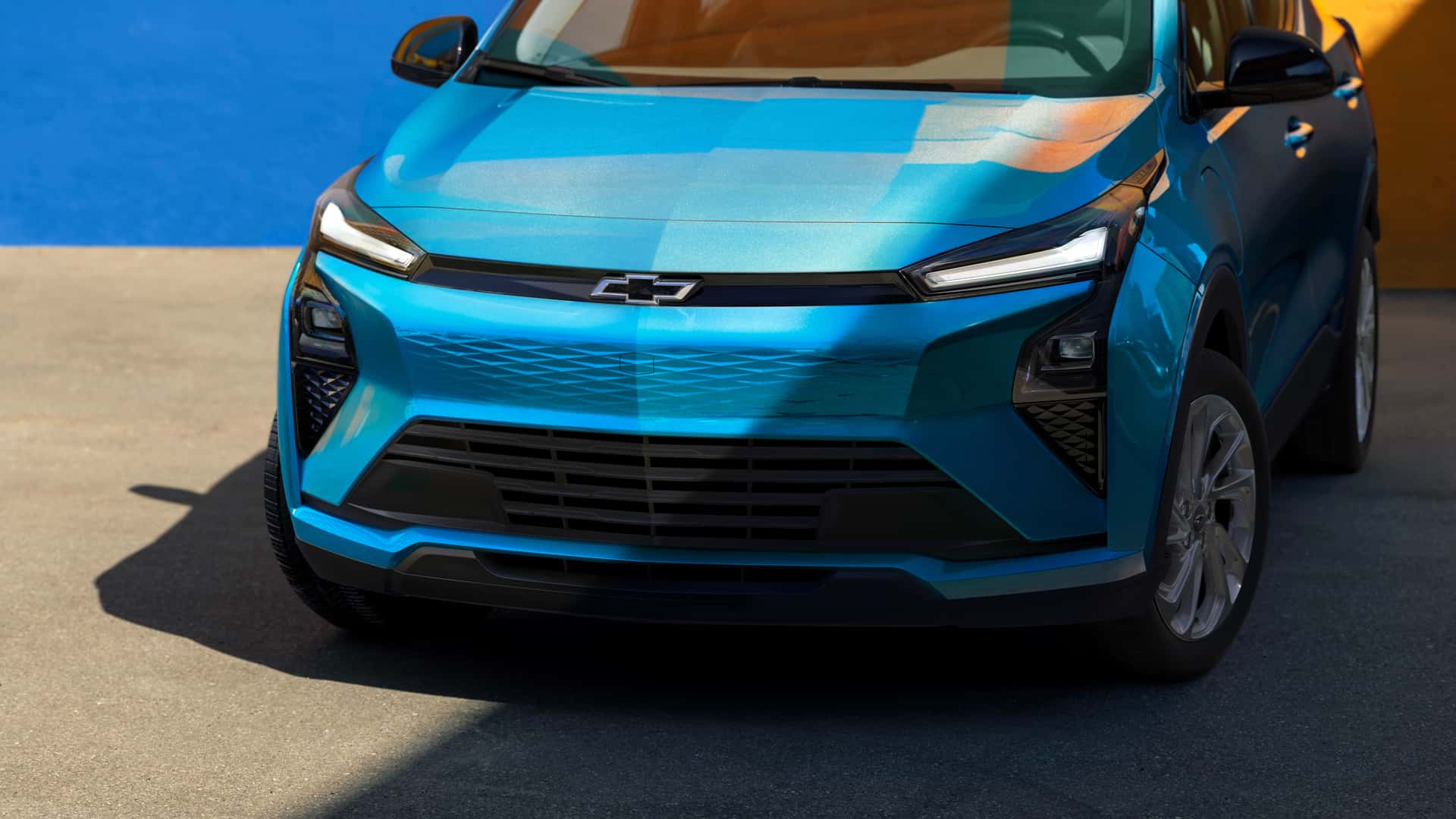
General Motors has implemented a strategic design choice across its electric vehicle lineup, centering on a common battery module architecture for its ‘Ultium’ platform. This approach is applied to a wide range of vehicles, from the robust GMC Hummer EV to the more accessible Chevrolet Equinox EV, all utilizing the same fundamental battery cells arranged into 24-cell modules.
However, the newly introduced Chevrolet Bolt deviates from this universal module strategy. Intriguingly, this divergence coincides with the Bolt exhibiting superior 10% to 80% charging times compared to its more premium Ultium-based counterparts. This performance difference prompts a closer examination of battery pack configurations and the fundamental role of voltage in electric vehicle charging.

The Module System and Economies of Scale
The development of electric vehicles presents unique challenges in establishing robust supply chains, particularly for critical components like battery packs. Unlike internal combustion engine vehicles, where established industries produce parts like fuel pumps and alternators at high volumes, the EV sector requires building these infrastructures from the ground up.
The battery itself represents a significant portion of an EV’s cost and complexity. Automotive-grade batteries are highly specialized, and achieving cost reductions through economies of scale is paramount. General Motors’ solution for its Ultium platform has been to standardize sub-pack components, specifically a 103 amp-hour cell. These cells are assembled into 24-cell modules operating at 29 volts.
This modular design allows GM to construct battery packs of varying capacities to suit different vehicle needs. For instance, the Chevrolet Equinox EV, Blazer EV LT, and Buick Optiq utilize 10-module packs totaling 85 kilowatt-hours. Higher-tier models like the Cadillac Lyriq and Blazer EV SS feature 12-module, 102 kWh packs. The most substantial packs, found in the GMC Hummer EV and Chevrolet Silverado EV, comprise 24 modules for a massive 205 kWh capacity.

The Impact of Lower Voltage on Charging Speed
The underlying chemistry of automotive battery cells operates at relatively low voltages, typically between 3.6 and 4.2 volts. To achieve the higher voltages required for EV powertrains and charging systems, these individual cells are wired in series. This process is crucial for delivering the necessary power and managing charging dynamics.
In GM’s Ultium vehicles that use the standardized 29-volt modules, a 10-module pack results in an overall system voltage of approximately 290 volts. This lower nominal voltage presents a challenge for charging performance. To achieve a specific charging power (measured in kilowatts, kW), voltage and current (amperes, A) must be multiplied (Power = Voltage x Current).
Consequently, a 290-volt system requires a higher current to reach the same charging power as an 800-volt system. For example, reaching 150 kW from a 290-volt pack necessitates over 500 amps. Many existing 150 kW DC fast chargers are not designed to deliver such high amperages, which can limit the actual charging speed achieved.
This limitation contributes to the observed charging curve in vehicles like the Equinox EV and Blazer EV. Even when connected to a capable 250 kW or 350 kW charger, achieving the peak 150 kW rate may be constrained by the system’s current delivery capabilities. As a result, charging from 10% to 80% can take a considerable 40 minutes, even under optimal conditions.
While larger Ultium packs, such as the one in the Silverado EV capable of up to 350 kW charging, can achieve higher peak rates, the sheer scale of these packs can also influence the overall charging duration. This is where the Chevrolet Bolt distinguishes itself.
Bolt’s LFP Battery: A Different Approach to Charging
The Chevrolet Bolt, despite its integration with the broader Ultium software and architecture, employs a different battery technology: Lithium Iron Phosphate (LFP). This shift from the Nickel-Manganese-Cobalt (NMC) chemistry used in other Ultium vehicles offers several advantages, including lower cost, enhanced durability, and a longer lifespan.
Crucially, the LFP pack in the Bolt was not constrained by GM’s standardized modular approach. This allowed its supplier to design the pack with a nominal voltage much closer to the 400-volt standard prevalent in many modern EVs. A higher nominal voltage directly translates to more efficient power transfer during charging.
With a voltage profile more aligned with the 400-volt standard, the Bolt can achieve its peak charging rate of 150 kW from a lower state of charge and sustain high charging speeds for a more extended period. This results in a more robust and faster charging curve, enabling it to replenish its 65 kWh battery from 10% to 80% in just 26 minutes. This performance surpasses that of some other affordable EVs, including base models of the Ford Mustang Mach-E and Volkswagen ID.4.
This faster charging capability positions the new Bolt as a charging champion, even outperforming some higher-priced electric vehicles in the crucial 10-80% charge time metric. It highlights how strategic battery chemistry and voltage design can significantly influence the user experience, particularly for drivers on longer journeys where rapid charging is essential.
While the Bolt’s unique battery strategy provides a significant advantage in charging speed, further details regarding other aspects of the new model are available in the full first-drive review.