
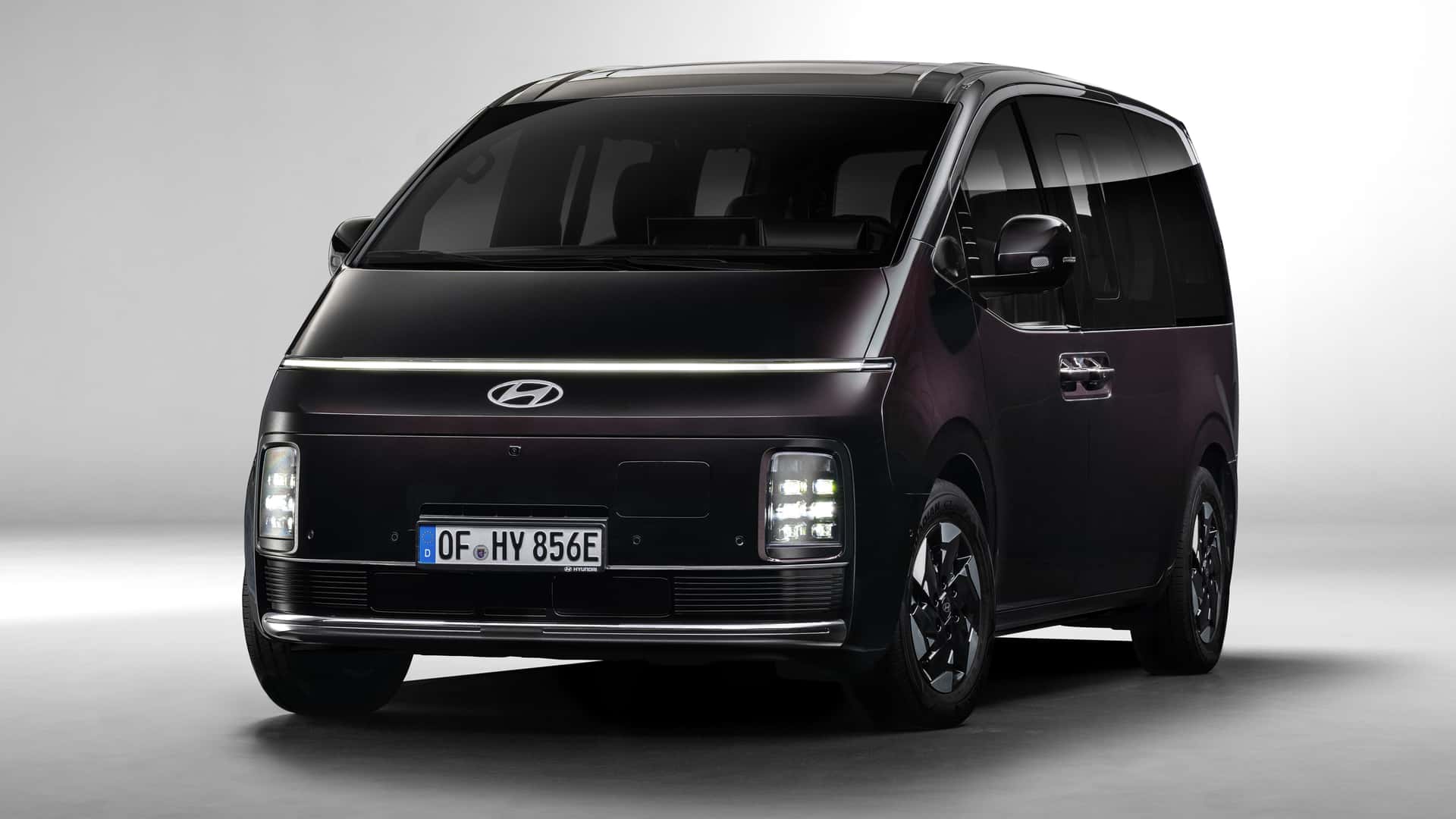
The Hyundai Staria EV: A Futuristic Electric Minivan with a Charging Edge
The all-electric Staria boasts an impressive 248-mile range and a charging capability that could leave competitors playing catch-up.
Hyundai has officially unveiled its largest electric vehicle to date – the Staria Electric. This futuristic minivan is set to enter the competitive electric MPV market, challenging established players like the Volkswagen ID. Buzz and the upcoming Kia PV5. While the Staria nameplate is familiar, this new all-electric iteration brings significant technological advancements, notably borrowing a crucial feature from Hyundai’s acclaimed E-GMP platform, albeit with a unique twist.
At the heart of the Staria EV is a robust 84-kilowatt-hour battery pack. What sets it apart is its 800-volt architecture, a technology that allows for significantly faster charging speeds compared to the 400-volt systems commonly found in rivals. This advanced system means the electric Staria can achieve a substantial charge in a remarkably short time.
Hyundai reports that the Staria EV can replenish its battery from 10% to 80% in approximately 20 minutes when connected to a DC fast charger. For context, the Volkswagen ID. Buzz, which has seen a pause in its US availability, requires around 26 minutes for the same charge, and the Kia PV5 is estimated to take about 30 minutes. This rapid charging capability positions the Staria EV as a highly convenient option for long journeys.
While the official WLTP range stands at 248 miles (400 kilometers), which may be slightly less than some variants of the ID. Buzz, the Staria’s advantage lies in its reduced downtime at charging stations. The vehicle is powered by a 214-horsepower (160-kilowatt) electric motor driving the front wheels, making it Hyundai’s only 800-volt, front-wheel-drive electric vehicle.
Beyond its charging prowess, the Staria EV comes equipped with standard Vehicle-to-Load (V2L) functionality. This feature allows the high-voltage battery to supply power to external appliances and tools, accessible either through an interior household outlet or an adapter that connects to the charging port. Additionally, the Staria EV features a heated CCS2 charging port located at the front, designed to prevent issues in cold winter conditions, and supports an 11 kW AC onboard charger.
Gallery: Hyundai Staria Electric (2026)
The interior of the Staria Electric is designed for comfort and versatility, offering configurations for seven and nine passengers. Hyundai highlights features like sliding seats, a flat floor, expansive glass surfaces, and power-sliding doors to create a welcoming and spacious cabin, making it an attractive option for families and shuttle services alike. Up front, occupants are greeted by a modern cockpit featuring dual 12.3-inch displays powered by Hyundai Motor Group’s latest ccNC infotainment system, which supports over-the-air software updates and seamless wireless connectivity for Apple CarPlay and Android Auto.
For those needing to haul cargo, the electric Staria offers a towing capacity of up to 4,409 pounds (2,000 kilograms) with a braked trailer and 1,653 lbs (750 kg) for an unbraked trailer. A comprehensive suite of standard Advanced Driver Assistance Systems (ADAS) further enhances safety and convenience, including Lane Keeping Assist, Lane Follow Assist, and adaptive cruise control with lane guidance.
The Hyundai Staria Electric is slated for launch in Korea and Europe during the first half of 2026, with plans for expansion into additional markets to follow.
More Electric Minivans
This Wild-Looking EV Aims To Make Minivans Cool Again
Kia’s Funky PV5 Electric Van Blew Past Its Official Range—With A Full Load
The Volkswagen ID. Buzz Won’t Get A 2026 Model
The Renault Traffic E-Tech Electric Van Makes Carrying Boxes Weirdly Chic