
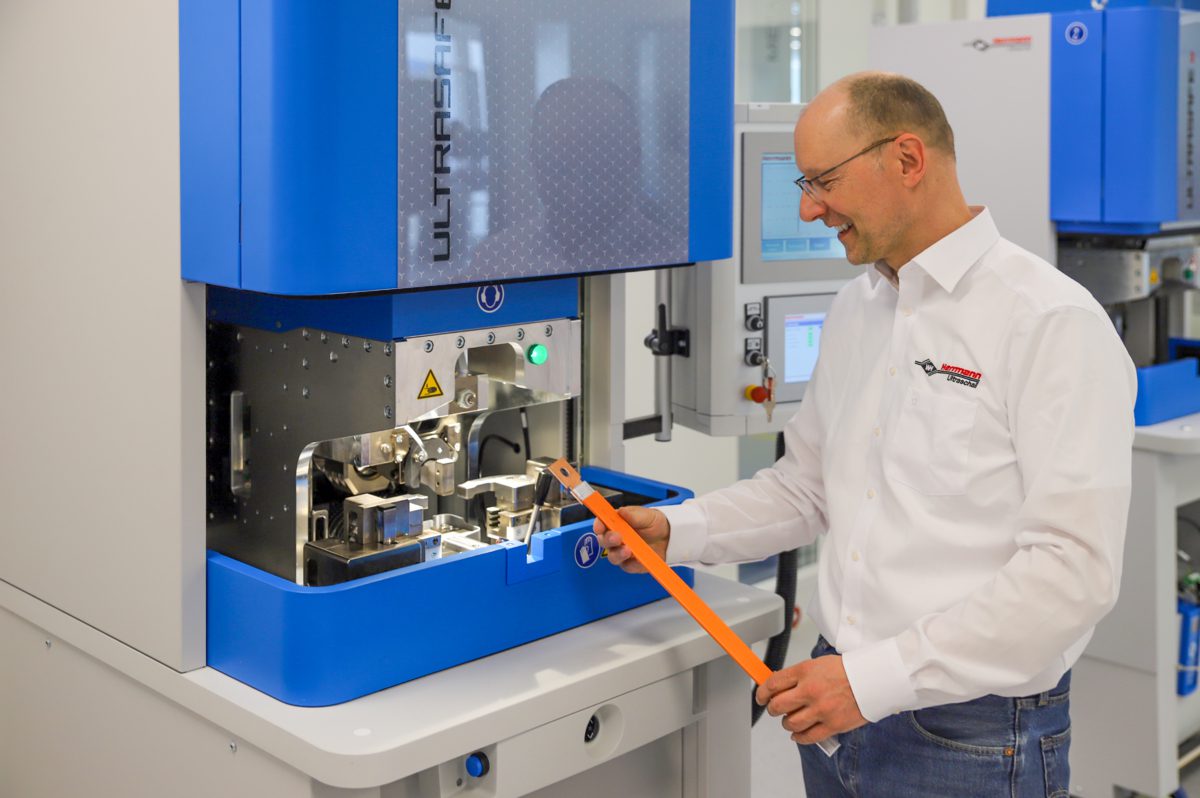
In an era defined by rapid technological advancement and burgeoning energy demands, the efficiency and reliability of electrical systems have become paramount. From the intricate power grids powering modern data centers to the sophisticated battery systems driving electric vehicles (EVs), busbars serve as critical components for current distribution. However, the escalating performance requirements across e-mobility, data infrastructure, and power electronics are pushing traditional busbar production methods to their absolute limits, necessitating a re-evaluation of manufacturing approaches.
This evolving landscape underscores the urgent need for advanced joining technologies that can meet stringent quality, performance, and scalability benchmarks. Conventional techniques often fall short in delivering the consistent, high-integrity connections required by these demanding applications, leading to potential bottlenecks in innovation and production.

Key Takeaways
- Ultrasonic welding offers a heat-free, additive-free method for joining non-ferrous metals in busbar production.
- This technology delivers superior connection quality with high strength and exceptionally low electrical resistance.
- Significant improvements in cycle times and overall output are achievable due to the rapid welding process without cooling phases.
- Advanced process control and real-time data monitoring ensure consistent quality and minimal rejects in scaled production.
- Compared to laser welding, crimping, and soldering, ultrasonic welding provides distinct technical advantages for specific busbar applications.
- The method supports cost-effective manufacturing, crucial for competitive advantages in e-mobility and power electronics.
- It facilitates robust, scalable busbar production, essential for the growing demands of modern electrical systems.
The Evolving Demands on Busbar Production
The global shift towards electrification and digitisation places immense pressure on fundamental electrical components. Busbars, which are metallic strips or bars distributing power, are at the heart of these systems. Their performance directly impacts the overall efficiency, safety, and longevity of everything from EV battery packs to renewable energy inverters and high-density computing clusters.
Traditional busbar production methods, frequently reliant on techniques that introduce heat or require additional materials, often encounter challenges when dealing with the advanced materials and tighter tolerances demanded today. Issues such as material degradation, inconsistent joint quality, and lengthy cycle times can severely impede manufacturing efficiency and product reliability.
Ultrasonic Welding: A Paradigm Shift in Joining Technology
Against this backdrop, ultrasonic welding emerges as a transformative technology, redefining how non-ferrous metals like copper and aluminum are joined in busbar production. Unlike thermal processes, ultrasonic welding creates molecular bonds through high-frequency mechanical vibrations, rather than heat. This distinctive approach ensures that materials are joined without melting, the use of fillers, or any detrimental material degradation.

The principle involves applying pressure to the workpieces while simultaneously subjecting them to ultrasonic vibrations. This action breaks down surface oxides and impurities, allowing the metals to bond at an atomic level. This innovative process unlocks a host of benefits that directly address the limitations of conventional joining techniques, paving the way for significantly optimised busbar manufacturing.
Seven Benefits of Optimised Busbar Manufacturing with Ultrasonic Welding
The adoption of ultrasonic welding in busbar production offers a compelling suite of advantages that collectively enhance efficiency, quality, and cost-effectiveness across the manufacturing lifecycle.
1. High-Strength, Low-Resistance Connections
One of the most critical aspects of busbar performance is the integrity and conductivity of its connections. Ultrasonic welding consistently produces exceptionally strong and highly conductive joints. By creating a true metallurgical bond without melting the base materials, the risk of intermetallic formation and subsequent embrittlement is significantly reduced.
This results in connections with extremely low electrical resistance, ensuring maximum current flow with minimal energy loss and heat generation. Such robust connections are vital for high-performance applications where even minor resistance fluctuations can impact system efficiency and longevity.
2. Short Cycle Times Without Cooling
Manufacturing speed is a key determinant of overall productivity and cost-efficiency. Ultrasonic welding boasts remarkably short cycle times, a significant advantage over many thermal joining methods. The process does not require external heat, eliminating the need for lengthy cooling periods.
Once the ultrasonic energy is applied and the bond is formed, the parts are ready for the next stage of assembly almost immediately. This rapid turnaround dramatically increases throughput in busbar production lines, contributing to higher output and faster time-to-market for critical components.
3. Precise Process Control
Achieving consistent quality in high-volume busbar production demands meticulous process control. Ultrasonic welding systems offer unparalleled precision in managing key parameters such as weld pressure, amplitude, and time. Modern welding equipment incorporates sophisticated sensors and feedback loops that allow for real-time adjustments and monitoring.
This level of control ensures that each weld meets exact specifications, minimising variability and enhancing the overall reliability of the finished busbar assemblies. The precise control over the joining parameters also facilitates optimal conductivity and mechanical strength in every connection.
4. Real-Time Data Monitoring for Quality Assurance
In today’s advanced manufacturing environments, data-driven insights are invaluable. Ultrasonic welding machines are typically equipped with capabilities for real-time data monitoring. This feature allows manufacturers to collect and analyse critical information about each weld cycle, including energy consumption, weld time, and achieved amplitude.
This continuous data stream provides comprehensive traceability and facilitates proactive quality assurance. Manufacturers can identify and address potential issues instantaneously, preventing defects and ensuring that every busbar meets stringent industry standards before leaving the production line.
5. Scalable Production with Minimal Rejects
The demand for electrical components is only set to grow, making scalable busbar production a strategic imperative. The inherent reliability and consistency of ultrasonic welding make it ideal for scaling operations. Its precise control and data monitoring capabilities directly contribute to a significantly reduced reject rate.
Minimising waste and rework not only lowers manufacturing costs but also optimises resource utilisation, making the production process more sustainable. This combination of scalability and high yield ensures that manufacturers can meet surging market demands without compromising on quality or efficiency.
6. Optimal Conductivity for Thicker Busbars
As power demands increase, so does the need for thicker busbars to handle higher current loads. A significant challenge with traditional methods can be reliably welding thicker sections while maintaining optimal conductivity. Ultrasonic welding excels in this regard, capable of joining even substantial busbar thicknesses effectively.
The fundamental principle of solid-state bonding ensures that the material properties, including electrical conductivity, are preserved across the joint interface, crucial for maintaining performance in high-power applications where thermal management is critical.
7. Efficient and Cost-Effective Manufacturing
Ultimately, the goal of any manufacturing innovation is to enhance efficiency and reduce costs. Ultrasonic welding contributes to this by eliminating consumables like solder, flux, or filler wires, which are common in other joining processes. The energy consumption is also typically lower than thermal methods, as it’s concentrated only at the weld interface and doesn’t require heating entire components.
Coupled with short cycle times and reduced scrap rates, this translates into a more streamlined and economically viable busbar production process. The competitive advantage gained through such cost-effective manufacturing directly supports increased output and helps meet the growing demands of modern electrical systems while upholding consistent quality at scale.
Technical Advantages Over Conventional Methods
When comparing ultrasonic welding to other established joining techniques, its unique characteristics highlight significant technical superiority for busbar production:
Compared to Laser Welding
While laser welding offers precision, it is a thermal process that introduces significant heat into the materials. This can lead to heat-affected zones (HAZs), material annealing, or even micro-cracking, particularly in highly conductive materials like copper and aluminum, which have high reflectivity and thermal conductivity. Ultrasonic welding, being a solid-state process, avoids these heat-related metallurgical issues, preserving the original material properties and ensuring higher joint integrity and consistent electrical performance.
Compared to Crimping
Crimping relies on mechanical deformation to create a connection. While widely used, crimped connections can be susceptible to vibration loosening, oxidation over time, and a less consistent electrical path due to varying contact points. Ultrasonic welding provides a true metallurgical bond that is highly resistant to environmental factors and mechanical stress, offering a more stable and reliable electrical connection with lower resistance and longer operational life, especially in dynamic environments like those found in e-mobility.
Compared to Soldering
Soldering involves the use of a filler metal (solder) to join components. This introduces a dissimilar material into the electrical path, which can have different conductivity and thermal expansion properties. Over time, solder joints can suffer from fatigue, corrosion, or ‘tin whiskers,’ leading to potential failures. Ultrasonic welding eliminates the need for any filler materials, creating a direct metal-to-metal bond that ensures optimal conductivity and superior long-term reliability without the vulnerabilities associated with solder joints.
Impact Across Industries
The implications of optimised busbar production using ultrasonic welding are far-reaching. In e-mobility, it enables the creation of more robust and efficient battery modules and power distribution units, critical for the performance and range of electric vehicles. For data centers, where uptime and energy efficiency are paramount, reliable busbar connections ensure stable power delivery to vast arrays of servers, preventing costly downtime and reducing operational expenditure.
In power electronics, from industrial converters to renewable energy inverters, ultrasonic welding facilitates the production of components that can withstand higher power densities and operate with greater efficiency. This technological shift supports the broader industry trend towards more compact, powerful, and sustainable electrical systems, ultimately driving innovation and competitive advantage.
The Future of Electrical Manufacturing
As performance expectations continue to soar across various high-tech sectors, the adoption of advanced manufacturing techniques like ultrasonic welding in busbar production is not merely an option but a strategic imperative. The ability to produce high-quality, high-performance busbars efficiently and cost-effectively will be a key differentiator for manufacturers navigating the complexities of the modern industrial landscape. This method offers a clear pathway to unlocking new levels of efficiency, reliability, and scalability, cementing its role as a cornerstone of future electrical engineering and manufacturing advancements.
FAQ
What is ultrasonic welding in busbar production?
Ultrasonic welding is a solid-state joining process that uses high-frequency mechanical vibrations and pressure to create a metallurgical bond between non-ferrous metals, such as copper and aluminum, without introducing external heat or filler materials. It is highly effective for critical busbar connections.
Why is optimised busbar production crucial for e-mobility?
Optimised busbar production ensures high-strength, low-resistance connections essential for efficient power distribution in electric vehicles. This directly impacts battery performance, range, and the overall reliability of the EV’s electrical system, meeting stringent safety and operational demands.
What are the primary benefits of using ultrasonic welding for busbars?
Key benefits include superior electrical conductivity, high mechanical strength, rapid cycle times without cooling, precise process control, real-time data monitoring for quality, scalability with minimal rejects, and cost-effective manufacturing without consumables like solder or flux.
How does ultrasonic welding compare to laser welding for busbars?
Unlike laser welding, ultrasonic welding is a cold process, preventing heat-affected zones and material degradation in highly conductive metals. This preserves material properties and ensures more consistent electrical performance, avoiding issues associated with thermal stress.
Can ultrasonic welding join different non-ferrous metals like copper and aluminum?
Yes, ultrasonic welding is particularly effective at joining dissimilar non-ferrous metals like copper and aluminum. Its solid-state nature avoids the formation of brittle intermetallic compounds that can occur with fusion welding of these materials, leading to more reliable connections.
What role does real-time data monitoring play in ultrasonic busbar welding?
Real-time data monitoring provides continuous feedback on weld parameters, enabling immediate quality checks and process adjustments. This ensures consistent joint integrity, facilitates traceability, and significantly reduces the potential for defects or rework in high-volume busbar production.
Is ultrasonic welding a cost-effective solution for busbar manufacturing?
Yes, ultrasonic welding is highly cost-effective due to several factors: it eliminates expensive consumables like solder, reduces energy consumption compared to thermal methods, and significantly lowers reject rates through precise control and consistent quality, leading to higher overall output.
How does ultrasonic welding contribute to scalability in busbar production?
The inherent consistency, speed, and reliability of ultrasonic welding make it ideal for scaling manufacturing operations. Its ability to produce high-quality joints repeatedly with minimal human intervention supports increased production volumes to meet growing market demands efficiently.