
Key Takeaways
- Volkswagen Group Sverige is deploying commercial bidirectional EV charging technology across its dealer network in Sweden.
- This initiative marks a significant shift, transitioning bidirectional charging from pilot projects to large-scale commercial availability.
- The system integrates Volkswagen Group’s bidirectional-capable electric vehicles with MOON chargers and Energy Bank’s intelligent software.
- Users can leverage their EVs to supply electricity back to homes (V2H) and the national grid (V2G), enhancing energy flexibility and grid stability.
- The collaboration between Volkswagen, MOON, and Energy Bank, ongoing since 2021, developed this system at the Stenberg Living Lab in Hudiksvall.
- This rollout is expected to create substantial value for electric vehicle owners and the broader electricity system.
Bidirectional EV charging, a transformative technology enabling electric vehicles to not only draw power but also supply it back to homes or the electrical grid, is rapidly moving from experimental phases to widespread commercial deployment. The latest significant advancement comes from Volkswagen Group Sverige, which has announced plans to roll out commercial bidirectional EV charging solutions across its extensive dealer network throughout Sweden.
This strategic move by Volkswagen Group Sverige signals a pivotal moment for the electric vehicle industry, underscoring a commitment to fully integrated energy ecosystems. It aims to empower electric vehicle owners with enhanced energy management capabilities while contributing to a more resilient and sustainable national grid.

Understanding Bidirectional EV Charging and Its Impact
Bidirectional EV charging, often referred to as Vehicle-to-Grid (V2G) or Vehicle-to-Home (V2H), represents a paradigm shift in how electric vehicles are perceived. Beyond being mere transportation, EVs become dynamic energy assets capable of storing and dispatching electricity. This capability unlocks numerous benefits for both individual users and the larger energy infrastructure.
For EV owners, bidirectional charging offers the potential to reduce electricity bills by selling excess energy back to the grid during peak demand or powering their homes during outages. This introduces a new dimension of energy independence and financial incentives, making EV ownership even more attractive.
From a grid perspective, bidirectional EV charging provides a powerful tool for balancing fluctuating renewable energy sources like solar and wind. By allowing thousands of parked EVs to act as distributed energy storage units, they can absorb surplus renewable energy when generation is high and feed it back during periods of low generation or high demand. This significantly improves grid stability and efficiency.
Volkswagen’s Strategic Deployment in Sweden
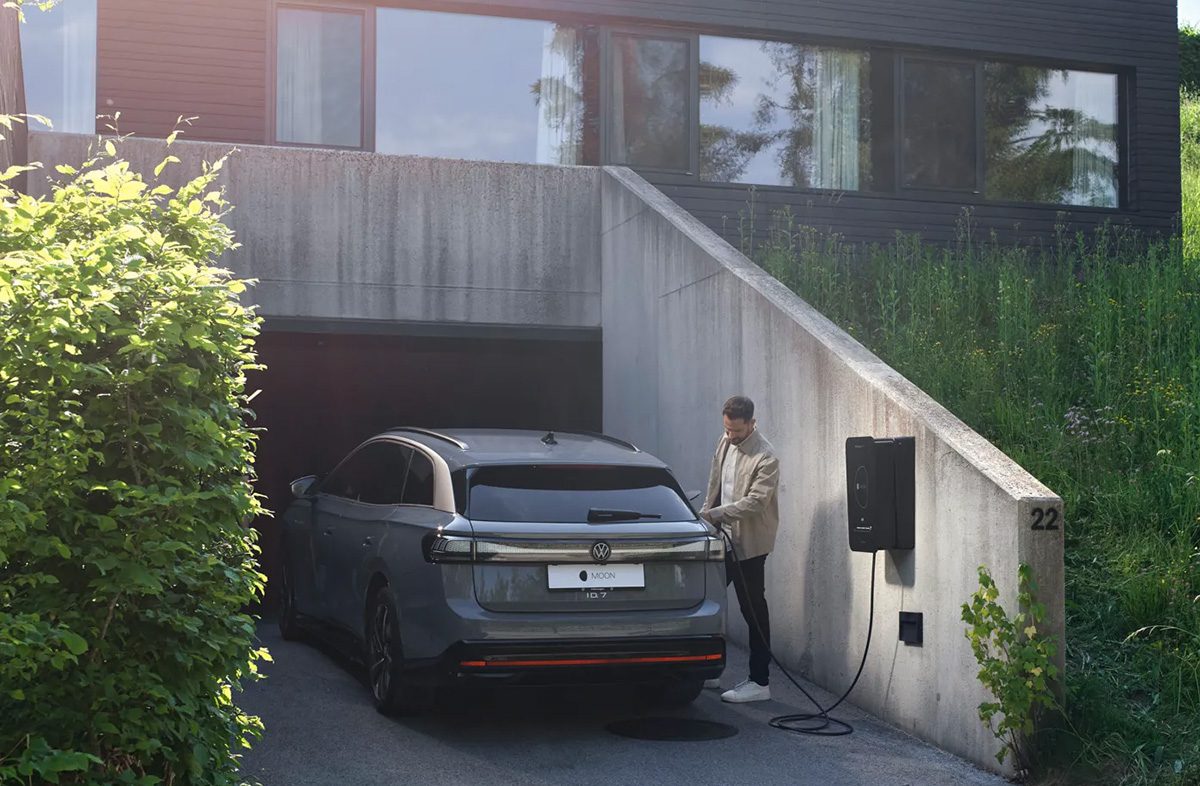
The system being introduced by Volkswagen Group Sverige is a comprehensive solution designed for seamless integration and optimal performance. It harmoniously combines several critical components to deliver robust bidirectional EV charging capabilities.
At its core are Volkswagen Group vehicles that are inherently capable of bidirectional charging. These vehicles are paired with specialized bidirectional chargers manufactured by MOON, a sister company within the Volkswagen Group, ensuring deep compatibility and optimized performance.
Crucially, the entire operation is managed by sophisticated software developed by Energy Bank. This software intelligently orchestrates the charging and discharging processes, overseeing energy storage and regulating power exports to either individual homes or the wider electricity system. This intelligent management ensures efficiency and safety.
A Collaborative Journey from Lab to Market
The commercial rollout of this advanced system is the culmination of years of dedicated research and development. Energy Bank and Volkswagen have maintained a close collaboration on bidirectional charging initiatives since 2021, fostering innovation and refinement.
Their joint efforts led to the development and rigorous testing of the system at the Stenberg Living Lab in Hudiksvall. This real-world testbed allowed the partners to fine-tune the technology, ensuring its reliability, efficiency, and scalability before broader market introduction.
This journey from a controlled pilot environment to a commercial offering through Volkswagen Group’s extensive dealer network in Sweden underscores the maturity and readiness of the technology. It represents a significant milestone in making advanced energy solutions accessible to the public.
Industry Perspective on the Commercial Transition
The significance of this development has been highlighted by industry leaders. Christian Jacobsson, CEO of Energy Bank, articulated the impact of this move, stating, “This is the moment when bidirectional charging moves from promising technology to commercial infrastructure.”
He further elaborated on the strategic importance of the partnerships involved: “With MOON and Volkswagen as strategic partners, we can bring bidirectional charging to customers at scale and create value for EV owners and the electricity system.” This statement underscores the potential for widespread adoption and the multi-faceted benefits of this technology.
The transition from pilot to commercial scale is critical for any emerging technology. It signifies confidence in its stability, economic viability, and ability to deliver tangible benefits to end-users and infrastructure providers. For bidirectional EV charging, this step in Sweden sets a precedent for other markets.
Broader Implications for the Future of Energy
The commercial deployment of bidirectional EV charging by Volkswagen Group in Sweden has far-reaching implications beyond just the automotive sector. It integrates electric mobility deeply into the energy grid, positioning EVs as active participants in energy management rather than just energy consumers.
This initiative could accelerate the adoption of renewable energy sources by providing flexible storage capacity. As more intermittent renewables like solar and wind come online, the ability of EVs to store and release energy becomes invaluable for maintaining grid stability and power quality.
Furthermore, it fosters a smart energy ecosystem where homes, vehicles, and the grid communicate to optimize energy flow. This intelligent energy management can lead to greater energy efficiency, reduced carbon emissions, and enhanced energy security for nations embracing electrification.
The experience gained from this rollout in Sweden will likely serve as a blueprint for Volkswagen Group’s future deployments in other markets, potentially influencing global standards and accelerating the widespread adoption of vehicle-to-grid technologies worldwide.
FAQs About Bidirectional EV Charging
What is bidirectional EV charging?
Bidirectional EV charging allows an electric vehicle to both draw power from and supply power back to a charging station, a home, or the electrical grid. This capability transforms EVs into mobile energy storage units, enabling them to participate in active energy management beyond simple charging.
What are the main benefits of bidirectional charging?
The primary benefits include cost savings for EV owners by selling power during peak demand, providing backup power to homes (V2H) during outages, and enhancing grid stability by balancing renewable energy fluctuations (V2G). It also contributes to a more sustainable and resilient energy infrastructure.
Which Volkswagen Group vehicles are compatible with this technology?
The Volkswagen Group’s system is designed to work with its bidirectional-capable electric vehicles. Specific models that support this feature are typically newer generation EVs designed with the necessary hardware and software to facilitate two-way power flow.
What role do MOON and Energy Bank play in this system?
MOON, a Volkswagen Group sister company, provides the specialized bidirectional chargers that enable the two-way power flow. Energy Bank contributes the intelligent software that manages the charging, discharging, energy storage, and power export functionalities, optimizing the system’s performance.
How does bidirectional charging help the electricity grid?
Bidirectional charging helps the grid by enabling a decentralized network of energy storage. EVs can absorb excess renewable energy when it’s abundant and feed it back when demand is high or renewable generation is low, thereby stabilizing the grid, reducing the need for fossil fuel peaker plants, and making the grid more efficient.
Is this technology widely available in other countries?
While bidirectional EV charging is gaining traction, its commercial deployment is still in relatively early stages globally. Volkswagen Group’s rollout in Sweden represents one of the significant steps towards making it a mainstream offering, with other regions expected to follow as infrastructure and regulatory frameworks evolve.
What is the Stenberg Living Lab in Hudiksvall?
The Stenberg Living Lab in Hudiksvall served as a critical development and testing site for the bidirectional charging system. It provided a real-world environment for Energy Bank and Volkswagen to collaborate since 2021, refine the technology, and ensure its readiness for commercial deployment.