
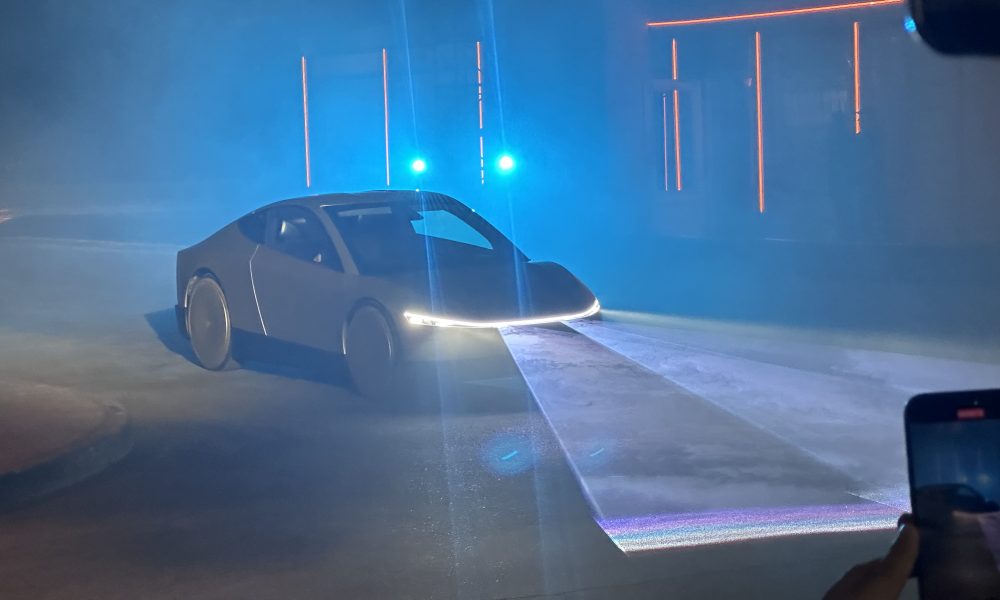
Key Takeaways:
- The Trump Administration, through NHTSA, is initiating new rulemaking to update Federal Motor Vehicle Safety Standards (FMVSS), specifically targeting the elimination of manual brake pedal requirements for vehicles designed purely for automated driving.
- This regulatory shift is poised to significantly benefit vehicles like the Tesla Cybercab, which is engineered to operate without a steering wheel or traditional pedals, paving the way for its accelerated deployment.
- The proposed changes to FMVSS No. 135 aim to remove physical control mandates while maintaining stringent stopping distance performance criteria through alternative testing methods.
- NHTSA emphasizes a commitment to fostering innovation in autonomous vehicle technology by reducing regulatory hurdles, alongside maintaining robust safety oversight through defect enforcement and recall authority.
- With the Tesla Cybercab already in mass production at Gigafactory Texas, these evolving federal frameworks are crucial for its planned integration into a widespread Robotaxi fleet, marking a significant step in the future of autonomous mobility.
Landmark Regulatory Shift Underway
The United States is on the precipice of a significant transformation in its approach to autonomous vehicle regulation. In a move signaling a push towards accelerating the deployment of self-driving technology, the Trump Administration’s U.S. Department of Transportation, via the National Highway Traffic Safety Administration (NHTSA), initiated crucial rulemaking processes five days ago, on June 25, 2026.
This development specifically targets Federal Motor Vehicle Safety Standards (FMVSS), with profound implications for cutting-edge vehicles like the Tesla Cybercab. The proposed changes aim to modernize regulations that have long been based on traditional human-operated vehicles.
Revisiting Federal Motor Vehicle Safety Standards
Central to this new regulatory effort is the proposed revision of FMVSS No. 135. This standard traditionally mandates the inclusion of conventional braking systems in light-duty vehicles, designed to allow human operators to manually control and slow the vehicle.
However, with the rapid advancements in automated driving systems (ADS), these long-standing regulations require modernization to accommodate purely driverless designs. The current framework, rooted in the assumption of human intervention, has proven to be a potential impediment to the widespread adoption of vehicles designed for full autonomy.

The core of NHTSA’s initiative is to eliminate the requirement for manual brake pedals in vehicles that are engineered to be driven exclusively by automated driving systems. This specific change directly addresses a fundamental design characteristic of the Tesla Cybercab, which Tesla has publicly stated will operate entirely without a steering wheel or traditional pedals.
Such a regulatory update is critical for manufacturers aiming to bring truly driverless vehicles to market without being constrained by outdated physical control mandates. It marks a significant acknowledgment of the evolving capabilities of autonomous technology.
Implications for Driverless Vehicle Design
The proposed changes to FMVSS No. 135 are multi-faceted, reflecting a careful balance between enabling innovation and upholding safety. These provisions are designed to ensure that while design flexibility is increased, rigorous safety standards remain paramount.
- Removal of Manual Controls: The revised standard would remove requirements for hand- or foot-operated brake controls specifically for vehicles designed never to be operated by a human. Importantly, existing rules will continue to apply to autonomous vehicles (AVs) that retain manual controls, ensuring a bifurcated approach to regulation based on operational design.
- Maintenance of Performance Criteria: Despite the absence of manual controls, all subject vehicles will still be required to meet the same stringent stopping distance performance criteria. This will be achieved through alternative testing procedures tailored to the unique operational characteristics of automated driving systems, ensuring that safety is not compromised.
- Separate Safety Performance Development: While this update focuses on the physical ability of AVs to stop, NHTSA is concurrently developing broader safety performance requirements for autonomous vehicles in real-world driving scenarios. This indicates a holistic approach to regulating AV safety, extending beyond individual component mandates.
- Continued Enforcement Authority: NHTSA explicitly states its intent to continue utilizing its broad defect enforcement authority. This allows the agency to investigate unsafe automated driving system behavior and oversee recalls, holding AV developers accountable for the safe performance of their technologies post-deployment.
Facilitating the Future of Autonomous Mobility
The overarching goal of these regulatory adjustments is to create an environment conducive to the advancement and broad deployment of autonomous vehicle technology within the United States. As autonomy becomes an increasingly integral part of passenger travel, such rule adjustments are deemed not merely reasonable, but essential.
The changes are expected to significantly ease the path for manufacturers in bringing their innovative designs to consumers. This forward-looking approach acknowledges the transformative potential of self-driving vehicles.
Streamlining Development and Deployment
By removing the mandate for human-centric controls in purely autonomous designs, the administration aims to grant manufacturers greater flexibility. This flexibility will allow companies to self-certify their vehicles based on their specific automated driving system capabilities, rather than being forced to conform to design elements that are redundant or counterproductive in a fully autonomous context.
This approach is anticipated to reduce bureaucratic red tape, which could otherwise delay the crucial deployment of these advanced vehicles into public service. The ability to innovate beyond the limitations of human interface design is a significant step towards realizing the full potential of driverless transportation.
Administrator’s Vision for Innovation
NHTSA Administrator Jonathan Morrison underscored the administration’s enthusiasm for leading the charge in this technological frontier. “We are at the cusp of the greatest technological revolution in vehicle technology since the innovation of the Model T,” Morrison stated, highlighting the transformative potential of autonomous vehicles.
He further articulated the necessity of adapting the regulatory landscape to meet this challenge: “If we want America to lead the way, we have to reimagine our regulatory framework. That’s why under Secretary Sean Duffy’s AV Framework, NHTSA is tearing down pointless barriers to innovative designs while strengthening the fundamental safety requirements that matter and holding AV developers accountable for safe performance.” This statement encapsulates the dual objective: to foster innovation by removing archaic barriers while simultaneously reinforcing foundational safety principles and ensuring accountability from developers.
The Tesla Cybercab’s Strategic Position
For Tesla, these regulatory developments arrive at a particularly opportune moment, directly aligning with the company’s ambitious roadmap for its fully autonomous vehicle, the Tesla Cybercab. The Cybercab has been at the forefront of Tesla’s future mobility plans, designed from its inception to operate without the need for human input or traditional controls.
Production and Operational Blueprint
The Tesla Cybercab officially entered mass production at Tesla’s Gigafactory Texas in April. This milestone signifies a critical phase in the vehicle’s journey from concept to reality, moving from development to large-scale manufacturing.
The design, devoid of a steering wheel or pedals, aligns perfectly with the regulatory flexibility now being proposed by NHTSA. Tesla’s commitment to this radical design is a testament to its belief in the maturity and safety of its automated driving system. The absence of manual controls underscores that the vehicle is intended for Level 4 or Level 5 autonomy, where human intervention is either unnecessary or entirely absent.
Towards a Widespread Robotaxi Fleet
Tesla’s ultimate strategic vision for the Tesla Cybercab is its integration into a vast Robotaxi fleet. This network of self-driving vehicles would offer on-demand autonomous rides, potentially revolutionizing urban transportation and public services.
The establishment of clear and progressive regulatory frameworks, such as those currently being developed by the Trump Administration, is paramount for the successful deployment and scaling of such a fleet. Without these foundational rules, the widespread operation of vehicles designed exclusively for automated driving, like the Cybercab, would face significant legal and logistical hurdles.
The synchronicity between Tesla’s production schedule and these regulatory advancements suggests a strategic alignment that could pave the way for a more rapid rollout of driverless services. This synergy is crucial for achieving Tesla’s long-term autonomous mobility goals.
Balancing Innovation with Public Safety
While the proposed regulatory changes are designed to propel innovation, NHTSA’s framework also underscores a strong commitment to maintaining public safety. The agency is carefully navigating the fine line between removing unnecessary regulatory burdens and ensuring that new autonomous technologies meet rigorous safety benchmarks.
Ensuring Performance and Accountability
The requirement that all autonomous vehicles, even those without manual controls, must meet the same stopping distance performance criteria is a cornerstone of this safety-first approach. This ensures that the fundamental ability of a vehicle to operate safely is preserved, regardless of its control interface.
Furthermore, NHTSA’s ongoing development of specific safety performance requirements for autonomous vehicles operating in real-world scenarios demonstrates a proactive stance on addressing the complexities of driverless operation. The agency’s commitment to using its defect enforcement authority acts as a powerful deterrent against unsafe practices and a mechanism for corrective action, holding developers accountable for their technological advancements.
The Evolving Landscape of AV Regulation
These proposed updates represent a crucial step in the evolution of autonomous vehicle regulation. The landscape for self-driving technology is dynamic, requiring continuous adaptation of policies to keep pace with technological progress.
By addressing specific design mandates like the presence of a brake pedal, the Trump Administration is fostering an environment where innovation can flourish without being stifled by regulations designed for a different era of automotive technology. The focus remains on establishing a robust framework that supports the safe and efficient integration of autonomous vehicles into the nation’s transportation infrastructure, with the Tesla Cybercab positioned to be a key beneficiary of these forward-looking policies.
Conclusion
The Trump Administration’s proactive move to revise Federal Motor Vehicle Safety Standards to accommodate purely autonomous vehicle designs marks a pivotal moment for the self-driving industry. By proposing to eliminate the mandate for manual brake pedals in vehicles like the Tesla Cybercab, which are engineered for exclusive automated operation, NHTSA is setting the stage for faster innovation and deployment.
This regulatory foresight, combined with Tesla’s ongoing mass production of the Cybercab, signals a nearing future where driverless Robotaxi fleets could become a tangible reality, fundamentally reshaping urban mobility while maintaining a strong emphasis on safety and accountability.
FAQ Section
Q1: What is the primary change proposed by the Trump Administration regarding autonomous vehicles?
A1: The primary change involves revising Federal Motor Vehicle Safety Standards (FMVSS) to eliminate the requirement for manual brake pedals in vehicles specifically designed to be operated exclusively by automated driving systems. This targets regulations like FMVSS No. 135, which currently mandate traditional braking controls for human operators.
Q2: How does this regulatory change specifically benefit the Tesla Cybercab?
A2: The Tesla Cybercab is designed to operate without a steering wheel or traditional pedals, relying entirely on its automated driving system. By removing the manual brake pedal mandate, the new rules align perfectly with the Cybercab’s design, removing a significant regulatory barrier to its deployment and streamlining its path to market.
Q3: Will autonomous vehicles still need to meet safety standards for braking?
A3: Yes, absolutely. Despite the removal of manual controls, all subject autonomous vehicles will still be required to meet the same stringent stopping distance performance criteria. This will be verified through alternative testing procedures tailored to their automated driving systems, ensuring no compromise on fundamental safety.
Q4: What is NHTSA’s role in ensuring the safety of these advanced autonomous vehicles?
A4: NHTSA will continue to play a crucial role in public safety. Beyond revising design mandates, the agency is developing separate safety performance requirements for AVs in real-world scenarios and will utilize its broad defect enforcement authority to investigate unsafe automated driving system behavior and oversee any necessary recalls.
Q5: When did the Tesla Cybercab begin mass production, and what is its intended use?
A5: The Tesla Cybercab entered mass production at Gigafactory Texas in April 2026. Tesla intends to integrate these vehicles into its Robotaxi fleet, offering on-demand autonomous ride-hailing services. The establishment of supportive regulatory frameworks is critical for the successful deployment of this vision.
Q6: What is the broader impact of these rule adjustments on the autonomous vehicle industry?
A6: These rule adjustments are expected to accelerate the advancement and deployment of self-driving technology by reducing regulatory hurdles for manufacturers. They enable companies to self-certify vehicles designed for pure autonomy, fostering innovation and potentially bringing driverless solutions to the market more swiftly.