
Key Takeaways
- Rivian R1T and R1S owners will gain access to Tesla’s extensive Supercharger network across the United States and Canada starting in 2024, initially via an adapter.
- From 2025, new Rivian R1T and R1S models, along with upcoming R2 platform vehicles, will integrate the North American Charging Standard (NACS) connector directly, eliminating the need for an adapter.
- This strategic collaboration significantly expands charging options for Rivian customers, leveraging Tesla’s more than 12,000 Supercharger stalls.
- The move aligns Rivian with a growing industry trend, following similar agreements by Ford and General Motors, solidifying NACS as a dominant charging standard in North America.
- While Rivian will continue to expand its Adventure Network, the future specifications for its proprietary charging infrastructure regarding NACS adoption remain under review.
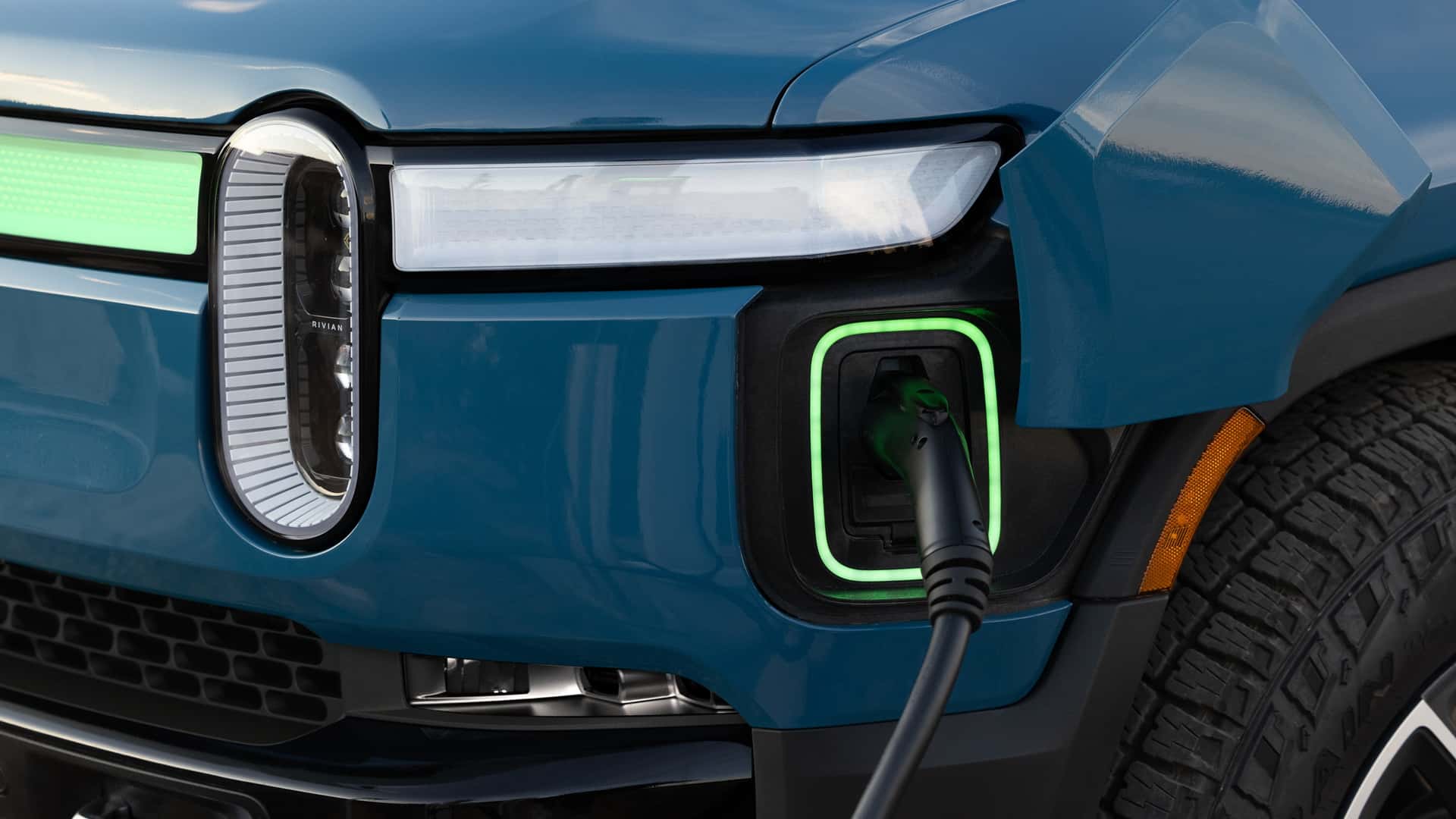
In a significant development for the electric vehicle (EV) landscape, Rivian has officially announced its adoption of Tesla’s North American Charging Standard (NACS) connector. This pivotal decision will grant owners of Rivian’s R1T all-electric pickup and R1S SUV access to Tesla’s formidable Supercharger network across the United States and Canada, dramatically expanding charging options for its growing customer base.
The transition is set to unfold in phases, ensuring a smooth integration for both current and future Rivian vehicle owners. This move underscores a broader industry shift towards a unified charging standard, promising greater convenience and reduced range anxiety for electric vehicle drivers across the continent.
Phased Rollout: Immediate Access and Future Integration
The immediate benefit for existing Rivian R1T and R1S owners will commence in 2024. From this point, they will be able to utilize Tesla’s extensive network of DC fast chargers with the assistance of an adapter. This interim solution provides crucial access to reliable, high-speed charging infrastructure without requiring immediate modifications to their vehicles.
Looking ahead, Rivian is committed to a deeper integration of the NACS connector. Beginning in 2025, all new R1T and R1S models rolling off the production line will be factory-fitted with the NACS port. This forward-looking approach will eliminate the need for an external adapter, offering a seamless plug-and-charge experience that mirrors the native functionality enjoyed by Tesla vehicle owners.
Expanding Reach for Future Rivian Models
Beyond its current R1 platform vehicles, Rivian’s agreement with Tesla extends to its highly anticipated R2 platform. This new generation of vehicles, which will underpin a series of smaller, more affordable EVs, is expected to launch between 2025 and 2026. The integration of the NACS connector into these future models from their inception signals Rivian’s long-term commitment to the standard and its vision for widespread EV accessibility.
This strategic decision is poised to significantly enhance the appeal of Rivian’s forthcoming R2 lineup by ensuring a robust and readily available charging ecosystem from day one. Potential buyers will be assured of unparalleled access to charging infrastructure, a critical factor for mainstream EV adoption.
Leveraging Tesla’s Expansive Supercharger Network
The core advantage of this partnership lies in gaining access to Tesla’s industry-leading Supercharger network. Boasting over 12,000 DC fast charging stalls across North America, the Supercharger network is renowned for its reliability, speed, and user-friendly experience. For Rivian owners, this translates into significantly expanded travel possibilities and reduced concerns about finding available charging stations, particularly on long journeys or in less densely populated areas.
The existing Rivian Adventure Network, while growing, is currently smaller in scale compared to Tesla’s established infrastructure. By tapping into the Supercharger network, Rivian vehicles will enjoy a level of charging convenience that was previously exclusive to Tesla vehicles, addressing a key pain point for EV drivers.
An Industry-Wide Shift Towards NACS
Rivian’s announcement is not an isolated incident but rather the latest in a series of major automakers embracing the NACS standard. Ford was the first to strike an identical deal with Tesla, quickly followed by General Motors. This trend signifies a powerful momentum towards NACS becoming the de facto charging standard in North America, challenging the previously dominant Combined Charging System (CCS) standard.
Beyond automakers, multiple charging providers and technology manufacturers, including prominent players like ChargePoint, ABB, Tritium, and Freewire, have also signaled their support or intention to integrate NACS. This broad industry consensus suggests a future where EV drivers will experience greater interoperability and a more streamlined charging experience, irrespective of their vehicle’s brand.
Rivian’s Perspective on the Collaboration
RJ Scaringe, Founder and CEO of Rivian, articulated the strategic importance of this collaboration. “We’re excited to work with Tesla and to see collaborations like this help advance the world toward carbon neutrality,” Scaringe stated. “The adoption of the North American Charging Standard will enable our existing and future customers to leverage Tesla’s expansive Supercharger network while we continue to build out our Rivian Adventure Network. We look forward to continuing to find new ways to accelerate EV adoption.”
This statement highlights a dual strategy for Rivian: enhancing customer experience through NACS adoption while concurrently expanding its proprietary charging solutions. The emphasis on accelerating EV adoption underscores a shared industry goal to overcome infrastructure challenges that have historically been barriers for potential electric vehicle owners.
Tesla’s Endorsement of NACS Standardization
Tesla also welcomed Rivian’s decision, viewing it as a testament to the growing acceptance of NACS as a universal charging solution. Rebecca Tinucci, Tesla’s Senior Director of Charging Infrastructure, commented, “It’s great to see the industry coming together to adopt the North American Charging Standard. By doing so, we’re collectively ensuring all EV drivers have access to easy to use, reliable charging hardware. We look forward to welcoming Rivian owners to thousands of our Superchargers across North America.”
This sentiment from Tesla’s leadership reinforces the collaborative spirit emerging within the EV sector, aiming to de-fragment the charging ecosystem for the ultimate benefit of consumers. The move is expected to bolster confidence in EV travel and further accelerate the transition away from fossil fuel vehicles.
Future of Rivian’s Proprietary Charging Networks
While the focus is on NACS adoption, questions naturally arise regarding the future of Rivian’s existing charging infrastructure. The company has committed to continuing the expansion of its proprietary Adventure Network of DC fast chargers nationwide. However, it remains unclear what type of charging plug will be fitted to these stalls moving forward, given the NACS integration strategy.
Similarly, the fate of the Rivian Waypoints network of Level 2 chargers, which currently feature J1772 plugs, also awaits clarity. When pressed for details, Rivian responded, “We’ll share details about how the NACS will impact future Rivian Adventure Network and Waypoints sites in the future.” This indicates that the company is actively evaluating its long-term strategy for its own charging networks in light of the NACS transition, with further announcements expected.
Broader Implications for Electric Vehicle Adoption
The convergence around a single charging standard, spearheaded by the NACS, represents a monumental step forward for the electric vehicle industry in North America. By reducing complexity and enhancing accessibility, such standardization directly addresses one of the primary concerns for prospective EV buyers: charging infrastructure availability and compatibility.
This collaborative approach among leading automakers and charging providers is set to catalyze further EV adoption by making the transition to electric mobility more seamless and practical for a wider demographic. The collective commitment to a unified charging experience fosters greater consumer confidence and paves the way for a more robust and interconnected EV ecosystem.
Frequently Asked Questions (FAQ)
What does Rivian’s adoption of NACS mean for current owners?
Current Rivian R1T and R1S owners will gain access to Tesla’s Supercharger network starting in 2024. They will need to use a special adapter provided by Rivian to connect their vehicles to Supercharger stalls, significantly expanding their fast-charging options.
When will new Rivian vehicles come with the NACS connector?
Starting in 2025, all new Rivian R1T and R1S vehicles, along with future models built on the R2 platform, will be manufactured with the NACS connector integrated directly. This means these vehicles will not require an adapter for Supercharger access.
How many Tesla Superchargers will Rivian owners have access to?
Rivian owners will gain access to Tesla’s extensive Supercharger network, which comprises over 12,000 DC fast charging stalls across the United States and Canada. This dramatically increases their available fast-charging locations.
Does this deal affect Rivian’s own Adventure Network?
Rivian has stated it will continue expanding its proprietary Adventure Network of DC fast chargers. However, the company has not yet confirmed what type of plug will be fitted to these new or existing stalls, indicating a potential future transition or hybrid approach.
Which other automakers have adopted the NACS standard?
Rivian joins a growing list of major automakers, including Ford and General Motors, in adopting the NACS standard for their electric vehicles. This trend signals a significant shift towards NACS becoming a dominant charging standard in North America.
Will Rivian’s R2 platform vehicles also use the NACS connector?
Yes, Rivian’s agreement with Tesla specifically includes vehicles based on the upcoming R2 platform. These smaller, more affordable EVs, anticipated between 2025 and 2026, will also be equipped with the NACS connector from their launch.
What are the benefits of NACS standardization for EV drivers?
NACS standardization offers several benefits, including reduced range anxiety due to more charging options, greater convenience from a single plug type, and potentially faster infrastructure build-out. It aims to create a more seamless and user-friendly experience for all EV drivers.