
Key Takeaways
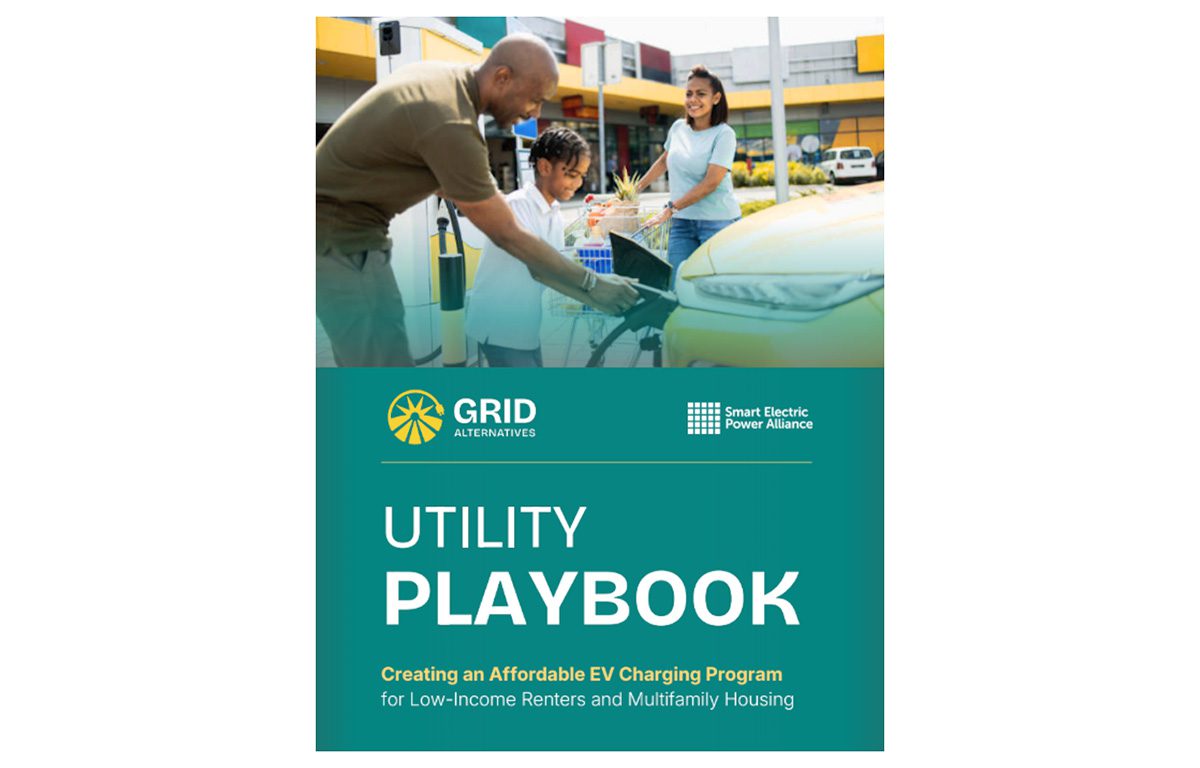
- GRID Alternatives and SEPA have launched the Utility Brief and Utility Playbook to help electric utilities design equitable EV charging programs.
- The resources specifically address the ‘renter’s penalty,’ a significant barrier for low-income drivers and multifamily housing residents who rely on public charging.
- Utilities, with their existing income-qualified frameworks, are uniquely positioned to extend affordable charging rates to public and shared EV infrastructure.
- The Playbook offers practical frameworks and diverse implementation models, informed by pilot projects, to ensure consistent and predictable fueling costs across service territories.
- These initiatives aim to democratize the economic benefits of electric vehicle adoption, ensuring all communities can participate in the transition.
NEW DELHI: In a significant stride towards equitable electric vehicle (EV) adoption, two prominent clean energy advocacy non-profit organizations, GRID Alternatives and the Smart Electric Power Alliance (SEPA), have collaborated to introduce a critical new resource. Their joint effort aims to empower electric utilities in developing and implementing affordable EV charging programs, particularly targeting low-income drivers and residents of multifamily housing.
The newly released Utility Brief and Utility Playbook are meticulously crafted documents designed for key decision-makers and planners within the utility sector. These resources provide a strategic roadmap for overcoming persistent barriers that have historically excluded certain segments of the population from fully participating in the EV transition.
Addressing the ‘Renter’s Penalty’ in EV Adoption
A central focus of the Utility Brief is to illuminate what experts term the “renter’s penalty.” This phenomenon highlights a significant disparity in EV charging costs, where homeowners often benefit from stable, regulated residential electricity prices, while renters and those in multifamily housing are frequently compelled to rely on more expensive public charging infrastructure.
This reliance on public charging often translates into higher per-kilowatt-hour rates, effectively eroding much of the economic advantage associated with driving an electric vehicle. The Utility Brief delves into the complexities of this cost differential, explaining how it creates an affordability gap that disproportionately affects vulnerable communities.
Zach Franklin, Strategic Impact Officer at GRID Alternatives, underscored the urgency of addressing this issue. “Relying on public charging shouldn’t mean paying a premium to drive electric,” Franklin stated. He further added, “The ‘renter’s penalty’ locks millions of multifamily residents and low-income families out of the full economic benefits of the EV transition. This playbook gives utilities a practical roadmap to bridge that gap.” His remarks highlight the imperative to ensure that the shift to electric mobility benefits all sections of society, not just those with home charging access.

A Practical Roadmap for Utilities
The companion document, the Utility Playbook, serves as a comprehensive guide, outlining concrete measures that utilities can adopt to narrow this crucial affordability gap. It transcends theoretical concepts, offering actionable strategies tailored for real-world implementation.
Ashley Lynn Qua, SEPA’s Senior Manager of Transportation Electrification, emphasized the pragmatic approach embedded within the playbook. “Harnessing SEPA’s deep utility-driven insights, this playbook delivers the real-world frameworks needed to build and scale more affordable charging programs,” Qua explained. She further noted the adaptability of the proposed solutions, stating, “Instead of a one-size-fits-all approach, these diverse models show how energy affordability can dynamically follow the driver wherever they plug in.” This flexibility is crucial given the varied regulatory landscapes and demographic profiles across different utility service territories.
Leveraging Utility Expertise for Equitable Access
The development of these resources is rooted in extensive practical experience. GRID Alternatives has actively collaborated with numerous utilities and electricity providers on the ground, designing, implementing, and rigorously evaluating EV charging projects specifically tailored for low-income EV drivers.
The insights garnered from these pilot programs form the bedrock of the Utility Playbook. It guides utilities through a series of recommended steps, from initial program conceptualization to full-scale deployment of affordable public charging solutions for low-income renters and multifamily housing residents. Several of these successful pilot projects are discussed within the playbook, serving as tangible demonstrations of various possible implementation models.
GRID Alternatives highlights a critical advantage that utilities possess: their established infrastructure for managing income-qualified discount frameworks. This pre-existing capacity positions utilities uniquely to seamlessly administer these affordability extensions at public or shared multifamily chargers.
By leveraging these capabilities, utilities can play a pivotal role in ensuring that the cost of charging an EV remains consistent and predictable for every driver within their service territory. This consistency is vital for budgeting and financial planning, particularly for households with limited disposable income, thereby enhancing the overall appeal and accessibility of electric vehicles.
The Broader Impact of Affordable EV Charging Initiatives
The introduction of the Utility Brief and Playbook signals a maturing phase in the broader EV transition, moving beyond simply deploying infrastructure to focusing on equity and accessibility. As governments and industry stakeholders push for accelerated EV adoption to meet climate goals, it becomes increasingly critical to address potential socio-economic divides.
Ensuring access to affordable EV charging is not merely an act of social responsibility; it is a strategic imperative for the long-term success of electric mobility. By mitigating the “renter’s penalty,” these initiatives can unlock a vast demographic of potential EV owners and users, fostering widespread adoption and maximizing the environmental and economic benefits of electric transportation.
The resources are publicly available for download, allowing any interested utility or policymaker to access and utilize these valuable frameworks. This open-source approach further democratizes the knowledge and best practices necessary to build a truly inclusive EV ecosystem.
Source: GRID Alternatives
Frequently Asked Questions About Affordable EV Charging Programs
What is the ‘renter’s penalty’ in EV charging?
The ‘renter’s penalty’ refers to the disparity where homeowners often access cheaper, regulated electricity rates for EV charging at home, while renters and multifamily residents frequently depend on more expensive public charging options. This can diminish the economic benefits of owning an EV for these groups.
Who developed the Utility Brief and Utility Playbook?
The Utility Brief and Utility Playbook were jointly developed by GRID Alternatives and the Smart Electric Power Alliance (SEPA). These two non-profit organizations specialize in clean energy advocacy and have extensive experience in renewable energy and transportation electrification.
What is the primary goal of these new resources?
The primary goal is to assist electric utilities in designing, implementing, and scaling affordable EV charging programs, specifically targeting low-income drivers and residents of multifamily housing. They aim to bridge the affordability gap and ensure equitable access to the economic benefits of electric vehicles.
Why are utilities uniquely positioned to address affordable EV charging?
Utilities are uniquely positioned because they already manage income-qualified discount frameworks and possess the infrastructure and regulatory experience to administer similar affordability extensions for public or shared multifamily chargers. This allows for consistent and predictable fueling costs across their service territories.
What kind of solutions does the Utility Playbook offer?
The Utility Playbook offers practical frameworks and diverse implementation models for building affordable charging programs. It draws on insights from various pilot projects, demonstrating how utilities can create programs that dynamically ensure energy affordability for drivers wherever they plug in, avoiding a one-size-fits-all approach.
Where can interested parties access these documents?
Both the Utility Brief and the Utility Playbook are publicly available for download. This open access ensures that decision-makers and planners within the utility ecosystem can readily obtain and utilize these valuable resources to develop their own equitable EV charging initiatives.