
Key Takeaways
- Asahi Kasei has signed its inaugural licensing agreement in China for its advanced Acetolyte battery electrolyte with HighChem Shanghai.
- This partnership grants HighChem Shanghai a non-exclusive license to produce and sell Acetolyte to Chinese battery manufacturers, leveraging HighChem’s extensive market presence.
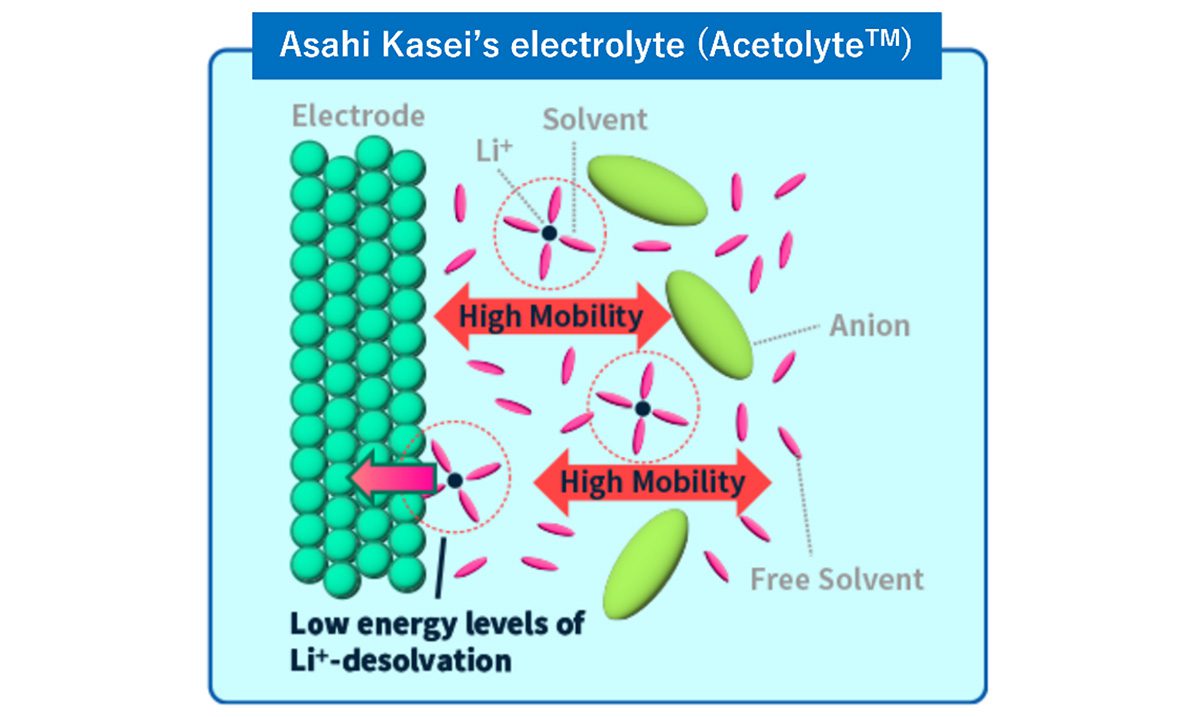
- Acetolyte, an acetonitrile-containing electrolyte, significantly enhances lithium-ion battery performance, particularly in extreme temperatures, improving power output at low temperatures and durability at high temperatures.
- The technology aims to enable smaller, more energy-dense battery packs, potentially reducing manufacturing costs for electric vehicles and energy storage systems.
- This move aligns with Asahi Kasei’s ‘Technology-value Business Creation’ strategy, focusing on monetizing intellectual property through licensing, targeting a cumulative profit contribution of ¥10 billion by 2030.
- The expansion into China follows a successful licensing model previously established in Europe, signaling a strategic global push for Asahi Kasei’s innovative battery solutions.
In a significant move poised to reshape the electric vehicle (EV) and energy storage sectors within China, Japanese chemical giant Asahi Kasei has announced its first licensing agreement in the country for its groundbreaking Acetolyte battery electrolyte. This strategic partnership grants HighChem Shanghai a non-exclusive license, empowering them to produce and distribute this advanced material to domestic battery manufacturers.
The collaboration marks a critical milestone for Asahi Kasei’s global expansion strategy, leveraging HighChem Shanghai’s deep market penetration and robust customer network within China’s rapidly growing battery industry. The aim is to accelerate the adoption of Acetolyte, an acetonitrile-containing electrolyte, across the nation’s burgeoning EV and stationary energy storage markets.

Pioneering Battery Performance with Acetolyte Electrolyte
At the core of this agreement lies Acetolyte, Asahi Kasei’s innovative battery electrolyte solution designed to address persistent performance challenges in conventional lithium-ion cells. The technology distinguishes itself through its exceptional ionic conductivity, a property crucial for enhancing battery power output.
Specifically, Acetolyte significantly improves performance in challenging environmental conditions. It boosts power output at lower temperatures, a critical factor for EVs operating in colder climates, and concurrently enhances durability when batteries are subjected to high temperatures. These advancements are vital for increasing the reliability and lifespan of battery systems.
By enabling the development of smaller battery packs that boast greater energy density, Acetolyte offers a dual advantage. It not only optimizes space and weight within vehicle designs but also holds the potential to reduce overall manufacturing costs, making advanced battery technology more economically viable for mass production.
Strategic Alliance with HighChem Shanghai
The selection of HighChem Shanghai as Asahi Kasei’s partner in China underscores a calculated decision to capitalize on local expertise and market access. HighChem Shanghai, an affiliate of the HighChem group, is renowned for its extensive trading operations within China and its specialized focus on the lithium-ion battery business for nearly two decades.
This deep-seated knowledge and comprehensive business experience within the Chinese market position HighChem Shanghai as an ideal conduit for the widespread adoption of Acetolyte. The partnership is strategically designed to expedite the integration of this cutting-edge electrolyte into local battery manufacturing ecosystems.
Yueyuan Long, General Manager of HighChem Shanghai, articulated the significance of this collaboration, stating, “Having focused on the lithium-ion battery business for nearly 20 years, HighChem has knowledge and extensive business experience in the Chinese market. Acetolyte offers excellent low-temperature performance, and we believe that our collaboration with Asahi Kasei will enable us to maximize the value of this technology and open up new possibilities for the battery industry.” This sentiment highlights the shared vision for leveraging Acetolyte’s unique attributes to drive innovation.
Asahi Kasei’s ‘Technology-Value Business Creation’ Strategy
This licensing agreement is a direct manifestation of Asahi Kasei’s forward-thinking corporate strategy, dubbed ‘Technology-value Business Creation’. Unveiled in April 2025, this medium-term plan represents a strategic pivot for the company, shifting its focus from traditional manufacturing to the monetization of its extensive intellectual property.
Under this innovative framework, Asahi Kasei aims to generate value by licensing its patents, proprietary know-how, critical data, and advanced algorithms. This approach allows the company to extend the reach of its technological innovations without the heavy capital expenditure associated with establishing new manufacturing facilities globally.
The ambitious targets set within this plan include concluding a minimum of 10 new license agreements across fiscal years 2025 to 2027. Furthermore, Asahi Kasei projects a cumulative profit contribution of ¥10 billion or more from these licensing endeavors by approximately 2030. The China agreement with HighChem Shanghai is a crucial step towards realizing these financial and strategic objectives, underscoring the company’s commitment to its asset-light, knowledge-intensive growth model.
Expanding Global Footprint: Following European Success
The expansion into the Chinese market is not an isolated incident but rather a continuation of Asahi Kasei’s successful global licensing strategy. The company has already established a strong foothold in Europe, where it has steadily expanded its Acetolyte business through similar licensing partnerships.
Notably, Charged, a reputable industry publication, previously reported on EAS Batteries’ commercialization of a Lithium Iron Phosphate (LFP) cell that incorporates Asahi Kasei’s Acetolyte. This European precedent demonstrates the practical viability and market acceptance of Acetolyte, providing a compelling blueprint for its adoption in other key regions.
Osamu Matsuzaki, Senior Executive Officer of Asahi Kasei and Head of Corporate R&D, emphasized the broader implications of the China deal. He stated, “We have steadily expanded the Acetolyte business through licensing partnerships in Europe. This first license agreement in China represents a significant advance in the global extension of our technology.” His remarks highlight the company’s methodical approach to scaling its advanced battery solutions worldwide.
China’s Dominance and the Imperative for Advanced Battery Solutions
China stands as the undisputed global leader in the production and adoption of electric vehicles and is rapidly expanding its grid-scale energy storage infrastructure. The country’s robust manufacturing capabilities, coupled with an insatiable demand for high-performance and cost-effective battery solutions, make it a pivotal market for innovations like Acetolyte.
The sheer scale of China’s EV market, which continues to grow at an unprecedented pace, demands constant advancements in battery technology to meet consumer expectations for range, charging speed, and durability in diverse climates. Similarly, the nation’s aggressive decarbonization goals are driving massive investments in renewable energy and the corresponding need for efficient, long-lasting energy storage systems.
In this context, an electrolyte that offers superior low-temperature performance and high-temperature durability directly addresses critical operational challenges faced by battery manufacturers and end-users in China. By enabling higher energy density and potentially lowering costs, Acetolyte can play a significant role in further accelerating the adoption of sustainable transportation and energy solutions across the country.
Implications for the Global Battery Landscape
Asahi Kasei’s strategic entry into the Chinese market through a licensing model carries broad implications for the global battery industry. It showcases a growing trend among technology innovators to leverage intellectual property as a primary driver of growth and market penetration, rather than solely relying on direct manufacturing.
This approach can foster greater collaboration across the supply chain, allowing specialized companies like Asahi Kasei to focus on R&D and core material science, while local partners like HighChem Shanghai handle production and distribution tailored to specific regional demands. Such models could accelerate the decentralization of advanced battery component manufacturing, reducing supply chain vulnerabilities and promoting regional technological self-sufficiency.
Ultimately, the successful deployment of Acetolyte battery electrolyte in China, following its European uptake, could set a new benchmark for battery performance and cost-efficiency. It underscores the continuous innovation required to power the next generation of electric vehicles and energy storage systems, reinforcing the critical role of advanced materials in achieving a sustainable energy future.
Frequently Asked Questions (FAQs)
What is Acetolyte battery electrolyte?
Acetolyte is an advanced, acetonitrile-containing electrolyte developed by Asahi Kasei. It is designed to significantly improve the performance and durability of lithium-ion batteries, particularly by enhancing power output at low temperatures and increasing battery life under high-temperature conditions.
Why is Asahi Kasei licensing Acetolyte to HighChem Shanghai?
Asahi Kasei is licensing Acetolyte to HighChem Shanghai to accelerate its adoption in China’s rapidly expanding electric vehicle and energy storage markets. This partnership leverages HighChem’s extensive customer base and nearly two decades of experience in the Chinese battery industry for effective local manufacturing and distribution.
What are the key benefits of using Acetolyte in batteries?
Acetolyte offers several key benefits, including high ionic conductivity for increased power output at low temperatures and improved durability at high temperatures. These properties address common issues with current lithium-ion cells, potentially enabling smaller, more energy-dense battery packs and reducing manufacturing costs.
What is Asahi Kasei’s ‘Technology-value Business Creation’ strategy?
This strategy, announced in April 2025, represents Asahi Kasei’s shift towards monetizing its intellectual property through licensing rather than direct manufacturing. It aims to create value by licensing patents, know-how, data, and algorithms, targeting significant profit contributions from licensing agreements by around 2030.
Has Acetolyte been licensed in other regions before China?
Yes, Asahi Kasei has successfully licensed Acetolyte in Europe. The technology has been commercially adopted there, with companies like EAS Batteries integrating it into their Lithium Iron Phosphate (LFP) cells, demonstrating its proven application and market readiness prior to the China expansion.
How does this agreement impact China’s EV and energy storage markets?
This agreement is expected to significantly benefit China’s EV and energy storage markets by introducing an advanced battery electrolyte that enhances performance and cost-efficiency. It can support the development of more robust and reliable batteries, accelerating the country’s transition towards sustainable transportation and renewable energy infrastructure.