
Key Takeaways:
- New York City is poised for a significant expansion of its electric vehicle (EV) charging capabilities, addressing a critical need for urban EV owners.
- The initiative includes the rollout of 600 new curbside charging points, specifically targeting high-density residential areas and underserved communities across all five boroughs.
- In addition to curbside solutions, the city is installing 92 new DC fast chargers and 180 Level 2 plugs at municipal parking facilities.
- This strategic enhancement aims to boost EV adoption, support ride-hailing and taxi drivers, and align with New York City’s ambitious climate action goals for net-zero emissions by 2050.
- The expansion will alleviate pressure on the existing public network, which currently operates with exceptionally high utilization rates, demonstrating strong demand for accessible charging.
New York City, one of the world’s most densely populated urban centers, is embarking on a substantial expansion of its electric vehicle (EV) charging infrastructure. This initiative is set to significantly ease the challenges faced by EV owners, particularly those without access to private home charging solutions.

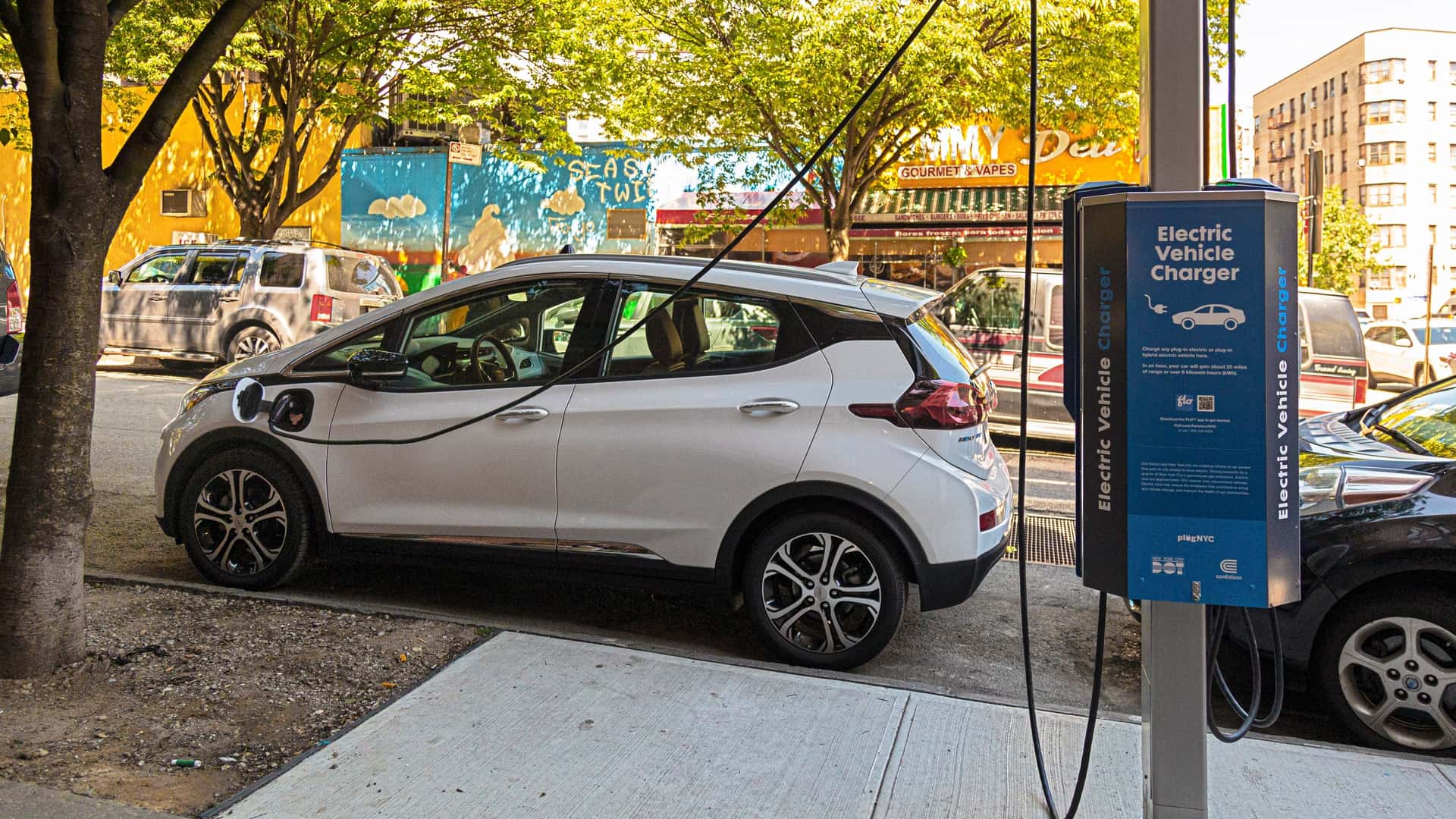
The city’s Department of Transportation (NYC DOT) has announced plans to deploy nearly 1,000 new charging points across its five boroughs over the next three years. This major upgrade will dramatically enhance the city’s public EV charging network, known as PlugNYC.
The current PlugNYC network offers a limited 88 Level 2 charging points, which have consistently experienced high demand. The upcoming expansion is a concerted effort to scale up accessibility and convenience for the growing number of EV drivers in the metropolis.
Addressing Urban EV Charging Challenges
Owning an electric vehicle in a bustling city like New York presents unique logistical hurdles. Unlike suburban or rural areas where home charging is often feasible, many New Yorkers reside in apartments or buildings without dedicated parking, making private charging stations an impractical option.
The absence of readily available public EV charging infrastructure has historically been a significant deterrent for potential EV adopters in the city. Finding an open parking spot alone is a daily challenge, and locating one with an available charger further complicates the situation.
This new initiative directly confronts these urban mobility challenges, aiming to integrate EV charging seamlessly into the city’s fabric. By prioritizing curbside installations, the plan seeks to bring charging solutions directly to where people park and live.
Extensive Curbside Charging Rollout
Central to this expansion is the installation of 600 new curbside chargers. These chargers are designed to replenish an EV battery within a few hours, offering a practical solution for residents who rely on street parking.
The placement of these new curbside charging points will be strategically determined based on several key criteria. These include areas with high residential density, neighborhoods with limited off-street parking options, and locations with a significant concentration of licensed taxi and ride-hailing drivers.
A crucial aspect of this deployment strategy is its focus on equity. The expansion explicitly includes low- and moderate-income communities, areas where private companies have historically made fewer investments in EV charging infrastructure.
Geographic Distribution and Community Engagement
The initial phase of the curbside charger deployment will see installations in a diverse range of neighborhoods across the boroughs. These include Soundview and Unionport in the Bronx; Rego Park, Forest Hills, and Far Rockaway in Queens; Red Hook, Carroll Gardens, and Bedford-Stuyvesant in Brooklyn.
Manhattan’s Upper West Side and Washington Heights are also on the initial list, alongside Stapleton on Staten Island. This broad geographical spread underscores the city’s commitment to making EV charging accessible to a wide cross-section of its population.
Residents are encouraged to provide feedback on proposed charging sites through the NYC DOT’s project portal, fostering community involvement and ensuring that the infrastructure meets local needs effectively.
Innovative Design for Future Mobility
Each new curbside station is designed to be highly functional, featuring at least two stalls, with each stall equipped with two charging points. This configuration provides a total of four charging connectors per site, maximizing the utility of each installation.
Looking ahead, the NYC DOT plans to integrate electrical connections for e-micromobility charging where feasible. This forward-thinking approach anticipates the growing popularity of electric bicycles, scooters, and other small personal electric vehicles.
Potential integrations include electrified bikeshare docks, public e-bike charging cabinets, secure bike parking with charging capabilities, or carbon bike charging for microhubs. This ‘dig once’ strategy aims to future-proof these new locations for evolving urban transportation needs.
Expanding Fast and Level 2 Charging at Municipal Facilities
Beyond the extensive curbside network, New York City is also making substantial investments in other forms of EV charging infrastructure. This includes the installation of 92 new DC fast charging points.
DC fast chargers are capable of rapidly charging EV batteries, making them ideal for quick top-ups or for drivers needing to cover longer distances. These will be complemented by 180 new Level 2 charging points, which offer a balance of charging speed and accessibility.
Both the new DC fast chargers and Level 2 units are being installed at City-owned Municipal Parking Fields and Municipal Parking Garages. Construction is already underway or completed at many of these planned locations, signifying rapid progress in the deployment.
Implementation, Operation, and Equitable Pricing
The NYC DOT will collaborate with the New York Power Authority (NYPA) to facilitate the procurement and installation of the new curbside charge points. This partnership leverages NYPA’s expertise in energy infrastructure development to ensure efficient deployment.
Once installed, the NYC DOT will assume responsibility for the operation and maintenance of the new curbside chargers. The department also oversees the existing chargers that were part of a successful pilot program conducted in collaboration with Con Edison, demonstrating continuity and established operational protocols.
While specific pricing details for the new curbside chargers are yet to be finalized, the city has emphasized its commitment to affordability. The pricing model will also be designed to encourage reasonable turnover, ensuring that charging spots are available to a wider number of users throughout the day.
Drivers will benefit from flexible payment options, including the ability to use multiple mobile applications or simply tap their credit cards to pay. Charges will be based on the kilowatt-hour (kWh) of energy dispensed, promoting a fair and transparent billing system.
A Catalyst for Climate Action and Equity
NYC DOT Commissioner Mike Flynn articulated the broader vision behind this initiative. He stated, “The Mamdani administration is taking aggressive action to address the climate crisis and achieve net-zero greenhouse gas emissions by 2050. For the transportation sector, our main goal is making it easier and more affordable for New Yorkers to walk, bike, and take transit.”
Commissioner Flynn further highlighted the critical role of electric vehicles in this strategy. “But for those who still drive, we need to dramatically accelerate the adoption of electric vehicles. This initiative will make charging more affordable and convenient, helping support the transition from fossil fuel-powered vehicles to electric vehicles and expand charging access to TLC-licensed drivers and residents of low- and moderate-income neighborhoods underserved by private charging options.”
This statement underscores the dual objectives of the project: combating climate change through reduced emissions and promoting social equity by ensuring access to sustainable transportation options for all communities, including those traditionally overlooked by private sector investments.
Responding to Overwhelming Demand
The urgency of this expansion is highlighted by the performance of New York City’s existing EV charging infrastructure. The current network of 88 public charging points boasts the highest utilization rate of any public curbside network in the United States, according to the NYC DOT.
These charging points are actively delivering energy more than 85% of the time they are occupied. Furthermore, the occupancy rate of these dedicated EV parking spots ranges between a remarkable 70% and 99%, indicating consistent and high demand. These parking spots are strictly reserved for electric vehicles actively plugged into a charger, ensuring their purpose is maintained.
The overwhelming demand for existing EV charging infrastructure underscores the critical need for this significant expansion. By increasing the number of accessible and affordable charging options, New York City aims to remove a major barrier to EV ownership and accelerate its transition towards a more sustainable and electrified transportation future.
Frequently Asked Questions (FAQ)
What types of new EV chargers are being installed in New York City?
New York City is installing 600 new curbside Level 2 chargers, 92 new DC fast charging points, and 180 additional Level 2 charging points. The curbside chargers are designed for convenient, multi-hour charging for residents, while fast chargers offer quicker power delivery, primarily for municipal parking facilities.
Where will the new curbside EV chargers be located?
Curbside chargers will be installed across all five boroughs, prioritizing areas with high residential density, limited off-street parking, and concentrations of ride-hailing drivers. Initial locations include Soundview, Unionport, Rego Park, Forest Hills, Far Rockaway, Red Hook, Carroll Gardens, Bedford-Stuyvesant, the Upper West Side, Washington Heights, and Stapleton.
Who is responsible for installing and maintaining these new charging points?
The NYC DOT will contract with the New York Power Authority for the procurement and installation of the new curbside chargers. The NYC DOT will then be responsible for operating and maintaining these new units, as well as the existing chargers from a pilot program with Con Edison.
How will drivers pay for charging services, and what will be the pricing structure?
Pricing for the new curbside chargers is still being determined, with a focus on affordability and encouraging reasonable turnover. Drivers will have flexible payment options, including using multiple mobile applications or tapping credit cards. Payment will be calculated per kilowatt-hour of energy dispensed.
How will this EV charging expansion support New York City’s climate goals?
This initiative is a critical component of the Mamdani administration’s aggressive climate action plan, aiming for net-zero greenhouse gas emissions by 2050. By making EV charging more accessible and affordable, the city seeks to dramatically accelerate the adoption of electric vehicles, shifting away from fossil fuel-powered transportation.
Will the new charging stations support e-micromobility devices like e-bikes?
Yes, the NYC DOT plans to future-proof the new curbside charging locations by integrating electrical connections for e-micromobility charging where possible. This could include provisions for electrified bikeshare docks, public e-bike charging cabinets, or secure bike parking with charging capabilities.