
Key Takeaways
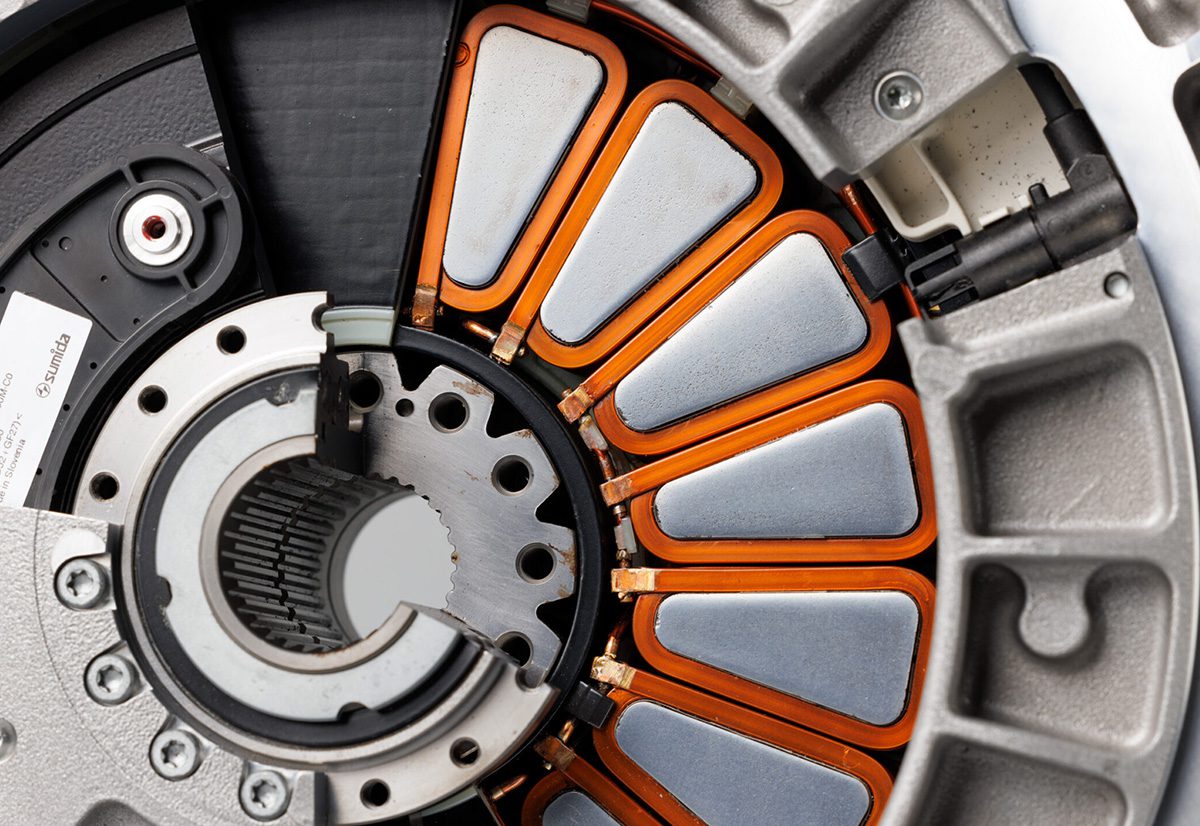
- YASA, a leading motor technology company, is developing two new axial flux motor designs aimed at significantly reducing or eliminating the use of rare-earth magnets.
- The initiative, part of the UK government-funded Project Resilience, is supported by a grant from the DRIVE35 Demonstrate competition.
- These innovative designs prioritize maintaining high power density and performance without increasing motor mass or package size, crucial for the advancement of battery-electric and hybrid vehicles.
- A key aspect of YASA’s strategy is a common stator technology that enables a modular motor architecture, allowing for flexible rotor selections based on specific vehicle program requirements.
- The project directly addresses the geopolitical and environmental challenges associated with rare-earth magnet supply chains, which are geographically concentrated and carbon-intensive.
- Project Resilience is a component of the UK government’s broader Advanced Manufacturing Sector Plan, allocating £4 billion for automotive R&D, scale-up, and transformation until 2035.
In a significant stride towards sustainable automotive manufacturing, YASA, a company at the forefront of electric motor technology, has announced plans to develop two innovative axial flux motor designs. These designs are engineered to minimize or entirely remove the need for rare-earth magnets, a critical step for the future of EV engineering and the broader electric vehicle industry.
The ambitious project, christened “Project Resilience,” is backed by a substantial grant from the UK government. This funding is part of the DRIVE35 Demonstrate competition, a strategic initiative aimed at fostering innovation within the nation’s advanced manufacturing sector. The development work will be executed entirely from YASA’s engineering and development facilities in the UK, underscoring the country’s commitment to leading in electric vehicle technology.
Addressing Rare Earth Dependency in EV Engineering
The global electric vehicle market’s rapid expansion has intensified focus on the materials critical for their components. Rare-earth permanent magnets are currently indispensable for high-performance electric motors, particularly in battery-electric and hybrid vehicles, due to their ability to deliver high power density within compact packages.
However, the reliance on these materials presents significant challenges. YASA’s new development pathways aim to circumvent these issues by focusing on designs that are either heavy-rare-earth-free or entirely rare-earth-free. The goal is to maintain the critical attributes of power density and performance without any increase in motor mass or overall package dimensions.
This dual approach reflects a nuanced understanding of market needs. One design route targets high-performance applications, aiming for heavy-rare-earth-free permanent-magnet solutions. This strategy seeks to retain competitive performance while mitigating some of the most critical supply chain vulnerabilities.
Concurrently, YASA will pursue a fully rare-earth-free axial flux technology. This second pathway is designed for vehicle applications with diverse performance, cost, and manufacturing requirements, offering a broader spectrum of solutions for the evolving EV engineering landscape.
A Modular Architecture for Broad Applications
A fundamental aspect of YASA’s strategy revolves around a common stator technology that will underpin both development routes. This shared component is pivotal, enabling the creation of a modular motor architecture where different rotor technologies can be integrated based on the specific demands of each vehicle program.
This modularity offers several distinct advantages. It allows YASA to efficiently transfer engineering, design, development, and manufacturing knowledge across both pathways, streamlining the innovation process. Furthermore, this approach significantly broadens the range of applications that YASA’s axial flux technology can address, from high-performance sports cars to more cost-sensitive mass-market electric vehicles.
The ability to select different rotor technologies while leveraging a common stator foundation enhances flexibility for automotive manufacturers. It provides tailored solutions that balance performance, cost, and sustainability goals, driving forward advancements in EV engineering.
Mitigating Supply Chain Risks and Environmental Impact
The impetus behind Project Resilience extends beyond technological innovation; it addresses profound geopolitical and environmental concerns. The supply chains for rare-earth permanent magnets are notoriously concentrated geographically, primarily in a few nations.
This geographical concentration exposes automotive manufacturers and their suppliers to considerable risks, including potential export restrictions, significant price volatility, and supply chain disruptions. Such vulnerabilities can severely impact production schedules and increase costs, thereby hindering the widespread adoption of electric vehicles.
Moreover, heavy rare earths, commonly utilized to enhance the high-temperature resilience of permanent magnets in electric motors, present significant environmental challenges. Their extraction and processing are often carbon-intensive and can have substantial ecological footprints.
By developing viable alternatives, YASA aims to reduce the automotive industry’s dependence on these volatile and environmentally costly materials. This initiative directly supports the industry’s broader goals of creating more resilient, sustainable, and ethically sourced supply chains for future EV engineering.
Government’s Role in Automotive Innovation and EV Engineering
Project Resilience is a testament to the UK government’s strategic investment in advanced manufacturing and sustainable technologies. The DRIVE35 program, under which this grant is awarded, is delivered by the Department for Business, Innovation, Science and Trade, in collaboration with the Advanced Propulsion Centre UK (APC) and Innovate UK.
This program forms a crucial part of the UK government’s overarching Advanced Manufacturing Sector Plan. This ambitious plan earmarks £4 billion in grant funding available until 2035, specifically targeted at automotive research and development (R&D), scale-up activities, and industrial transformation.
Project Resilience is one of ten ‘Demonstrate’ projects recently announced, collectively sharing £9 million in government funding. The Advanced Propulsion Centre (APC) highlights that the combined government and industry investment across these ten projects surpasses £18 million, signaling a strong collaborative effort to advance automotive technology.
Projects funded through the Demonstrate competition are mandated to build a product or process demonstrator within a stringent 12-month timeframe. This requirement ensures rapid progress and tangible outcomes, accelerating the development of innovative solutions in EV engineering. While the specific size of YASA’s individual award was not disclosed, its inclusion in such a competitive program underscores the project’s strategic importance and potential impact.
Expert Perspective on Development Strategy
Explaining the strategic rationale behind YASA’s dual development approach, Tom Hillman, YASA’s Head of Motor Simulation, articulated the company’s vision.
“Project Resilience is about creating credible alternatives without losing sight of what vehicle manufacturers need from an electric motor,” Hillman stated. “Different applications require different balances of performance, efficiency, packaging, cost and production volume, which is why we are developing two complementary technology routes rather than pursuing a single universal solution.”
This statement emphasizes the practical considerations that guide YASA’s innovation. Recognizing the diverse requirements across the automotive sector, from luxury performance vehicles to commercial fleets, necessitates a flexible and adaptable technological framework. This tailored approach is crucial for widespread adoption and successful integration of new motor technologies into various vehicle platforms.
The Future of Sustainable EV Engineering
YASA’s Project Resilience represents a pivotal moment in the evolution of EV engineering. By actively pursuing rare-earth-free motor designs, the company is not only pushing the boundaries of electric motor technology but also contributing significantly to the sustainability and resilience of the entire automotive supply chain.
The success of these projects holds the promise of reducing the industry’s environmental footprint, mitigating geopolitical risks, and ultimately, making electric vehicles more accessible and cost-effective for consumers worldwide. As the global transition to electric mobility accelerates, innovations like those pioneered by YASA will be crucial in shaping a more sustainable and robust future for transportation.
The natural integration of advanced materials science with strategic government funding and industry expertise highlights a collaborative ecosystem driving impactful change in sustainable manufacturing and EV engineering.
Frequently Asked Questions (FAQ)
What is Project Resilience?
Project Resilience is a UK government-funded program under which YASA is developing two axial flux motor designs to reduce or eliminate the use of rare-earth magnets. It aims to create sustainable alternatives for electric vehicle motors.
Why is YASA focusing on rare-earth-free motors?
YASA is focusing on rare-earth-free motors to address supply chain vulnerabilities, price volatility, and the environmental impact associated with the geographical concentration and carbon-intensive extraction of rare-earth materials.
What is an axial flux motor?
An axial flux motor is a type of electric motor where the magnetic flux travels parallel to the axis of rotation, offering high power density and efficiency in a compact form factor, making it suitable for electric vehicle applications.
How many motor designs is YASA developing under this project?
YASA is developing two distinct axial flux motor designs: one that is heavy-rare-earth-free for high-performance vehicles, and another that is entirely rare-earth-free for applications with different performance and cost requirements.
What is the role of the UK government in Project Resilience?
The UK government, through its DRIVE35 Demonstrate competition and the Advanced Manufacturing Sector Plan, provides grant funding and strategic support for projects like Project Resilience, fostering innovation in automotive R&D and manufacturing.
What are the benefits of YASA’s modular motor architecture?
The modular architecture, built around a common stator technology, allows for flexible rotor selections to suit various vehicle applications. It also streamlines engineering, design, and manufacturing processes, broadening the technology’s applicability.
How much funding did Project Resilience receive?
Project Resilience is one of 10 Demonstrate projects sharing £9 million of government funding. The total combined government and industry investment across these 10 projects exceeds £18 million, although YASA’s specific award was not disclosed.