
Key Takeaways
- LG Energy Solution’s $2 billion Lansing battery gigafactory has strategically shifted focus from primarily EV battery production to include a significant capacity for Energy Storage Systems (ESS).
- This pivot comes after General Motors sold its stake in the joint venture, influenced by slower-than-expected EV sales growth and changes in federal tax credits.
- The facility now produces Lithium Iron Phosphate (LFP) pouch cells for major clients like Tesla’s energy storage systems and Michigan’s DTE Energy, demonstrating LGES’s commitment to U.S.-based LFP production.
- Despite the ESS pivot, the battery gigafactory continues to produce Nickel Manganese Cobalt (NMC) cells for upcoming electric vehicles, including the Toyota Highlander, ensuring a dual-market approach.
- LGES is actively researching next-generation battery chemistries such as Lithium-Manganese-Rich (LMR) cells, 46-series lithium-ion cells, and sodium-ion technology, while also monitoring solid-state battery development, aiming for a diverse technological portfolio.
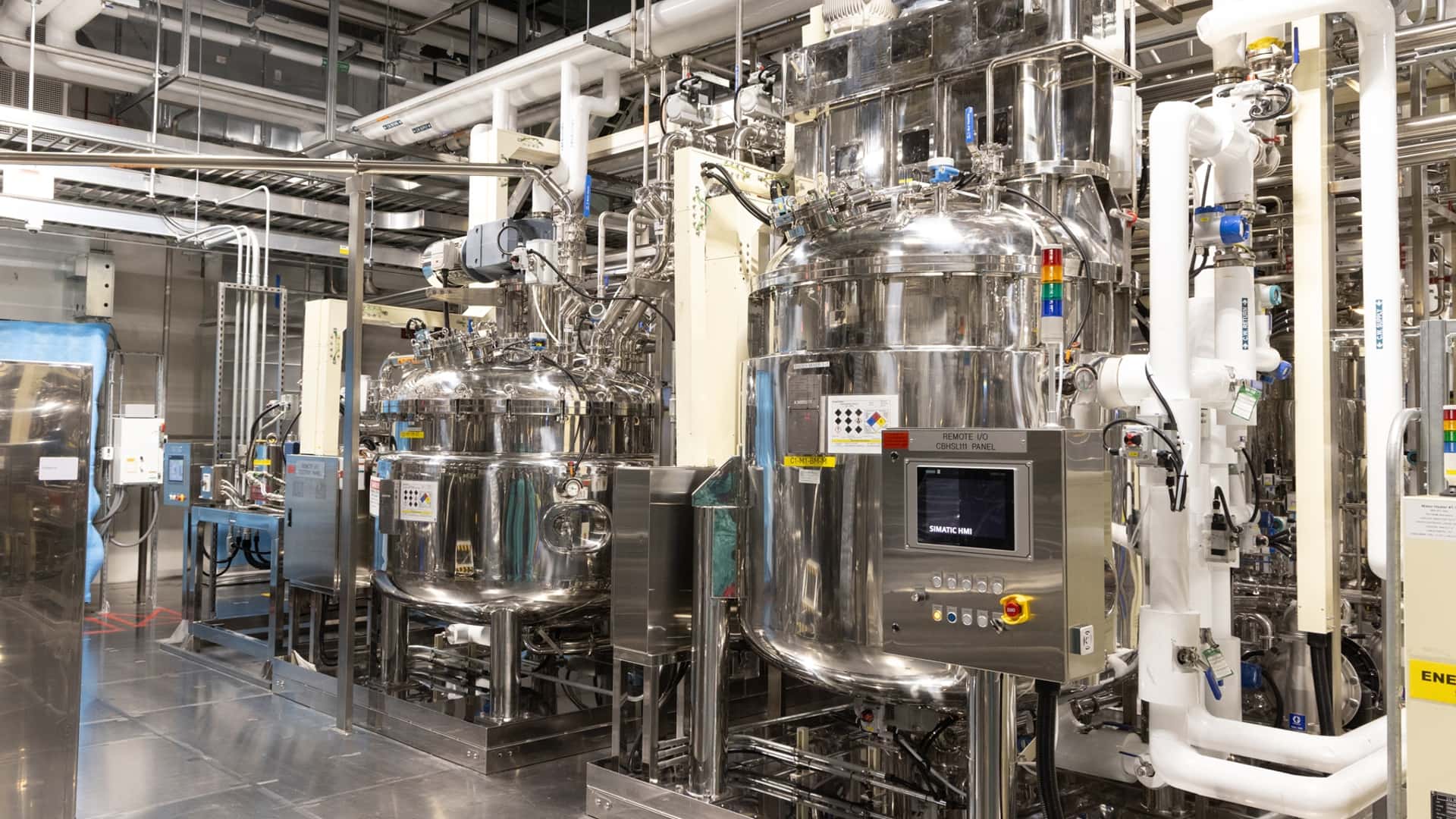
LANSING, Michigan – The sprawling LG Energy Solution (LGES) battery gigafactory in Lansing, Michigan, a monumental $2-billion-plus investment, is navigating a dynamic shift in the automotive and energy sectors. Spanning half a mile long and a quarter mile wide, the 2.8-million-square-foot facility, characterized by its clinical, automated environment where robots and automated guided vehicles (AGVs) meticulously manage production under human supervision, is recalibrating its strategic output.
Originally conceived as an Ultium Cells joint venture with General Motors for electric vehicle (EV) battery production, the plant’s trajectory altered last year. Following shifts in federal EV tax credits and a deceleration in EV sales growth, General Motors divested its stake, leaving LGES as the sole proprietor. This restructuring mirrors broader industry adjustments, including similar realignments involving Ford and SK On, GM and Samsung SDI, and Stellantis and LGES, all grappling with regulatory fluidity in the United States that has impacted support for green initiatives.
Strategic Pivot Towards Energy Storage Systems
Amidst these industry shifts, a burgeoning demand for battery energy storage systems (ESS) from AI data centers and utility providers is breathing new life into the Lansing battery gigafactory. This strategic pivot is cushioning the impact of the more moderate growth in EV demand, solidifying the plant’s operational viability. Significantly, LGES stands as one of the pioneering companies to establish Lithium Iron Phosphate (LFP) battery production within the U.S. – a chemistry initially developed in the country in the 1990s but largely commercialized by China.
While the EV battery segment faces current market fluctuations, LGES anticipates its North American ESS division, LGES Vertech, to achieve profitability by the fourth quarter of the current year. This optimistic forecast is predominantly driven by the exponential expansion of AI data centers and the increasing integration of ESS batteries across national power grids and large-scale renewable energy projects.
Powering Tesla and Toyota: Diverse Production at the Core
The Lansing plant has commenced production of LFP pouch cells specifically for Tesla’s advanced energy storage systems, a key component of a substantial $4.3 billion supply agreement finalized last year. In addition to powering leading technology companies, the facility will also furnish ESS batteries to regional utility giants such as Michigan’s DTE Energy, further diversifying its market reach and impact.
Despite the heightened focus on ESS, LGES remains steadfast in its commitment to EV battery manufacturing. The company has confirmed ongoing production of Nickel Manganese Cobalt (NMC) cells at the Lansing battery gigafactory. These high-performance cells are slated to power the forthcoming all-electric Toyota Highlander, with potential future supply agreements for other prominent automakers, including mechanically related vehicles like the three-row Subaru Getaway and the premium Lexus TZ.
Navigating Production Complexities for ESS
Converting a large-scale facility from primary EV battery production to encompass significant ESS manufacturing is a complex undertaking, as highlighted by LGES leadership. Robert Lee, the head of LGES North America, articulated the intricate nature of this transition during a recent media roundtable at the plant.
“It’s not easy,” Lee stated. “LFP coating is thicker and then there are slight differences in the manufacturing process, so you do need to put in some new equipment and validate them in order to build batteries.” This requires meticulous engineering adjustments and rigorous validation processes to ensure the quality and performance of the diverse battery chemistries.
However, LGES firmly believes the investment in these adaptations is justified by the surging demand for energy storage solutions. Citing research from Wood Mackenzie, LGES revealed that the U.S. added approximately 25 gigawatt-hours (GWh) of energy storage capacity over the past decade. In a remarkable acceleration, the country has added 100 GWh of ESS capacity this year alone. The average project size has dramatically increased from approximately 10 megawatt-hours (MWh) to 1,000 MWh, signifying a trend towards larger, safer, more cost-effective, and more rapidly integrated energy storage solutions across power grids, renewable energy installations, and critical AI data centers.
Lee further underscored the national imperative for infrastructure development. “There’s a lot of great infrastructure upgrades that we need in this country,” he remarked. “20 years ago, we had something like twice the power generation of China. Today, they have two and a half times more power generation than the U.S. As a nation, we have to invest in our grid and energy infrastructure.”
Inside the Lansing Battery Gigafactory: A Glimpse into Manufacturing
A tour of the Lansing battery gigafactory offers a stark contrast to the conventional industrial landscape of a car factory. Absent are the noisy clatter of metal and the bustling assembly lines typically associated with engine and body shell production. Instead, the facility operates with remarkable quietude, powered by advanced automation. The atmosphere is meticulously controlled, devoid of dust and odors, underscoring the extreme sensitivity of battery components to contamination.
Strict protocols govern entry: visitors must don full white gowns, protective glasses, hairnets, and shoe covers. Multiple rounds of high-pressure air decontamination and shoe cover changes between different sections of the plant emphasize the stringent cleanliness standards. Moreover, camera lenses on all personal devices are sealed with stickers, and LGES executives, some flown in from the company’s Korean headquarters, closely monitor journalists to safeguard sensitive intellectual property (IP) during the production line walkthrough.
The tour provided insights into key LFP battery manufacturing processes. These include **coating**, where the cathode active material – a wet, cake-batter-like slurry – is precisely applied to metal sheets; **calendering** (roll pressing), which compresses these layers to achieve the exact desired thickness; and **drying**, an essential step to eliminate moisture. Subsequently, **formation** involves the initial charging and discharging cycles that activate the cells, followed by **degassing**, which expels gases accumulated during the formation process. While LFP and NMC batteries share fundamental cell manufacturing principles, their distinct cathode materials necessitate specific adjustments in manufacturing parameters, equipment, and quality control measures, though the overall production line architecture remains largely consistent. The differences become more pronounced upstream in their respective supply chains, given LFP’s reliance on iron and phosphorus, contrasting with NMC’s use of nickel, manganese, and cobalt.
The finished LFP pouch cells emerge as slim, elongated, rectangular units. These are then carefully stacked into containers and transported to LGES’s other substantial battery facility in Holland, Michigan, where they undergo assembly into complete ESS systems. While the LFP cells themselves are entirely produced in the U.S., engineers acknowledge that crucial raw materials are sourced internationally, including from countries like Indonesia and China.
Exploring Future Battery Chemistries and Technologies
Beyond current production, LGES is intensely focused on pioneering next-generation battery technologies. The company is actively collaborating with General Motors to advance Lithium-Manganese-Rich (LMR) batteries. These innovative cells are designed to significantly reduce the reliance on expensive and environmentally intensive nickel and cobalt, instead emphasizing manganese, which can be processed domestically in the U.S. General Motors has indicated that LMR batteries will power its full-size trucks and SUVs from 2028 onwards, promising an impressive range exceeding 400 miles at a cost comparable to more affordable LFP batteries.
LGES is also exploring other advanced lithium-ion technologies and sodium-ion cells, while closely monitoring the progress of solid-state battery development. The company is preparing to produce its new 46-series lithium-ion cells for EVs at its forthcoming battery gigafactory in Arizona. These larger-format cells are deemed better suited for next-generation EVs featuring structural battery packs, with ongoing advancements aiming for ultra-fast 10-minute charging times and enhanced pack safety.
“We just want to have all those options open,” stated Devon Wilson, Vice President of Sales and Marketing at LGES Vertech. “We continue to look at other chemistries [and] sodium that’s a big one for us,” he added, confirming that the company is developing a pilot program for sodium-ion batteries specifically for energy storage systems. While Chinese battery giant CATL has spearheaded the commercialization of sodium-ion batteries, the U.S. is rapidly catching up, with General Motors also announcing plans to deploy sodium-ion ESS batteries by the end of the decade.
Regarding the widespread adoption of solid-state batteries for EVs, Robert Lee highlighted ongoing bottlenecks. “The problem with solid state is large-scale production,” Lee explained. “It has very good energy density, so if you’re making a small form factor, you should be able to get there. If you’re making very large form factors, most companies are struggling.” He further predicted that EVs would not be the initial application for mass-market solid-state batteries. “You will see that in your smartphones probably a decade before you would see it in EVs,” he cautioned. “I would expect specialized applications first before we’re able to contemplate that as fit for EVs or even ESS.”
The evolution of the LGES Lansing battery gigafactory underscores a compelling irony: while billions of dollars in clean energy projects, including several battery plants, faced cancellations in recent years, established battery manufacturers have demonstrated remarkable adaptability. Their pivot towards ESS batteries for solar farms, AI data centers, and the broader power grid is now fundamentally contributing to the very infrastructure that is poised to fuel America’s next wave of electrification.
Frequently Asked Questions (FAQ)
What is the primary function of the LGES Lansing battery gigafactory?
The LGES Lansing battery gigafactory initially focused on EV battery production through a joint venture with General Motors. It has now strategically diversified to include significant manufacturing of Energy Storage Systems (ESS) batteries for utilities and AI data centers, while also continuing to produce EV batteries for select automakers.
Why did LGES shift its production focus from solely EV batteries?
The shift was influenced by slower-than-expected EV sales growth, changes in federal EV tax credits, and General Motors selling its stake in the original joint venture. Concurrently, there was a significant surge in demand for ESS batteries from AI data centers and utility providers, prompting a strategic pivot to meet these market needs.
What types of batteries are currently produced at the Lansing facility?
The Lansing plant is currently producing Lithium Iron Phosphate (LFP) pouch cells for energy storage applications, notably supplying Tesla’s ESS and Michigan’s DTE Energy. It also manufactures Nickel Manganese Cobalt (NMC) cells, intended for electric vehicle applications, including the upcoming all-electric Toyota Highlander.
What are LGES’s plans for future battery technologies?
LGES is actively developing Lithium-Manganese-Rich (LMR) batteries with General Motors, aimed at reducing reliance on expensive materials. They are also preparing to produce 46-series lithium-ion cells for EVs and exploring sodium-ion batteries for ESS applications. Research into solid-state batteries is ongoing, though mass-market EV application is considered a decade away.
What makes the Lansing battery gigafactory unique in its operations?
The gigafactory operates in a highly automated and clinical environment, with robots and AGVs performing most tasks. It adheres to stringent contamination control protocols, requiring specialized attire and multiple decontamination steps for visitors, ensuring the purity essential for battery manufacturing.
How does LFP battery production in the U.S. contribute to energy independence?
Bringing LFP battery production to the U.S., where the chemistry was originally developed, reduces reliance on foreign supply chains, particularly from China, which currently dominates the LFP market. This domestic production enhances energy independence and strengthens the national manufacturing base for critical energy technologies.
What challenges did LGES face in converting the plant for ESS production?
Robert Lee, head of LGES North America, noted that converting the plant was not simple due to differences in manufacturing processes. LFP coating is thicker, requiring new equipment and validation processes. Despite these complexities, the company deemed the investment worthwhile given the rapidly growing demand for energy storage solutions.
What role do ESS batteries play in supporting the U.S. power grid and renewable energy?
ESS batteries are crucial for stabilizing the U.S. power grid, integrating intermittent renewable energy sources like solar and wind, and providing reliable power for burgeoning AI data centers. They help manage peak demand, improve grid resilience, and facilitate a cleaner energy transition by storing excess renewable energy for later use.