
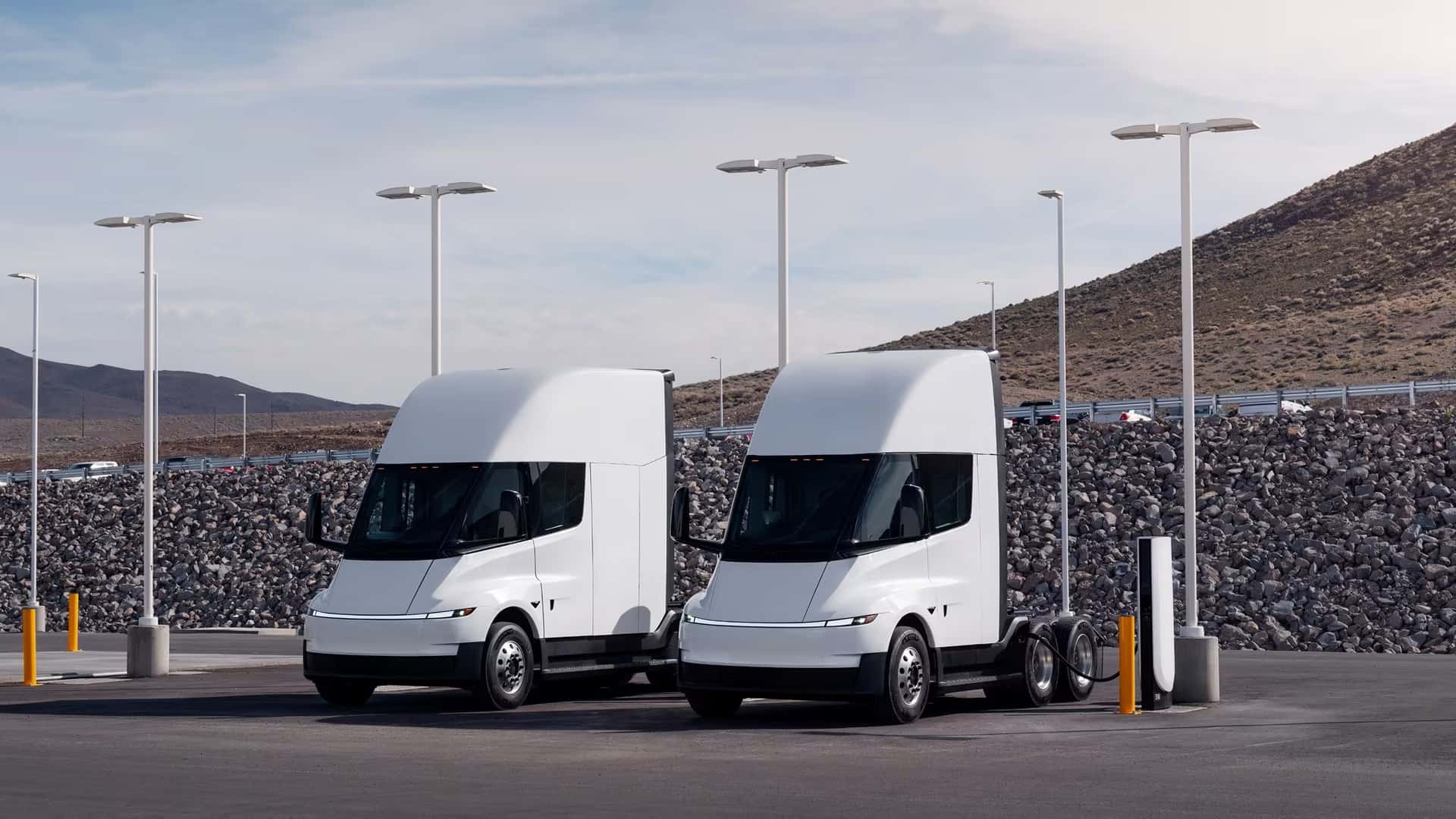
Key Takeaways
- Tesla is initiating a significant rollout of over 100 megawatt-capable Megachargers across 21 strategic stations in Europe.
- This robust charging infrastructure is crucial for the impending European launch of the Tesla Semi electric truck, with first deliveries anticipated next year.
- Initial deployments are planned for Germany, France, the UK, Sweden, Belgium, the Netherlands, and Luxembourg.
- The Megachargers boast up to 1.2 megawatts of power, enabling a 60% charge for the Semi in approximately 30 minutes.
- Tesla will also offer both Megachargers (€163,000 per bundle) and Basechargers (€17,000 each, min. two units) for purchase by private logistics operators and fleet owners, enhancing flexibility for commercial transport.
Tesla Powers European Semi Launch with Extensive Megacharger Network
Tesla is poised to significantly accelerate the transition to electric heavy-duty vehicles in Europe with the strategic deployment of its advanced Megacharger infrastructure. This critical development directly underpins the much-anticipated launch of the Tesla Semi electric truck on the continent, with initial deliveries slated for the coming year.
The success of zero-emission freight transportation hinges not only on innovative vehicle technology but also on a robust and readily available charging network. Recognizing this imperative, Tesla has meticulously mapped out the initial locations for its high-powered charging stations, ensuring a foundational infrastructure for its battery-powered tractor.

Strategic Rollout Across Key European Nations
Details revealed during this year’s IAA Transportation fair in Hanover, Germany, by Dan Priestley, Tesla’s head of Semi development, highlight an ambitious plan. The initial phase of this Tesla’s European Megacharger rollout will see the installation of over 100 Megachargers across 21 dedicated stations.
While a precise timeline for the completion of this initial deployment was not disclosed, the commitment signals a firm intent to support the Semi’s entry into the European commercial transport sector. This move positions Tesla to play a pivotal role in the region’s ongoing fleet decarbonization efforts.
The strategic selection of countries for the initial Megacharger deployment includes major economic powerhouses and key logistical corridors. Germany, France, the United Kingdom, and Sweden are set to receive the first Tesla-branded megawatt chargers.

Additionally, the Benelux region—comprising Belgium, the Netherlands, and Luxembourg—will also be among the first to benefit. These nations represent vital hubs for intra-European trade and road freight, making them logical starting points for a high-capacity electric truck network.
Unpacking Megacharger Capabilities: Speed and Power
The Tesla Megachargers are engineered to meet the demanding energy requirements of electric heavy-duty vehicles. Each unit is capable of delivering an impressive output of up to 1.2 megawatts, providing unparalleled charging speeds for commercial trucks.
This immense power allows the Tesla Semi’s large battery pack to be replenished to a substantial 60% state of charge in approximately just 30 minutes. Such rapid charging is paramount for maintaining operational efficiency and minimizing downtime in the fast-paced logistics industry.
The technical specifications for the European Megachargers include a 1,000-volt power cabinet, feeding two charging stalls. Each stall is designed to deliver up to 1,500 amperes to a compatible electric vehicle, ensuring maximum energy transfer rates to support long-haul journeys.
Connectivity Standards: MCS 3.2 and Adapter Solutions
Both the Tesla Semi and the dedicated Megacharger units are equipped with the Megawatt Charging System (MCS) 3.2 connector. The MCS is an emerging global standard for high-power charging of medium and heavy-duty electric vehicles, designed to handle the massive energy flows required by large battery packs.
A notable aspect of this proprietary connector is its initial exclusivity to Tesla’s ecosystem, meaning that other manufacturers’ power-hungry electric trucks will not be immediately compatible with Tesla’s Megachargers in the region. This approach, while offering optimized integration for the Semi, highlights a potential future interoperability challenge within the broader electric truck market.
However, Tesla has proactively addressed broader charging network access by confirming that it will supply CCS adapters to Semi customers. This provision will enable Tesla Semi operators to recharge their vehicles at existing CCS2 stalls found across the European continent, offering valuable flexibility and ensuring greater route coverage.
Empowering Logistics: Private Charging Solutions
Beyond establishing a public Tesla’s European Megacharger rollout, the company is also making its advanced charging dispensers available for direct purchase. This strategic move targets logistics hubs, freight depots, and large fleet operators who require dedicated, on-site charging capabilities to manage their electric truck fleets efficiently.
The availability of these private charging solutions underscores Tesla’s commitment to facilitating a comprehensive electric vehicle ecosystem for the commercial sector. By offering both public and private options, Tesla aims to remove a significant barrier to the widespread adoption of electric trucks.
Order books for both the high-power Megacharger and the lower-powered Basecharger are already open in Europe, with the first deliveries for private entities scheduled for the middle of next year. This parallel strategy of building out public and private infrastructure simultaneous will be key for Tesla’s European Megacharger rollout.
The Megacharger bundle, which includes a power cabinet and two stalls, is priced at €163,000. This investment allows companies to install cutting-edge charging technology capable of rapidly energizing multiple Semis, crucial for tight operational schedules and high utilization rates.
For operations with longer dwell times, Tesla offers the 120-kW all-in-one Basecharger, priced at €17,000, though a mandatory two-unit order applies. The Basecharger integrates all necessary components into a single housing, streamlining installation and maintenance for fleet operators.
With a DC output of 120 kW and an AC output of 125 kW, the Basecharger provides a robust charging solution for overnight or extended charging periods. Tesla estimates that it can increase the Semi’s state of charge to 80% in approximately four hours, making it an ideal fit for depots where trucks are parked for longer durations.
The Future of European Electric Freight
This significant infrastructure investment by Tesla marks a pivotal moment for the European electric truck market. The development of a reliable, high-speed charging network is not merely an amenity but a fundamental requirement for the viability and scalability of electric heavy-duty transport.
As regulatory pressures for decarbonization intensify across the European Union, the introduction of compelling electric truck models like the Tesla Semi, backed by dedicated charging infrastructure, will be critical. This holistic approach by Tesla aims to mitigate range anxiety and operational concerns for fleet operators considering the switch to zero-emission logistics.
The competitive landscape for electric heavy-duty vehicles is rapidly evolving, with various manufacturers introducing their own solutions. Tesla’s bold step in deploying this expansive charging network prior to widespread vehicle deliveries positions it as a frontrunner in establishing a comprehensive ecosystem, fostering greater confidence in the future of sustainable freight.
FAQ Section
What is the Tesla Megacharger rollout in Europe?
The Tesla Megacharger rollout in Europe involves installing over 100 megawatt-capable chargers at 21 stations across several countries. This initiative is designed to provide robust charging infrastructure for the upcoming launch and operation of the Tesla Semi electric truck, supporting the transition to zero-emission commercial transport.
Which European countries will get the first Megachargers?
The initial phase of Tesla’s European Megacharger rollout will target key regions. Germany, France, the United Kingdom, and Sweden are designated for the first installations. Additionally, the Benelux countries—Belgium, the Netherlands, and Luxembourg—will also receive these high-powered charging stations.
How fast can a Tesla Semi charge with a Megacharger?
Tesla’s Megachargers are engineered for rapid charging of heavy-duty electric trucks. They can deliver up to 1.2 megawatts of power, enabling a Tesla Semi to recharge its battery pack to 60% capacity in approximately 30 minutes. This speed is crucial for minimizing downtime in commercial logistics operations.
Can other electric trucks use Tesla’s Megachargers in Europe?
Tesla’s Megachargers and the Semi currently use a proprietary MCS 3.2 connector. This means other electric trucks, unless specifically designed for this standard or utilizing a compatible adapter, may not be able to use Tesla’s megawatt chargers. However, Tesla will provide CCS adapters to Semi customers for broader network access.
What is the cost of buying a Tesla Megacharger for private use?
Tesla offers its Megacharger solution for private purchase by logistics companies and fleet operators. A Megacharger bundle, which includes a power cabinet and two charging stalls, is priced at €163,000. This allows businesses to establish their own high-capacity charging infrastructure on-site.
What is the Tesla Basecharger and its purpose?
The Tesla Basecharger is a lower-powered charging option also available for purchase, designed for scenarios requiring longer charging periods. It integrates all components into one housing, providing 120 kW DC and 125 kW AC output. It can charge a Semi to 80% in about four hours, suitable for overnight charging at depots.