
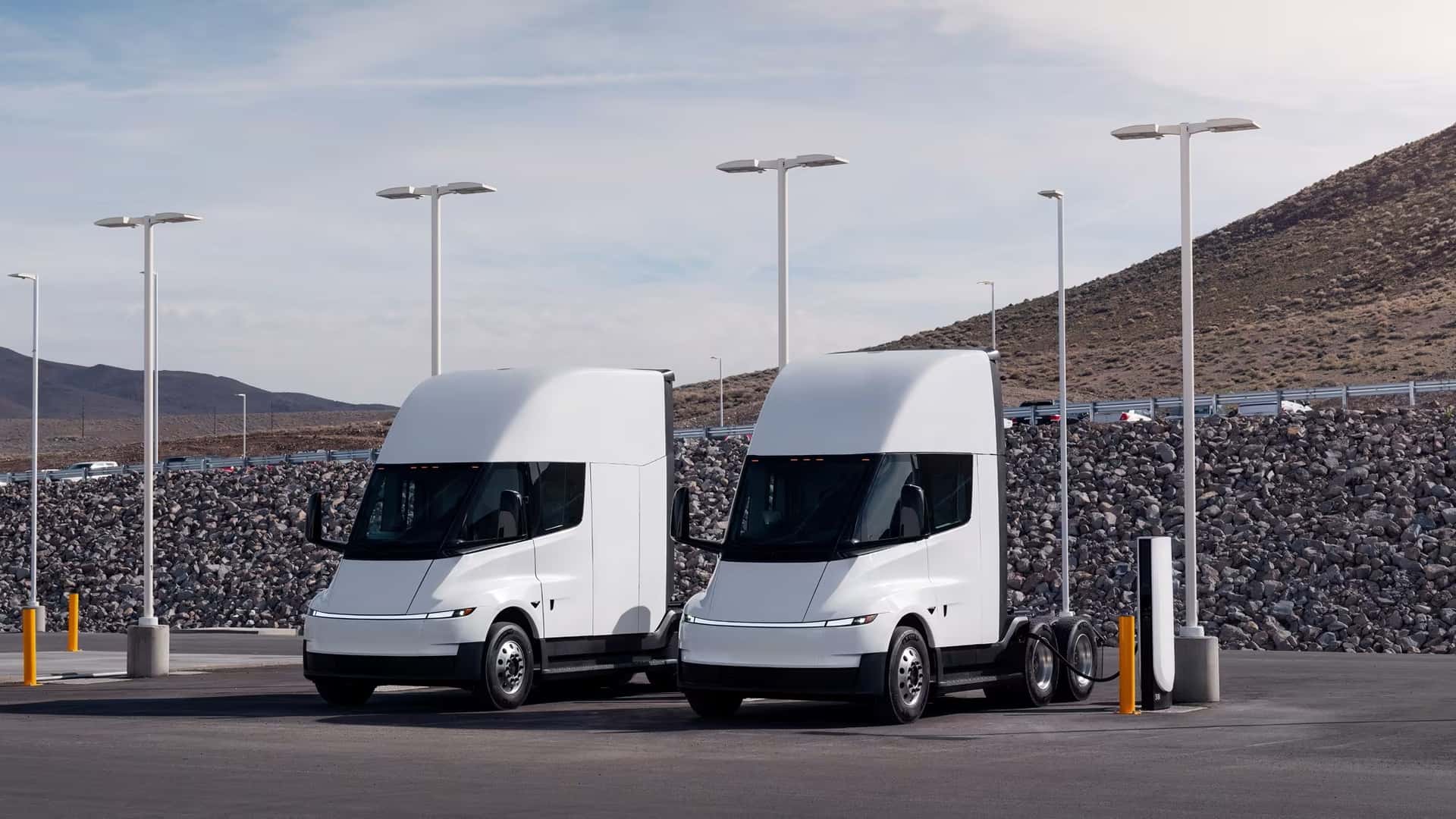
Tesla is significantly bolstering its commitment to electrifying heavy-duty transport in Europe with an ambitious rollout of its megawatt-capable charging infrastructure. The initiative aims to support the imminent arrival of the Tesla Semi electric truck on European roads, with first deliveries anticipated next year. This strategic deployment marks a critical step towards establishing a robust charging ecosystem essential for the widespread adoption of electric trucks across the continent.
Key Takeaways
- Tesla is commencing the installation of over 100 megawatt-capable chargers across Europe, a crucial move for its Semi electric truck launch.
- The initial phase includes 21 strategically located stations in Germany, France, the UK, Sweden, and the Benelux region.
- Megachargers are engineered to provide up to 1.2 megawatts of power, allowing the Tesla Semi’s battery to reach 60% charge in roughly 30 minutes.
- Beyond public stations, Tesla will offer Megachargers and Basechargers for sale to logistics hubs, enabling private fleet charging.
- This extensive charging network is pivotal for advancing sustainable freight transport and addressing the unique energy demands of heavy-duty electric vehicles in Europe.
Europe Prepares for Tesla Semi Arrival
The highly anticipated Tesla Semi is set to make its official debut in Europe, with the first units scheduled for delivery in the upcoming year. This expansion into the European market represents a significant milestone for Tesla, extending its electric vehicle vision beyond passenger cars into the crucial heavy-duty commercial sector. However, the viability and operational efficiency of these futuristic electric tractor-trailers hinge entirely on the availability of a powerful and reliable charging infrastructure.

Recognizing this fundamental requirement, Tesla has meticulously planned the initial deployment of its high-powered charging solutions. Unlike conventional diesel trucks that rely on a well-established refuelling network, the battery-powered Tesla Semi demands a specialised charging ecosystem capable of quickly replenishing its substantial battery capacity to maintain rigorous logistics schedules.
The Strategic European Megacharger Footprint
Tesla has unveiled its comprehensive strategy for installing the first wave of megawatt-capable chargers across Europe. This foundational charging infrastructure is specifically designed to facilitate the seamless launch and operation of the Tesla Semi throughout the region. Dan Priestley, the head of Semi development at Tesla, confirmed these plans during his presentation at the IAA Transportation fair in Hanover.
The initial rollout will see more than 100 Megachargers deployed across 21 dedicated stations. These strategic locations have been carefully selected to cover key logistics corridors and industrial hubs. Countries earmarked for this inaugural phase include Germany, France, the United Kingdom, Sweden, Belgium, the Netherlands, and Luxembourg. While a precise timeline for the completion of this initial deployment has not yet been disclosed, the mapping of these locations indicates a focused effort to establish core charging capabilities.

Unpacking Megacharger Technology and Performance
The Tesla Megacharger system represents a leap forward in electric vehicle charging technology, specifically engineered to meet the demanding energy requirements of heavy-duty electric trucks. These chargers are capable of delivering an impressive 1.2 megawatts (MW) of power, significantly surpassing the capabilities of standard passenger EV chargers.
This high power output is crucial for commercial applications where downtime translates directly to lost revenue. With its advanced design, a Megacharger can replenish the Tesla Semi’s substantial battery pack to approximately 60% state of charge in roughly 30 minutes. Such rapid charging capability is vital for maintaining tight delivery schedules and ensuring optimal fleet utilisation across logistics operations.
In Europe, the Megachargers will feature a 1,000-volt power cabinet. Each station is equipped with two charging stalls, designed to deliver up to 1,500 amperes (A) of current to an electric vehicle. These technical specifications underscore Tesla’s commitment to providing an efficient and robust energy solution for the heavy-duty electric truck segment, addressing concerns about charging speed and range anxiety for fleet operators.
Navigating Charging Standards and Interoperability
A key aspect of the new Tesla Megachargers is their adherence to specific charging standards. Both the Tesla Semi and the dedicated Megacharger units are fitted with an MCS 3.2 connector. The Megawatt Charging System (MCS) is an emerging global standard designed for high-power DC charging of heavy-duty electric vehicles, reflecting the significant power transfer needed for these large battery packs.
The use of the MCS 3.2 connector means that, initially, other power-hungry electric trucks from different manufacturers may not be directly compatible with Tesla’s Megachargers in Europe. However, Tesla is proactively addressing potential interoperability challenges by providing CCS adapters to its Semi customers. This provision will enable Tesla Semi operators to access and utilise existing CCS2 (Combined Charging System 2) stalls prevalent across the European continent, offering a vital backup and supplementary charging option where Megachargers are not yet available.
This approach demonstrates Tesla’s understanding of the evolving EV charging landscape and its commitment to ensuring operational flexibility for its customers. While promoting its proprietary Megacharger network, the inclusion of CCS adapter compatibility helps integrate the Semi into the broader European electric vehicle charging infrastructure.
Empowering Private Fleets with Dedicated Charging Solutions
Beyond establishing a public Megacharger network, Tesla is also extending its charging solutions directly to logistics and freight companies. The company will make its sophisticated charging dispensers available for purchase, catering to businesses that require their own dedicated charging infrastructure. This strategy is particularly beneficial for large logistics hubs, distribution centres, and fleet operators who manage their own vehicle depots and prefer on-site charging capabilities.
Order books are currently open for both the high-capacity Megacharger and a lower-powered alternative, the Basecharger, with initial European deliveries scheduled for mid-next year. The Megacharger bundle, which includes a power cabinet and two stalls, is priced at €163,000. For businesses with different charging needs, the 120-kW all-in-one Basecharger is available for €17,000, although a mandatory two-unit order is specified.
The Basecharger integrates all necessary components into a single housing, offering a more compact and perhaps more suitable option for companies that can accommodate longer charging durations. With a DC output of 120 kW and an AC output of 125 kW, this unit can increase the Tesla Semi’s state of charge to 80% in approximately four hours, according to Tesla. This dual offering allows businesses to select the charging solution that best aligns with their operational models and infrastructure capabilities, supporting both rapid turnaround scenarios and overnight charging strategies.
Impact on Europe’s Commercial EV Landscape
The widespread rollout of Tesla’s Megacharger network and the introduction of the Semi truck in Europe are poised to have a transformative impact on the continent’s commercial electric vehicle landscape. This initiative directly addresses one of the most significant barriers to heavy-duty EV adoption: the lack of adequate charging infrastructure. By providing dedicated, high-power charging solutions, Tesla is creating a more viable ecosystem for electric freight transport.
This development aligns with broader European efforts towards decarbonising the transport sector and achieving ambitious emissions reduction targets. The availability of efficient electric trucks coupled with robust charging infrastructure offers logistics companies a compelling alternative to fossil fuel-dependent vehicles, potentially leading to reduced operational costs through lower fuel consumption and maintenance, alongside significant environmental benefits.
As the electric truck market in Europe continues to mature, Tesla’s proactive investment in charging solutions could accelerate the transition to sustainable freight. This strategic move not only positions Tesla as a key player in the European commercial vehicle segment but also sets a benchmark for the high-power charging standards required to support the next generation of zero-emission logistics.
Frequently Asked Questions (FAQ)
What is the Tesla Megacharger?
The Tesla Megacharger is a high-power charging station designed specifically for heavy-duty electric vehicles like the Tesla Semi. It can deliver up to 1.2 megawatts of power, enabling rapid charging for large battery packs.
Where will the first European Megachargers be installed?
The initial European Megacharger rollout targets 21 stations across Germany, France, the United Kingdom, Sweden, Belgium, the Netherlands, and Luxembourg, supporting key logistics routes.
How fast can a Tesla Semi charge using a Megacharger?
A Tesla Semi can recharge its battery pack to approximately 60% state of charge in roughly 30 minutes when connected to a Megacharger, optimising operational efficiency for fleet operators.
Can other electric trucks use Tesla’s Megachargers?
Tesla’s Megachargers primarily use an MCS 3.2 connector. While other trucks may not be directly compatible, Tesla will provide CCS adapters for Semi customers to use other charging networks.
What are the options for private fleet charging?
Logistics companies can purchase Megachargers or Basechargers directly from Tesla. The Basecharger offers 120 kW DC/125 kW AC output, capable of charging a Semi to 80% in about four hours.
When are the first Tesla Semi deliveries expected in Europe?
The first deliveries of the Tesla Semi electric truck in Europe are officially scheduled to commence in the middle of next year, coinciding with the charging infrastructure expansion.