
Key Takeaways:
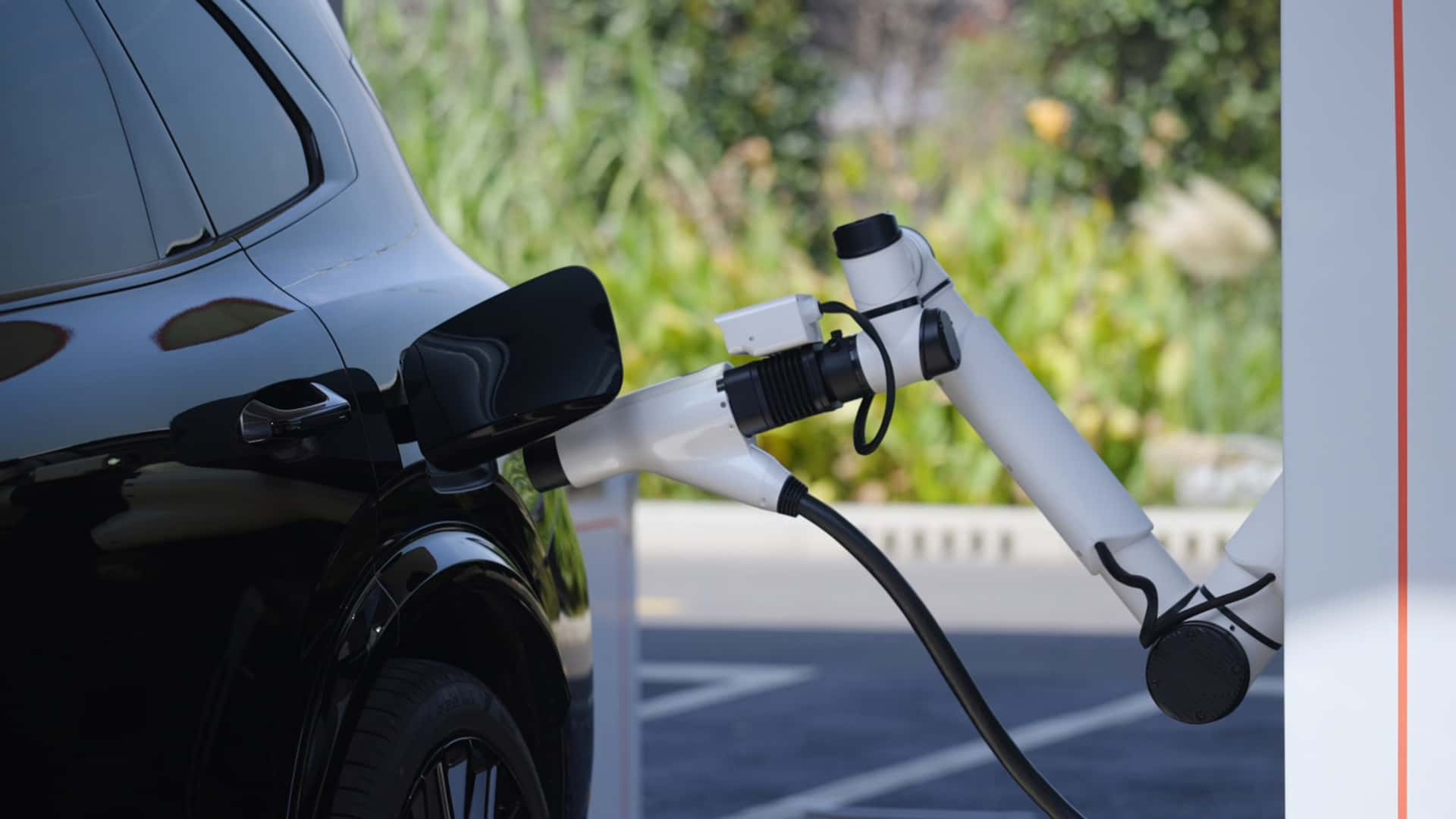
- Geely Auto Group has introduced a fifth-generation Smart Charging System capable of delivering 2,250 kilowatts (2.25 megawatts) of peak charging speeds.
- This groundbreaking system, coupled with a new Ultra Short Blade Battery, enables EVs like the Lynk & Co 10 and Zeekr 001 to charge from 10-70% in just 4 minutes and 30 seconds.
- The innovation significantly outpaces existing megawatt EV charging solutions, including BYD’s 1.5 MW Flash chargers.
- Advanced AI-powered systems (Xingrui PowerMind) and an innovative five-point liquid cooling thermal management system are employed to safeguard battery health during ultra-fast charging.
- Proprietary “lithium-ion pulse restoration” technology aims to mitigate lithium plating, a common issue during rapid charging, thereby preserving battery longevity.
The Dawn of Ultra-Fast Megawatt Charging
In a significant leap forward for electric vehicle charging technology, Chinese automotive giant Geely Auto Group has unveiled what appears to be the world’s fastest charging system. This cutting-edge development promises to transform the EV ownership experience, drastically reducing charging times and addressing a key concern for potential electric vehicle adopters.
The automaker recently introduced its fifth-generation Smart Charging System alongside a new Ultra Short Blade Battery. This powerful combination is designed to deliver unprecedented peak charging speeds, setting a new benchmark for the global electric vehicle market.
Unprecedented Charging Speeds Set New Industry Standards
Geely’s new charger boasts an astounding peak output of 2.25 megawatts (2,250 kilowatts). This capacity fundamentally redefines the parameters of rapid electric vehicle charging, leaving most Western EV charging systems and many rivals far behind.
For context, last year, BYD made headlines with its 1.5 MW Flash chargers, which were considered a major breakthrough. Geely’s latest innovation not only surpasses BYD’s impressive offering but also establishes a new performance ceiling in the fiercely competitive race for superior EV infrastructure.
Utilizing this advanced battery system, electric vehicles from Geely Auto Group’s premium brands, Lynk & Co and Zeekr, can achieve remarkable charging times. The company claims that a real-world charge from 10% to 70% can be completed in an astonishing 4 minutes and 30 seconds.
Furthermore, a more comprehensive charge from 10% to 97% is reportedly achieved in a mere 8 minutes and 40 seconds. In comparison, BYD’s Flash chargers typically complete a 10-70% charge in approximately five minutes and a 10-97% charge in nine minutes, highlighting Geely’s significant lead in speed.
Protecting Battery Health with AI and Advanced Cooling
While pumping electrons into a battery at such blistering speeds offers immense convenience, it also poses significant challenges to battery longevity and performance. High-power charging can generate substantial heat and stress on the battery cells, potentially leading to degradation over time.
To counteract these effects, Geely has integrated an intelligent, AI-powered system named Xingrui PowerMind. This sophisticated system is engineered to dynamically predict battery temperatures and adjust charging speeds in real-time. Its primary goal is to maintain the battery’s average temperature at 55 degrees Celsius, with a strict ceiling of 65 degrees Celsius, thus safeguarding its long-term health and performance.
Beyond intelligent software, the system incorporates an innovative hardware solution for thermal management. Geely refers to this as an “end-to-end five-point liquid cooling” system. This comprehensive setup coordinates heat management across all critical components involved in the charging process.
This includes the battery pack itself, the charging port, the charging cable, the charging dispenser, and the energy storage batteries that support the chargers. This holistic approach ensures that heat is dissipated efficiently and uniformly, enabling the sustained delivery of 2.25 MW, a power level previously deemed unattainable for a single charging plug.
Innovative Battery Technology: Tackling Lithium Plating
Geely’s advancements extend to the battery itself, with the introduction of a “lithium-ion pulse restoration” technology. This innovative feature utilizes micro-pulse currents to reactivate lithium ions that may accumulate at the anode during repeated cycles of ultra-fast charging. The anode is the negative electrode in a battery, where electrons flow during charging.
The phenomenon Geely addresses is known as lithium plating, which occurs when lithium ions deposit on the surface of the anode instead of intercalating into its structure. This plating can degrade battery performance and reduce its lifespan. By metaphorically dislodging these ‘stuck’ ions with micro pulses, the technology aims to restore their mobility and utility, thereby preserving battery capacity and efficiency over many charging cycles.
This specialized battery technology is crucial for managing the intense energy flow associated with megawatt EV charging. It underscores Geely’s commitment to not only rapid charging but also to the sustained health and performance of the electric vehicle battery, ensuring that speed does not come at the cost of durability.
A Global Perspective on Charging Speeds
To underscore the magnitude of Geely’s achievement, it is useful to compare its new system with some of the fastest-charging electric vehicles currently available in Western markets. High-performance EVs like the Lucid Gravity and the Porsche Cayenne Electric typically feature a maximum charging rate of around 400 kilowatts.
The upcoming Mercedes-AMG GT 4-Door Coupe is expected to push these boundaries among Western automakers, offering a peak charging speed of 600 kW and an impressive 10-80% charging time of just 11 minutes. While these figures represent significant engineering feats, they remain substantially lower than the 2.25 megawatts delivered by Geely’s system.
This disparity highlights a growing technological gap, with Chinese manufacturers like Geely and BYD currently leading the charge in developing and deploying ultra-fast electric vehicle charging technology. While Geely did not explicitly state the maximum charging rate its individual cars can handle, the new infrastructure demonstrates a clear vision for the future of rapid EV replenishment.
The Race for Charging Infrastructure Dominance
Beyond the raw power of the chargers, the deployment scale of megawatt EV charging infrastructure is another critical factor in determining market leadership. In this regard, BYD currently holds a notable advantage over Geely.
As of August, BYD had successfully deployed 10,000 of its distinctive T-shaped Flash chargers across China, with ambitious plans to expand this network to 20,000 units by the close of the year. The company is also making strategic moves into international markets, with plans to install 3,000 Flash chargers in Europe.
The ability of Geely to match or surpass BYD’s extensive deployment efforts will be a key indicator of its long-term influence in the high-speed electric vehicle charging landscape. The rapid proliferation of such powerful charging stations is essential to making ultra-fast charging a widespread reality for electric vehicle owners globally, further accelerating the transition towards sustainable mobility.
Frequently Asked Questions (FAQ)
What is the peak power of Geely’s new EV charger?
Geely’s latest Smart Charging System boasts an astounding peak charging speed of 2,250 kilowatts, equivalent to 2.25 megawatts. This makes it one of the most powerful electric vehicle charging systems globally, significantly surpassing current industry standards.
How fast can Geely’s new system charge an electric vehicle?
With Geely’s new system and Ultra Short Blade Battery, compatible EVs like the Lynk & Co 10 and Zeekr 001 can charge from 10% to 70% in just 4 minutes and 30 seconds. A full charge from 10% to 97% is achieved in 8 minutes and 40 seconds.
How does Geely protect battery health during ultra-fast charging?
Geely employs an AI-powered system called Xingrui PowerMind, which dynamically adjusts charging speeds based on battery temperature. Additionally, an “end-to-end five-point liquid cooling” system manages heat across all charging components, ensuring battery longevity and performance.
What is “lithium-ion pulse restoration” technology?
This proprietary technology uses micro pulse currents to reactivate lithium ions that accumulate at the anode during rapid charging. It helps mitigate lithium plating, a common degradation mechanism, thereby extending the battery’s lifespan and maintaining its efficiency over time.
How does Geely’s charging system compare to other fast chargers globally?
Geely’s 2.25 MW system significantly outperforms many leading Western fast chargers, which typically offer peak rates of 400-600 kilowatts. It also surpasses rivals like BYD’s 1.5 MW Flash chargers, establishing a new benchmark for speed in megawatt EV charging.
What is the current deployment status of Geely’s new chargers?
Details on the exact scale of Geely’s new charger deployment were not fully specified at the time of the announcement. However, the introduction of this technology signals a robust push towards establishing a high-speed charging infrastructure in China and potentially beyond.