
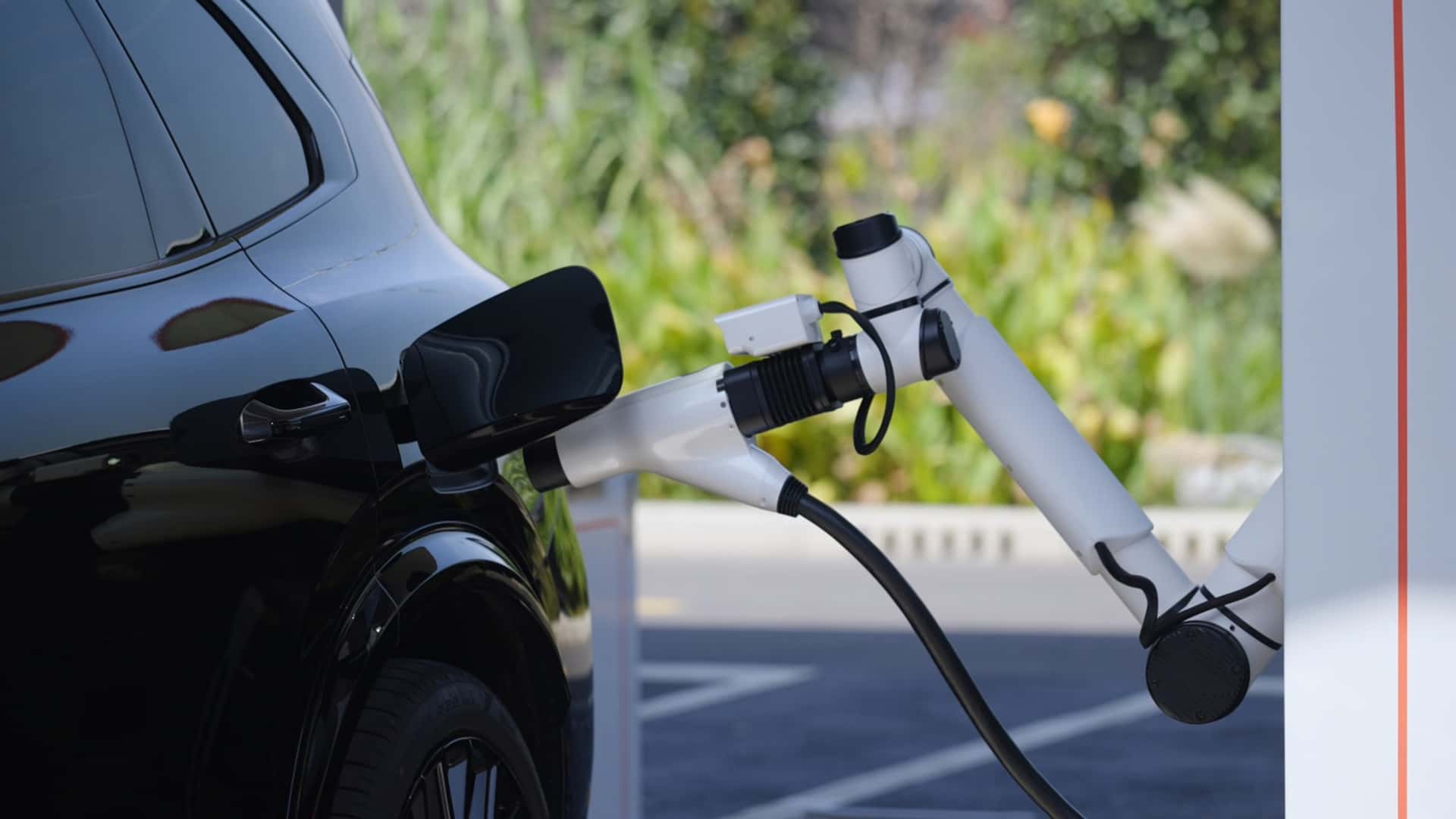
China’s automotive giant, Geely Auto Group, has introduced a groundbreaking electric vehicle charging system capable of delivering an unprecedented 2.25 megawatts of peak power. This development significantly raises the bar for global EV charging technology, leaving established benchmarks, including rival BYD’s advanced Flash chargers and leading Western systems, considerably behind.
Key Takeaways
- Geely’s new fifth-generation Smart Charging System offers a staggering 2.25 megawatts of peak power.
- Equipped with Geely’s new Ultra Short Blade Battery, models like Lynk & Co 10 and Zeekr 001 can charge from 10% to 70% in just 4 minutes and 30 seconds.
- The system integrates an AI-powered thermal management system, Xingrui PowerMind, and an innovative “end-to-end five-point liquid cooling” to ensure battery health and safety.
- A novel “lithium-ion pulse restoration” technology addresses battery degradation caused by ultra-fast charging, enhancing longevity.
- This development positions Chinese manufacturers at the forefront of global EV charging innovation, challenging existing industry standards.
Geely’s Megawatt Breakthrough Redefines Electric Vehicle Charging
In a significant leap forward for the electric vehicle industry, Geely Auto Group has launched its fifth-generation Smart Charging System, paired with a sophisticated Ultra Short Blade Battery. This cutting-edge electric vehicle charging technology promises to dramatically reduce charging times, addressing one of the most persistent concerns among prospective EV owners: range anxiety.
The newly unveiled system boasts a phenomenal peak charging speed of 2.25 megawatts (MW), a figure that not only outpaces Western offerings but also substantially surpasses competitors within the Chinese market. For context, this system delivers nearly 5.5 times the peak charging rate of some of the fastest-charging EVs currently available in the U.S.
Unprecedented Speed for Mainstream EVs
The practical implications of this innovation are profound. According to Geely’s claims, electric vehicles from its Lynk & Co and Zeekr brands, specifically the Lynk & Co 10 and Zeekr 001, can achieve a 10-70% charge in an astounding 4 minutes and 30 seconds. Pushing the charge further, a 10-97% top-up is completed in a mere 8 minutes and 40 seconds.
These figures represent a substantial improvement over existing fast-charging solutions. For comparison, rival BYD’s highly acclaimed 1.5 MW Flash chargers, which made headlines last year, typically achieve a 10-70% charge in approximately five minutes and a 10-97% charge in nine minutes. Geely’s new system therefore offers a clear advantage in charging efficiency and speed.
Advanced Technologies Ensuring Battery Longevity and Safety
The ability to pump electrons into an electric vehicle’s battery at such extreme speeds necessitates robust safeguards to prevent degradation and ensure long-term battery health. Geely has addressed this challenge with a suite of sophisticated technologies integrated into its Smart Charging System and Ultra Short Blade Battery.
AI-Powered Thermal Management: Xingrui PowerMind
At the core of Geely’s battery protection strategy is an AI-powered system dubbed Xingrui PowerMind. This intelligent system is designed to continuously predict battery temperatures and dynamically adjust charging speeds in real-time. Its primary objective is to maintain the battery’s average temperature at an optimal 55 degrees Celsius, with a strict ceiling of 65 degrees Celsius. This precise temperature control is crucial for preventing overheating and preserving the integrity of the battery cells during ultra-fast charging.
Integrated Liquid Cooling System
Beyond the AI-driven adjustments, the system incorporates an innovative thermal management solution that Geely refers to as an “end-to-end five-point liquid cooling.” This comprehensive cooling approach manages heat across multiple critical components involved in the electric vehicle charging process. It orchestrates coordinated cooling for the battery pack itself, the charging port, the charging cable, the charging dispenser, and even the energy storage batteries that support the high-power chargers. This holistic thermal management is vital for safely delivering and sustaining the extraordinary 2.25 MW charging speeds.
Combating Lithium Plating with Pulse Restoration
One of the significant challenges in ultra-fast charging is the phenomenon of lithium plating. This occurs when lithium ions accumulate at the anode faster than they can be intercalated, forming metallic lithium deposits that can degrade battery performance and lifespan over repeated rapid charging cycles. Geely claims to have developed a proprietary “lithium-ion pulse restoration” technology to counter this.
This innovative technology utilizes micro pulse currents to reactivate and dislodge lithium ions that have accumulated at the anode. By preventing these ions from forming permanent deposits, the system aims to restore their mobility and usefulness, thereby protecting the battery’s long-term health and performance even under the most demanding fast-charging conditions. This represents a critical advancement in extending battery life amidst aggressive charging demands.
Global EV Charging Landscape: A Widening Gap
The introduction of Geely’s 2.25-megawatt electric vehicle charging system starkly highlights the growing disparity in charging capabilities between Chinese and Western automotive markets. While leading Western EVs boast impressive fast-charging capabilities, they remain a considerable distance from the speeds now becoming available in China.
For instance, some of the fastest-charging electric vehicles in the U.S. market, such as the Lucid Gravity and Porsche Cayenne Electric, typically offer a maximum charging rate of around 400 kilowatts (kW). The upcoming Mercedes-AMG GT 4-Door Coupe is expected to push this to a peak of 600 kW, allowing for a 10-80% charge in approximately 11 minutes. While commendable, these figures are dwarfed by Geely’s megawatt-level capabilities, underscoring a significant technological lead emerging from Asia.
It is important to note that Geely’s announcement focused on the system’s peak capacity, and the actual peak charging rate that its specific electric vehicles can sustain was not explicitly stated. However, the demonstrated real-world charging times for the Lynk & Co 10 and Zeekr 001 provide compelling evidence of the system’s effectiveness.
Deployment Scale and Future Outlook for EV Charging Infrastructure
While Geely has unveiled a technologically superior electric vehicle charging system, the ultimate impact of such innovations also hinges on widespread deployment. Here, BYD currently maintains a notable lead in scale.
As of August, BYD had already deployed approximately 10,000 of its T-shaped Flash chargers across China and has ambitious plans to expand this network to 20,000 stations by the end of the year. Furthermore, BYD intends to install 3,000 of these high-power chargers in Europe, signaling a global expansion strategy. The scale of Geely’s rollout for its 2.25 MW system remains to be seen. The deployment of megawatt-level electric vehicle charging infrastructure presents significant logistical and grid integration challenges, requiring substantial investment in power infrastructure and intelligent grid management solutions.
The relentless pursuit of faster charging speeds by manufacturers like Geely and BYD underscores a broader industry trend towards making electric vehicles as convenient, if not more so, than their internal combustion engine counterparts. As charging times shrink to mere minutes, the practicality and appeal of electric mobility are set to grow exponentially, paving the way for broader global adoption of sustainable transport solutions.
FAQ Section
What is Geely’s new EV charging system?
Geely’s new system is the fifth-generation Smart Charging System, capable of delivering a peak charging speed of 2.25 megawatts. It works in conjunction with Geely’s Ultra Short Blade Battery and is currently the fastest electric vehicle charging technology globally, drastically reducing charge times for compatible models.
How fast can Geely’s new system charge an EV?
With Geely’s new electric vehicle charging technology, compatible EVs like the Lynk & Co 10 and Zeekr 001 can charge from 10% to 70% in just 4 minutes and 30 seconds. A near-full charge, from 10% to 97%, can be achieved in 8 minutes and 40 seconds.
How does Geely’s system compare to other fast chargers?
Geely’s 2.25 MW system significantly surpasses others. For instance, BYD’s 1.5 MW Flash chargers achieve a 10-70% charge in about 5 minutes. Leading Western EV charging technology typically offers maximum rates of 400 kW to 600 kW, making Geely’s offering several times more powerful and faster.
What technologies protect the battery during ultra-fast charging?
Geely employs an AI-powered system, Xingrui PowerMind, to dynamically adjust charging speeds and maintain optimal battery temperatures. It also features an “end-to-end five-point liquid cooling” system for comprehensive heat management and a “lithium-ion pulse restoration” technology to prevent lithium plating and enhance battery longevity.
Will this new charging technology be available outside of China?
Geely has not yet announced specific plans for the international deployment of its 2.25 MW charging system. While rival BYD has outlined plans to install its megawatt chargers in Europe, the global availability and expansion of Geely’s cutting-edge electric vehicle charging infrastructure remain to be seen.
What is lithium-ion pulse restoration technology?
Lithium-ion pulse restoration is a technology developed by Geely that uses micro pulse currents to reactivate and dislodge lithium ions that accumulate at the anode during repeated fast-charging. This process helps prevent lithium plating, a common cause of battery degradation in ultra-fast charging scenarios, thereby extending the battery’s lifespan and performance.