
Key Takeaways:
- Voltpost has significantly expanded its network of pole-mounted lamppost EV chargers across New York State, introducing 14 new charging ports in Albany, Saratoga Springs, and Cold Spring.
- The company is offering complimentary charging at its Brooklyn facility during Climate Week, encouraging wider adoption of electric vehicles.
- These innovative lamppost EV chargers leverage existing utility pole infrastructure, drastically reducing installation costs and urban disruption compared to traditional charging stations.
- Designed for convenience in long-dwell parking scenarios, these Level 2 chargers provide up to 9.6 kilowatts of power, accessed seamlessly via the Voltpost mobile application.
- Voltpost aims to bridge the gap in urban EV charging, making electric vehicle ownership more accessible and convenient for residents without private driveways.
NEW YORK – In a strategic move to bolster urban electric vehicle (EV) infrastructure, Voltpost, an American startup specializing in pole-mounted charging solutions, has announced a significant expansion of its innovative lamppost EV chargers across New York State. The deployment adds 14 new charging ports in three communities, alongside a special initiative offering free top-ups at its Brooklyn facility during Climate Week.
This expansion underscores a growing commitment to making EV charging as accessible as traditional fueling, particularly in dense urban environments where curbside charging presents a practical challenge. Voltpost’s approach seeks to transform existing street infrastructure into vital charging hubs.
Expanding the Curbside Charging Network Across New York
The latest phase of Voltpost’s rollout has seen three new dual-port lamppost EV chargers activated in Albany, three in Saratoga Springs, and one in Cold Spring. This brings the total of new charging ports to 14 across these key locations, reinforcing the company’s footprint in the state.
These new additions build upon previous successful deployments in Westchester County, Brooklyn, and Glenn Falls. The ongoing expansion highlights Voltpost’s dedication to creating a robust and easily accessible charging network for electric vehicle owners.

Further sweetening the proposition for EV drivers, Voltpost is currently offering complimentary charging services at its dispenser located at the MADE Bush Terminal in Brooklyn. This initiative coincides with Climate Week, aiming to promote sustainable transportation solutions and encourage greater electric vehicle adoption.
The Innovative Technology Behind Lamppost EV Chargers
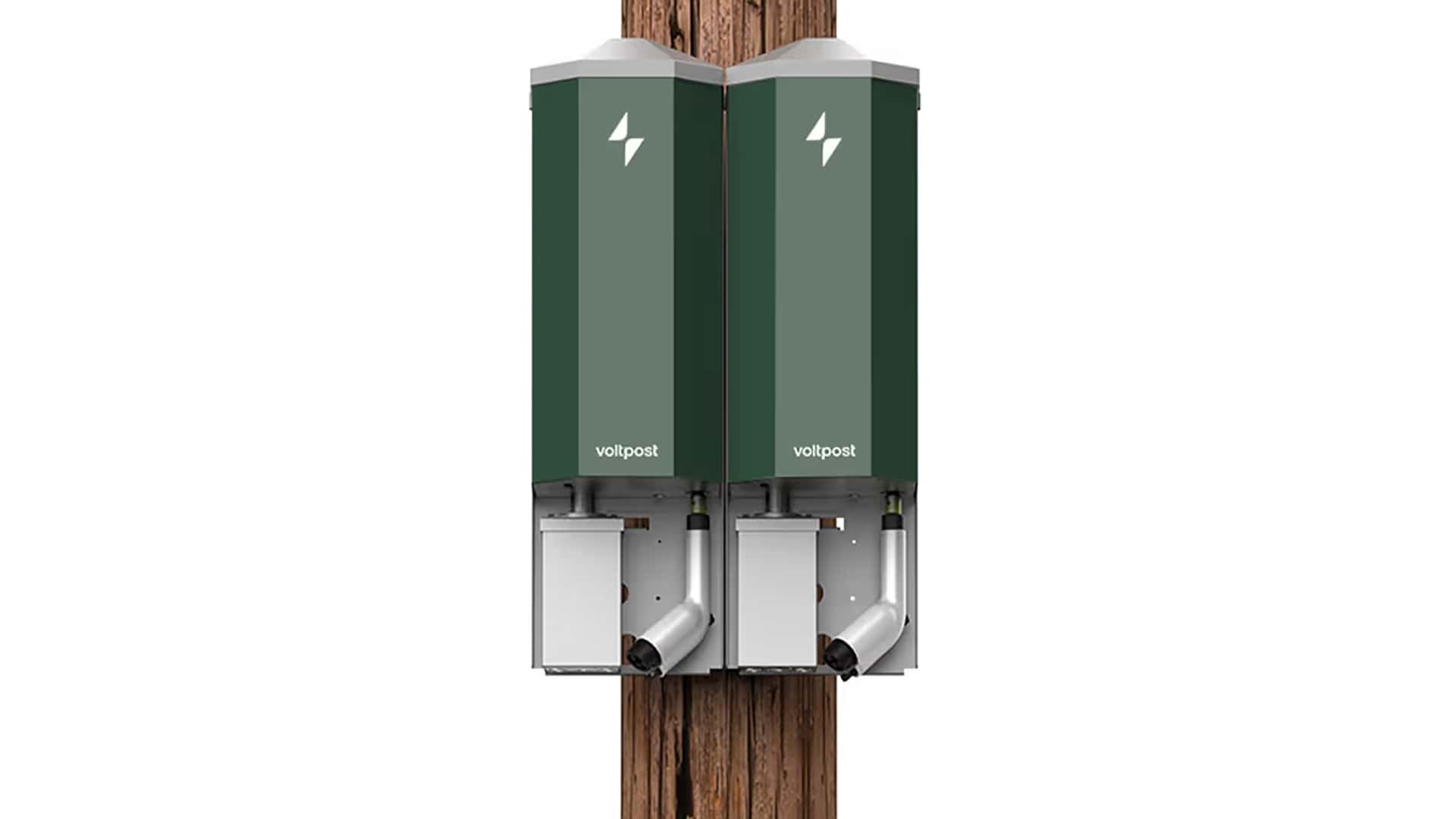
Voltpost’s distinctive lamppost EV chargers represent a significant departure from conventional charging station installations. The core innovation lies in their ability to tap directly into the existing electrical supply of the utility poles they are mounted on.
This method circumvents the need for extensive civil engineering works, such as digging trenches, cutting into sidewalks, or pouring concrete foundations. The result is a substantial reduction in both installation costs and the disruption typically associated with deploying new public charging infrastructure.
While these lamppost EV chargers draw on a more limited energy supply, restricting their power output to approximately 9.6 kilowatts, this capacity is optimally suited for specific charging scenarios. They are particularly effective in locations where electric vehicles remain parked for extended durations.
Such sites include shopping malls, office building parking areas, and residential streets where vehicles are typically left overnight. This strategic placement ensures that EV owners can efficiently top up their batteries during periods of natural downtime.
User Experience and Accessibility
The Voltpost Air chargers are designed with user convenience and durability in mind. Each unit features dual ports, equipped with retracting cables and standard J1772 connectors. This design allows drivers to easily pull the cable to reach their car’s charge port, ensuring a hassle-free connection.
To safeguard against environmental elements and potential vandalism, these lamppost EV chargers are strategically installed approximately 10 feet (3 meters) above ground level. This elevated positioning enhances their longevity and ensures continuous operational reliability.
Furthermore, each Voltpost dispenser is permanently connected to the internet via AT&T’s robust network. This constant connectivity is crucial for managing the charging network and providing real-time data to users.
Accessing and managing a charging session is streamlined through the dedicated Voltpost application. EV owners can use the app to locate available charging stalls, check their real-time availability, monitor the progress of their charging sessions, and process payments. Notably, the system operates entirely without on-site card readers, simplifying the user interface.
A Strategic Vision for Sustainable Mobility
The expansion of Voltpost’s lamppost EV chargers is part of a broader vision to address critical infrastructure gaps and accelerate the transition to sustainable transportation. The company aims to make electric vehicle charging an integrated and seamless part of urban life, mirroring the convenience of traditional petrol stations.
Jeffrey Prosserman, CEO & Co-Founder of Voltpost, articulated this commitment, stating, Decarbonizing mobility starts with making EV charging as convenient as filling up a gas tank. Every deployment, including these in Albany, Saratoga Springs, and Cold Spring, is about putting reliable charging where drivers already live and park, so more New Yorkers can confidently make the switch to electric.
He further emphasized, We’re thrilled to partner with utilities and communities across New York State that share our commitment to deploying sustainable mobility solutions.
Prosserman’s statement highlights the company’s understanding of the psychological and practical barriers to EV adoption, particularly for those without dedicated home charging options. By integrating charging into existing urban infrastructure, Voltpost is directly tackling the challenge of curbside charging, a segment where the United States has historically lagged behind European counterparts.
The strategic partnerships with utilities and local communities are vital for the successful widespread deployment of such innovative solutions. These collaborations ensure that the charging infrastructure meets local needs and integrates smoothly into urban planning.
National Expansion on the Horizon
Beyond its significant inroads in New York, Voltpost is actively pursuing opportunities to deploy its lamppost EV chargers in several other states across the nation. The startup has set its sights on expanding into California, Connecticut, Massachusetts, Michigan, Illinois, and Washington, D.C.
This national expansion strategy signals Voltpost’s ambition to become a leading provider of accessible urban EV charging solutions. The widespread availability of convenient and cost-effective charging options is a critical factor in encouraging broader electric vehicle adoption and achieving national decarbonization goals.
As more cities and states look to electrify their transportation sectors, innovative solutions like Voltpost’s lamppost EV chargers will play an increasingly vital role. They offer a practical, scalable, and aesthetically unobtrusive way to build out the essential charging infrastructure required for a fully electric future.
Conclusion
Voltpost’s continued expansion of lamppost EV chargers in New York marks a crucial step in democratizing access to electric vehicle charging. By transforming existing streetlights into smart charging hubs, the company is addressing key challenges related to cost, urban space, and installation complexity.
The strategic deployment in communities like Albany, Saratoga Springs, and Cold Spring, combined with user-friendly technology and a clear vision for sustainable mobility, positions Voltpost as a key player in shaping the future of urban electric vehicle infrastructure. As the demand for EVs grows, these innovative charging solutions will be instrumental in supporting a seamless and confident transition to electric transportation across the United States.
FAQs About Lamppost EV Chargers
What are lamppost EV chargers and how do they work?
Lamppost EV chargers are innovative electric vehicle charging units mounted directly onto existing utility poles. They draw power from the pole’s electrical supply, eliminating the need for extensive construction. This method significantly reduces installation time and costs compared to traditional ground-mounted charging stations, making them ideal for urban environments.
What are the main benefits of using Voltpost’s lamppost EV chargers?
The primary benefits include lower installation costs due to leveraging existing infrastructure, minimal disruption to urban landscapes, and increased convenience for EV owners without private driveways. They offer a scalable solution for expanding public charging networks discreetly and efficiently in densely populated areas, promoting wider EV adoption.
What charging speed do Voltpost’s lamppost EV chargers offer?
Voltpost’s lamppost EV chargers are Level 2 chargers, providing up to 9.6 kilowatts of power. While not as fast as DC fast chargers, this output is suitable for locations where vehicles are parked for extended periods, such as residential streets, workplaces, or shopping centers, allowing for efficient battery top-ups over several hours.
How do drivers access and pay for charging sessions?
Drivers access Voltpost’s lamppost EV chargers through a dedicated mobile application. The app allows users to locate available charging ports, check their status, initiate and monitor charging sessions, and securely process payments. This app-centric approach streamlines the user experience and eliminates the need for physical card readers at each charging point.
Where are Voltpost’s lamppost EV chargers currently deployed and what are future plans?
Voltpost has deployed its lamppost EV chargers across several locations in New York State, including recent expansions in Albany, Saratoga Springs, and Cold Spring, complementing existing sites in Westchester County, Brooklyn, and Glenn Falls. The company also has ambitious plans to expand its network to California, Connecticut, Massachusetts, Michigan, Illinois, and Washington, D.C., in the near future.