
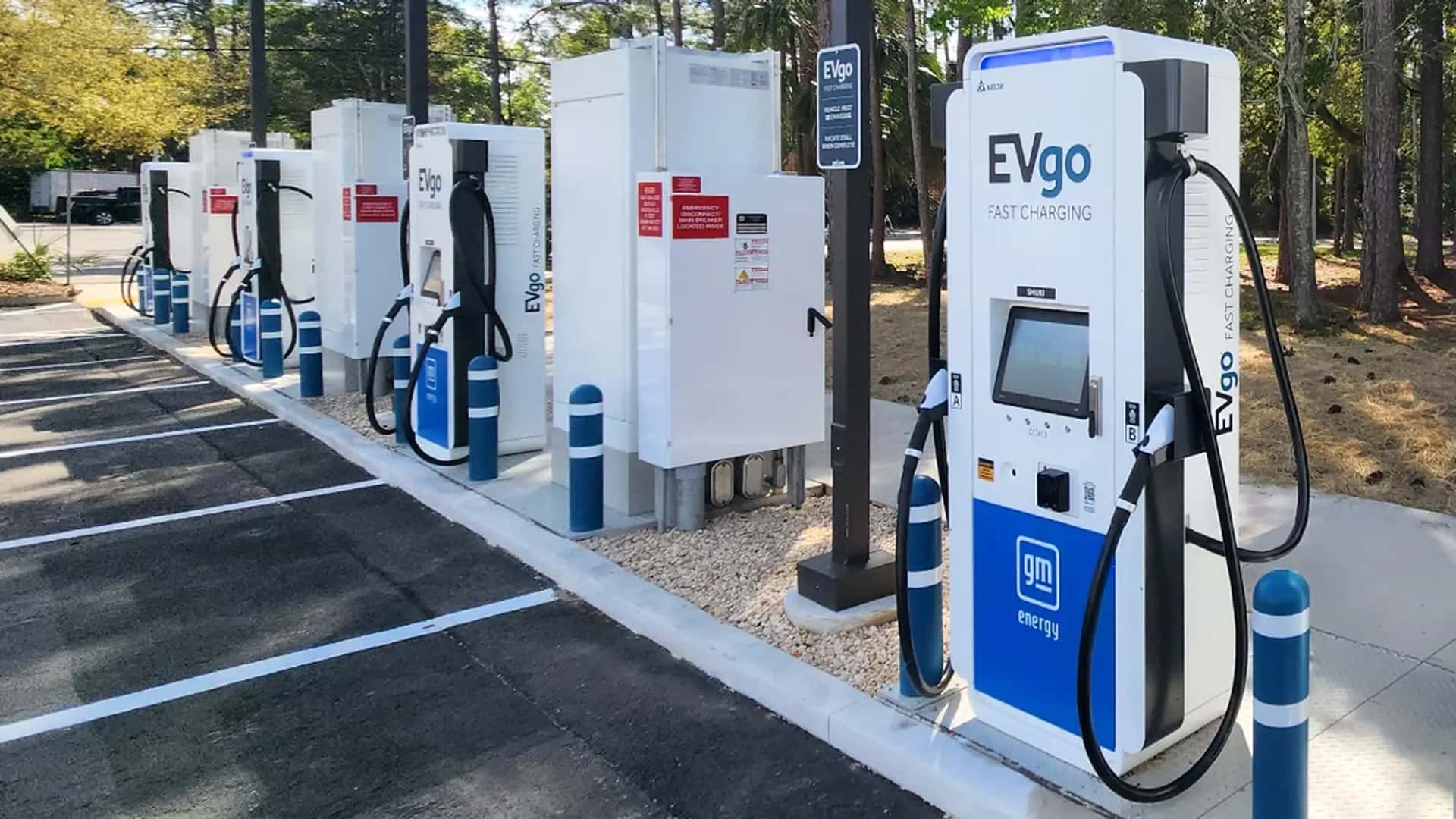
EVgo, a preeminent electric vehicle (EV) charging network in the United States, is set to significantly upgrade its infrastructure with the deployment of next-generation fast chargers. These new systems will boast an impressive capacity of up to 750 kilowatts (kW), effectively doubling the power output of its current fastest offerings. This strategic move by EVgo is poised to transform the landscape of electric vehicle charging, addressing critical demands for speed, efficiency, and widespread accessibility across the nation.
The introduction of 750 kW chargers underscores a pivotal advancement in the EVgo charging network, designed to meet the escalating requirements of modern electric vehicles and future innovations. As EV adoption continues to grow, the availability of ultra-fast charging becomes increasingly crucial for long-distance travel and daily convenience, bolstering the entire EV ecosystem.
Key Takeaways: Pioneering Faster EV Charging
- EVgo is deploying 750 kW chargers, significantly boosting its network’s power capabilities.
- The new charging stalls will feature dynamic power sharing, optimizing charge rates for connected vehicles.
- Future stations will see an increased integration of NACS ports, expanding market reach.
- These advancements aim to facilitate 10-minute charging sessions for the fastest charging EVs.
- Development and testing are underway at EVgo’s Innovation Lab in El Segundo, California.
Elevating the EV Charging Experience
The operator, which stands out as one of the few companies in the country with the in-house capabilities to design and develop its own hardware, is actively engaged in the design, development, and rigorous testing phases of these innovative chargers. This work is being conducted at its state-of-the-art Innovation Lab located in El Segundo, California, highlighting EVgo’s commitment to technological leadership and robust engineering.
While the final design details of EVgo’s newest DC fast chargers are still under wraps, the company has shared several key features that promise to enhance the user experience and operational efficiency. These insights offer a glimpse into the future of high-speed electric vehicle charging.
Innovative Features for Enhanced Convenience
A significant upgrade will be the integration of a touchless payment interface within the new stalls. This feature will enable drivers to initiate and pay for charging sessions seamlessly, eliminating the need for smartphone applications or membership cards. Such a streamlined process is expected to reduce friction and improve overall customer satisfaction, making the EVgo charging network more accessible to a broader user base.
Furthermore, the new hardware will incorporate dynamic power sharing capabilities. This advanced system is engineered to intelligently distribute power, ensuring that each connected EV receives the optimal charge rate it can safely handle. For instance, if a Lucid Gravity, capable of high-speed charging, and a Tesla Model 3, with different power requirements, utilize the same stall, the system could dynamically allocate approximately 400 kW to the Gravity and 250 kW to the Model 3, maximizing efficiency for both vehicles without compromising speed.
Future-Proofing the EV Charging Network
This forward-thinking approach signifies EVgo’s commitment to future-proofing its expansive network. Currently, no mass-market EVs sold in the United States can accept the full 750 kW power output. However, the global electric vehicle market is rapidly evolving, with numerous models overseas already capable of handling 1,000 kW or more. By anticipating these technological advancements, EVgo positions itself at the forefront of the evolving charging infrastructure.
The high-power capacity of these new chargers will also prove particularly beneficial for electric trucks and heavy-duty vehicles. These larger EVs are equipped with massive battery packs that necessitate substantial power delivery to achieve reasonable charging times. While the design specifications concerning the accommodation of large rigs at these stations are yet to be fully disclosed, the raw power output aligns well with the demands of commercial fleet electrification.
Expanding Access with NACS Integration
In a strategic move to broaden its market reach, EVgo plans to significantly increase the deployment of North American Charging Standard (NACS) ports at its new stations. This initiative is expected to effectively double the company’s addressable market in the near future, catering to the growing number of EVs, including Tesla models, that utilize this standard. The widespread adoption of NACS by various automakers is rapidly unifying the charging landscape, and EVgo’s proactive integration underscores its responsiveness to industry shifts.
The implications for America’s EV drivers are substantial. According to EVgo, the new 750 kW system is projected to enable ultra-fast charging sessions, potentially reducing charging times to as little as 10 minutes for the fastest charging vehicles available in the country. This dramatically shorter charge time is a critical factor in mitigating range anxiety and making electric vehicles a more viable option for everyday use and long-distance travel.
Despite ongoing efforts to accelerate vehicle electrification across the United States, the demand for robust and high-speed charging solutions remains paramount. The continuous introduction of fast-charging EVs by manufacturers further highlights the need for advanced charging infrastructure. EVgo’s high-powered stalls are well-positioned to serve this expanding fleet of electric vehicles, enhancing the overall appeal and practicality of sustainable transportation.
Deployment Timeline and Current Network Footprint
Further details regarding the 750 kW system, including its final design and the initial deployment schedule, are anticipated next year. This phased rollout will provide valuable insights into the performance and user experience of these cutting-edge chargers in real-world conditions.
Currently, EVgo operates a substantial network of nearly 2,000 DC fast charging stations across the United States. These stations collectively offer more than 5,300 individual charging ports, according to data provided by the Department of Energy’s Alternative Fuels Data Center (AFDC). This existing infrastructure, combined with the planned upgrade, solidifies EVgo’s role as a vital contributor to the nation’s electric vehicle charging backbone.
FAQ Section: Understanding EVgo’s New Chargers
What is the maximum power output of EVgo’s new chargers?
EVgo’s next-generation system is designed to deliver up to 750 kilowatts (kW) of power. This represents a significant increase from their current maximum offering of 350 kW, enabling much faster charging speeds for compatible electric vehicles.
How will dynamic power sharing benefit EV drivers?
Dynamic power sharing ensures that each connected EV receives the maximum power it can handle, optimizing charging efficiency. If multiple vehicles are charging simultaneously at one stall, the system intelligently allocates power to reduce overall charging times for all users.
What does it mean for EVgo to deploy more NACS ports?
Increasing the deployment of North American Charging Standard (NACS) ports means EVgo’s stations will be more accessible to Tesla vehicles and other brands adopting the NACS standard. This expansion aims to double EVgo’s addressable market, improving convenience for a wider range of EV drivers.
Will these new chargers be able to charge all EVs at 750 kW?
No, not all EVs can accept 750 kW. The chargers will deliver power up to the maximum rate an individual vehicle can handle. While no current US-sold EVs can accept the full 750 kW, this future-proofs the network for upcoming vehicle models with higher charging capabilities.
Where are these new chargers being developed and tested?
EVgo is developing and rigorously testing its new 750 kW chargers at its dedicated Innovation Lab located in El Segundo, California. This in-house development ensures specialized expertise and control over the hardware’s design and functionality.
When can EV drivers expect to see these new chargers deployed?
The final design of the 750 kW system is expected to be unveiled next year, with the first deployments going online around the same time. This phased introduction will gradually bring these ultra-fast charging capabilities to the public.
How many charging stations does EVgo currently operate in the US?
According to the Department of Energy’s Alternative Fuels Data Center (AFDC), EVgo currently operates nearly 2,000 DC fast charging stations across the United States, providing over 5,300 individual ports for electric vehicle charging.
What impact will 750 kW charging have on charge times?
EVgo anticipates that its new 750 kW system will enable rapid 10-minute charging sessions for the fastest charging electric vehicles currently available in the United States. This significantly reduces downtime and enhances the practicality of EV ownership.