
Key Takeaways
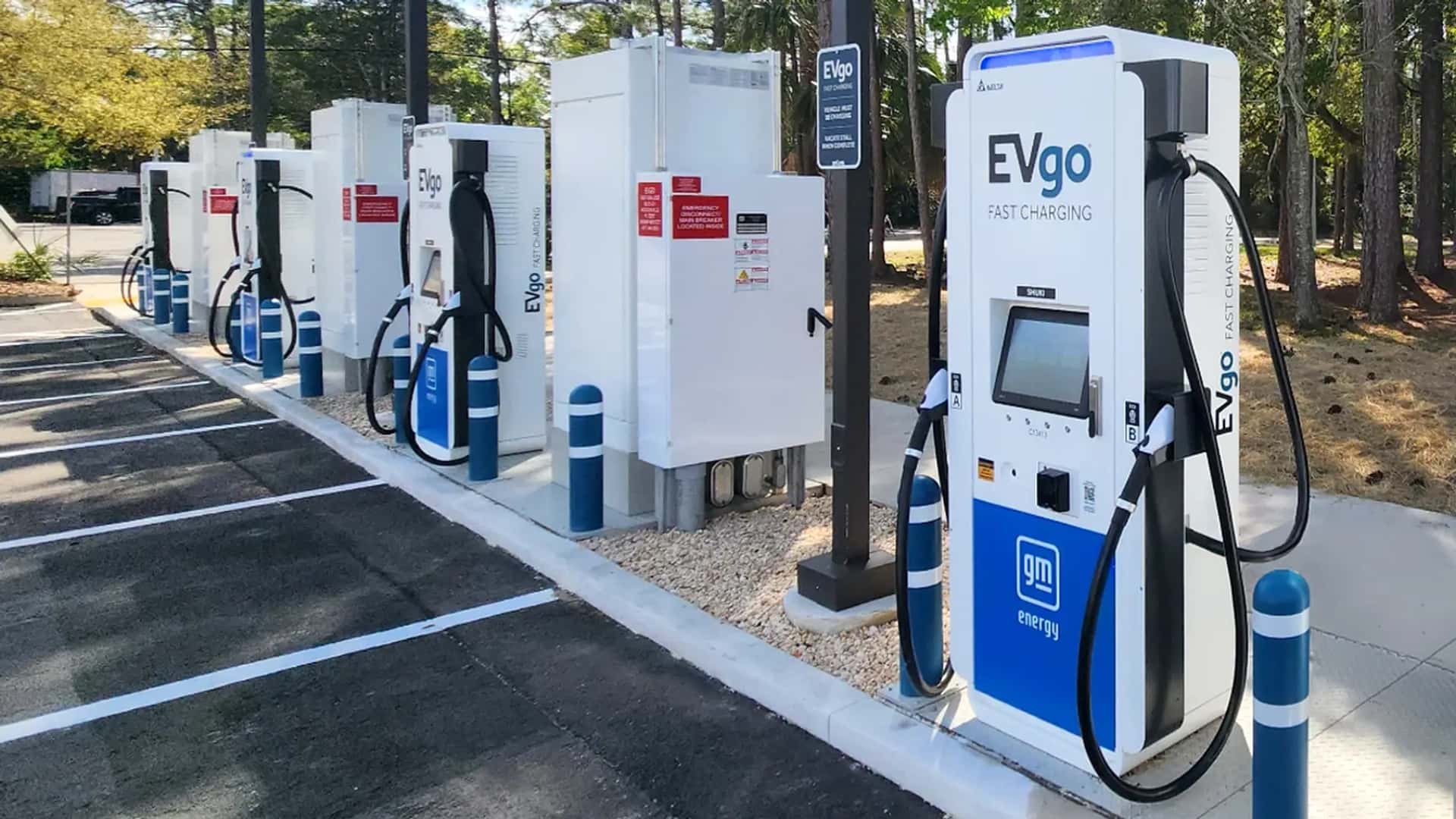
- EVgo, a prominent US EV charging network, is developing 750 kW DC fast chargers, significantly more powerful than its current 350 kW offerings.
- These new high-power EV chargers will feature dynamic power sharing, optimizing charge delivery for multiple connected electric vehicles simultaneously.
- The next-generation stalls will integrate a touchless payment interface and boost the deployment of NACS ports to enhance user convenience and expand compatibility.
- The 750 kW system is designed to future-proof EVgo’s network, enabling ultra-fast charging sessions of around 10 minutes for the fastest charging vehicles, including potential support for electric trucks.
- Development and testing are underway at EVgo’s Innovation Lab in California, with the final design and initial deployments anticipated for next year.
EVgo Set to Double Charging Power with Advanced 750 kW Stations
EVgo, one of the leading electric vehicle (EV) charging networks in the United States, is on the cusp of a significant technological leap. The company has announced plans to deploy next-generation DC fast chargers capable of delivering up to 750 kilowatts (kW) of power, a substantial increase from its current maximum output of 350 kW.
This strategic upgrade is poised to redefine the landscape of public EV charging infrastructure, addressing growing demands for faster charging times and broader compatibility across the rapidly expanding electric vehicle market.
The innovation, currently being designed, developed, and rigorously tested at EVgo’s state-of-the-art Innovation Lab in El Segundo, California, underscores the company’s commitment to advancing the electric mobility ecosystem.
Pioneering Dynamic Power Sharing for Optimal Efficiency
A cornerstone of EVgo’s upcoming 750 kW charging system is its sophisticated dynamic power sharing capability. This feature is engineered to intelligently allocate power to connected EVs, ensuring each vehicle receives the maximum charge it can handle at any given moment.
For instance, in a scenario where a Lucid Gravity and a Tesla Model 3 are simultaneously charging at the same stall, the system can optimally distribute power. The Lucid Gravity might receive 400 kW, while the Tesla Model 3 could get 250 kW, maximizing efficiency for both vehicles without compromising speed.
This intelligent distribution not only enhances the charging experience for individual drivers but also optimizes the overall throughput and utilization of the EV charging infrastructure, reducing wait times and improving network efficiency.
Enhancing User Experience with Touchless Payments and NACS Integration
Beyond raw power, EVgo is focusing on a seamless and user-friendly charging experience. The new 750 kW stalls will incorporate a touchless payment interface, allowing drivers to initiate and pay for charging sessions without the necessity of downloading a smartphone application.
This simplification of the payment process is expected to significantly improve accessibility and convenience, catering to a wider demographic of EV owners and reducing potential friction points during a charging session. It represents a move towards more universal and hassle-free access to high-power EV chargers.
Furthermore, EVgo is strategically increasing the deployment of North American Charging Standard (NACS) ports at its new stations. This move is designed to double its addressable market in the near future, aligning with broader industry trends towards standardization and interoperability.
Future-Proofing the EV Charging Network for Evolving Demands
The introduction of 750 kW chargers is a proactive measure to future-proof EVgo’s extensive network. While no currently sold EVs in the United States can accept a full 750 kW charge, the global electric vehicle market is rapidly evolving, with some overseas models already capable of handling 1,000 kW or more.
This forward-looking approach ensures that EVgo’s EV charging infrastructure will be well-equipped to support the next generation of high-capacity electric vehicles as they become available domestically. It also addresses the specific and substantial power requirements of emerging electric trucks and other heavy-duty fleet vehicles.
Electric trucks, with their massive battery capacities, require immense amounts of power to achieve relatively short charging times. These high-power EV chargers are crucial for making electric trucking a viable and efficient solution for commercial operations across the country.
Accelerating Charging Times for American EV Drivers
The immediate and tangible benefit for American EV drivers will be the prospect of significantly reduced charging durations. According to EVgo, the new 750 kW system is projected to enable 10-minute charging sessions for the fastest charging vehicles currently available in the U.S. market.
This dramatic reduction in charging time is a critical factor in mitigating range anxiety and making electric vehicle ownership more appealing for daily commutes and long-distance travel. It represents a substantial improvement in the overall convenience and practicality of electric mobility.
Despite earlier concerns about the pace of vehicle electrification in the U.S., a robust selection of fast-charging EVs is now on offer, all of which stand to benefit immensely from EVgo’s upcoming high-powered stalls.
EVgo’s Extensive Footprint and Strategic Expansion
EVgo currently operates a formidable network of nearly 2,000 DC fast charging stations across the United States, providing access to over 5,300 individual charging ports. This data, sourced from the Department of Energy’s Alternative Fuels Data Center (AFDC), highlights EVgo’s established presence in the national EV charging infrastructure.
The ongoing development at its Innovation Lab underscores EVgo’s commitment to not only expanding its physical footprint but also to pioneering advancements in electric vehicle charging technology. This dual focus positions the company as a key player in supporting the nation’s transition to electric transportation.
The investment in higher power charging and enhanced user experience is a strategic move to solidify its market position and meet the evolving needs of millions of EV drivers.
Looking Ahead: Deployment and Industry Impact
While the specifics of the 750 kW system’s final design remain under wraps, EVgo has indicated that more details, including the complete design reveal, will be announced next year. The initial deployments of these groundbreaking chargers are also slated to commence in the upcoming year.
This initiative from EVgo is a clear indicator of the rapid advancements in the EV charging infrastructure sector. It reflects an industry-wide push towards creating a charging experience that is as fast, reliable, and convenient as traditional gasoline refueling, thereby accelerating the widespread adoption of electric vehicles.
The deployment of these high-power EV chargers is expected to have a profound impact, setting new benchmarks for charging speeds and operational efficiency within the public charging domain.
Frequently Asked Questions (FAQ)
What is EVgo doing to upgrade its charging network?
EVgo is developing and testing next-generation DC fast chargers capable of delivering up to 750 kilowatts (kW) of power. This is a significant upgrade from its current maximum offering of 350 kW, designed to provide much faster charging speeds for electric vehicles across the United States.
What is the significance of 750 kW charging power?
A 750 kW charging power signifies a substantial leap in EV charging technology. It aims to future-proof the network by accommodating next-generation EVs with larger batteries and enabling ultra-fast charging times, potentially reducing charging sessions for compatible vehicles to as little as 10 minutes.
What is dynamic power sharing?
Dynamic power sharing is a technology that allows a charging station to intelligently distribute available power to multiple electric vehicles connected simultaneously. It ensures that each EV receives the maximum amount of power it can handle, optimizing charging efficiency and minimizing overall charging time for all users at the station.
How will the new chargers improve the user experience?
The new high-power EV chargers will enhance user experience through several innovations. These include a touchless payment interface, which eliminates the need for smartphone apps, and an increased deployment of NACS ports, improving compatibility and convenience for a broader range of electric vehicle owners.
When can EV drivers expect to see these new chargers deployed?
EVgo is currently in the design, development, and testing phase for these 750 kW chargers at its Innovation Lab. The company expects to unveil the final design and begin the initial deployments of these advanced charging stations sometime next year.
How large is EVgo’s current charging network?
According to the Department of Energy’s Alternative Fuels Data Center (AFDC), EVgo currently operates nearly 2,000 DC fast charging stations throughout the United States. These stations collectively offer more than 5,300 individual charging ports, making EVgo one of the nation’s largest public EV charging networks.
Why is NACS port integration important for EVgo’s network?
Integrating North American Charging Standard (NACS) ports is crucial for EVgo as it significantly expands compatibility with a growing number of electric vehicles, particularly those from Tesla. This strategic move aims to double EVgo’s addressable market, making its network accessible to more EV drivers and contributing to industry-wide charging standardization.