
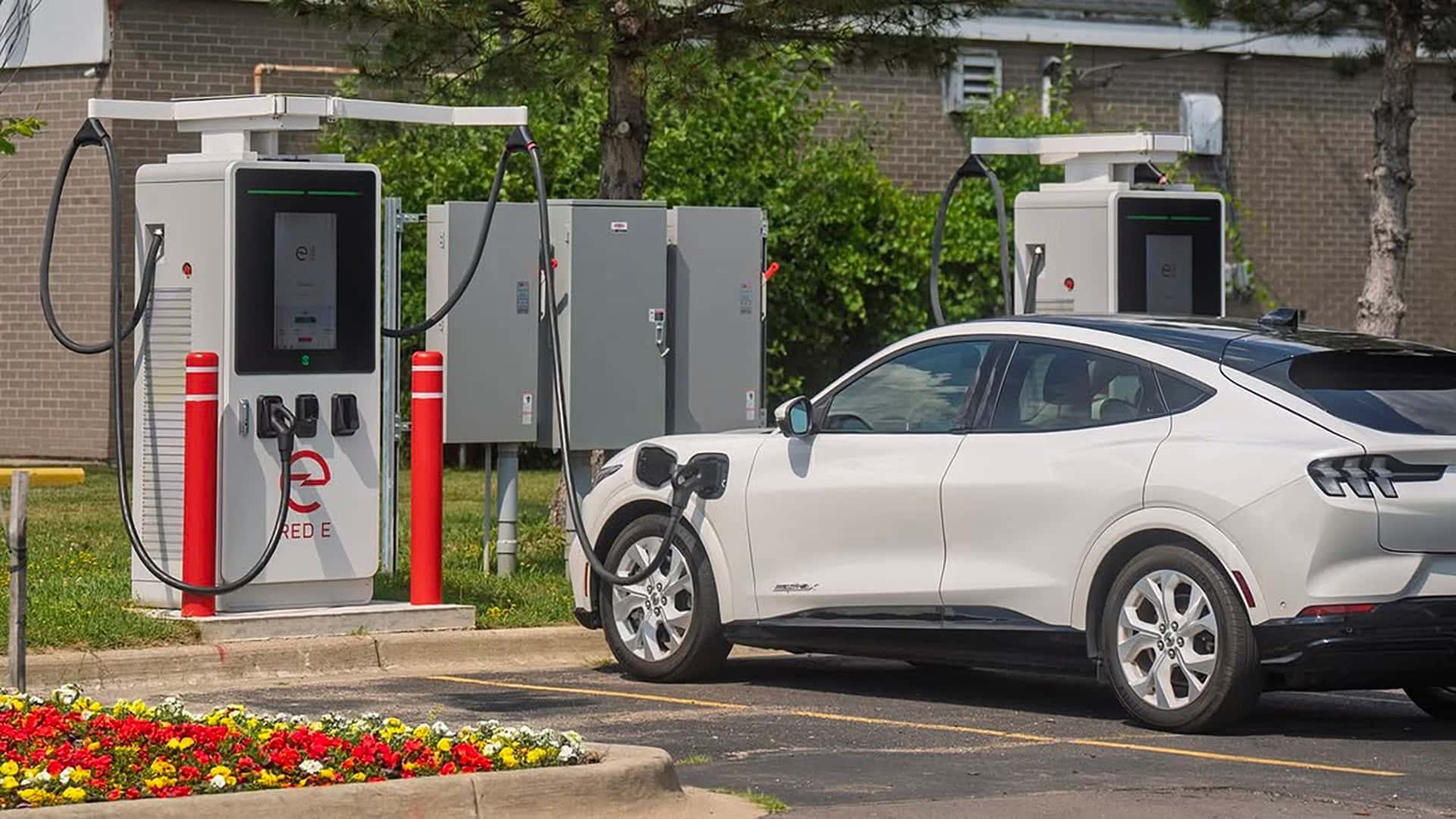
In a significant stride towards simplifying the electric vehicle (EV) charging experience, Red E Charge, a rapidly expanding network in the United States, has introduced its innovative ‘Plug & Charge’ functionality. This new feature, dubbed Red E Go, promises to eliminate common frustrations associated with public charging, allowing EV drivers to power up their vehicles without the need for smartphone apps or physical credit cards after an initial one-time setup.
This development is poised to significantly enhance the usability of electric vehicle charging networks, addressing key pain points for consumers and driving broader EV adoption. The Detroit-based company’s strategic move not only elevates its service offerings but also cements its position as a key player in the evolving landscape of sustainable transportation infrastructure.
Key Takeaways
- Red E Charge has launched ‘Red E Go,’ a Plug & Charge service for streamlined EV charging.
- After a quick one-time account setup, drivers can simply plug in their EV for automatic charging and payment.
- The company was the fourth fastest-growing DC fast charging network in Q2, adding 315 new ports.
- Red E Charge operates over 1,000 locations with approximately 4,600 charging ports across 46 U.S. states.
- The network ranks fifth in overall customer satisfaction in the JD Power EVX Public Charging Study.
Seamless Charging: The Dawn of Red E Go
The introduction of Plug & Charge functionality at Red E Charge stations marks a pivotal moment for EV drivers seeking effortless charging solutions. The core principle behind ‘Red E Go’ is simplicity: once an EV owner completes a straightforward, one-time setup within the Red E Charge smartphone application, linking their vehicle details and a preferred payment method, the charging process becomes entirely automated.
Gone are the days of fumbling with QR codes, navigating multiple app interfaces, or searching for credit cards at the charging station. With ‘Red E Go,’ drivers can simply pull up, plug in their electric vehicle, and the charging session commences, with payment handled seamlessly in the background. This innovation is a direct response to consumer demand for a charging experience that mirrors the ease of refuelling a traditional gasoline-powered car.
This enhanced convenience is particularly crucial as the market for electric vehicles continues its rapid expansion. Reducing friction points like complicated payment processes at public charging stations is vital for encouraging more widespread adoption of EVs. Red E Charge’s commitment to improving the user experience through ‘Red E Go’ positions it at the forefront of customer-centric EV charging solutions.
Expanding Footprint Across the Nation
Red E Charge’s network infrastructure provides a robust backbone for its enhanced services. According to data from the Department of Energy’s Alternative Fuels Data Center, the company currently boasts an impressive network of over 1,000 locations, encompassing approximately 4,600 charging ports spread across 46 American states. This expansive reach ensures that convenient EV charging options are available to a broad spectrum of drivers nationwide.
Within this extensive infrastructure, a significant emphasis is placed on fast charging capabilities. The network features 2,159 fast charging ports across 579 stations, vital for long-distance travel and quick top-ups. Complementing these are nearly 2,500 Level 2 charging ports distributed across 600 locations, offering versatile charging options for various needs, from overnight stays to workplace charging.
The strategic deployment of both DC fast charging and Level 2 charging ports highlights Red E Charge’s comprehensive approach to catering to the diverse requirements of the electric vehicle community. Such a widespread and varied network is fundamental to alleviating ‘range anxiety’ – a primary concern for many prospective EV buyers – and underscores the growing maturity of electric vehicle charging networks.
A Network on the Rise: Market Performance and Growth
Red E Charge has not only been enhancing user convenience but also demonstrating remarkable growth in its infrastructure. A Paren report from the second quarter of this year highlighted Red E as the fourth fastest-growing DC charging network in the United States. The company added 315 new ports during this period, showcasing its aggressive expansion strategy.
This impressive growth trajectory places Red E Charge ahead of several established industry giants, including Electrify America, EVgo, and Ionna, in terms of quarterly port additions. While ranking just below market leaders like Tesla, Walmart, and ChargePoint, Red E Charge’s rapid expansion signals its intent to become a dominant force in the public charging domain. This consistent growth in electric vehicle charging networks is crucial for meeting the escalating demand from a swelling EV fleet.
The focus on DC fast charging is particularly noteworthy, as these high-power stations are critical for reducing charging times and making EVs more viable for daily use and longer journeys. The company’s strategic investment in expanding its fast-charging footprint directly contributes to the overall robustness of the national EV infrastructure.
Prioritising the Driver: Customer Satisfaction Insights
Beyond network size and growth, customer experience remains a paramount factor in the success of any charging provider. Red E Charge has performed commendably in this regard, securing the fifth position in terms of overall satisfaction in JD Power’s latest Electric Vehicle Experience (EVX) Public Charging Study. This study provides invaluable insights into the quality of service across the industry.
With a score of 628 points on a 1,000-point scale, Red E Charge demonstrated a solid performance, positioning itself just below the segment average of 666 points. Importantly, its satisfaction rating surpassed those of other prominent networks such as Electrify America, EVgo, and ChargePoint. This indicates a strong commitment to service quality and driver satisfaction, which are crucial for building trust and loyalty among EV owners.
The networks that ranked higher in the study included Ionna, the Mercedes-Benz Charging Network, the Rivian Adventure Network, and Tesla’s Supercharger network. Red E Charge’s competitive standing underscores its efforts to deliver reliable and user-friendly EV charging solutions, a factor that is increasingly influencing consumer choices and network preferences.
Advanced Charging Capabilities and Transparent Pricing
Red E Charge stations are equipped with a diverse range of power outputs and connector types to accommodate nearly all electric vehicles on the road today. The power output of its charging stalls varies significantly, ranging from a modest 10 kilowatts (kW) for slower, sustained charging to an impressive 640 kW for ultra-fast charging, ensuring rapid turnarounds for compatible vehicles.
To cater to the varied EV market, the network offers multiple plug types, including J1772, CCS1, NACS (North American Charging Standard), and CHAdeMO. This comprehensive compatibility ensures that drivers of different EV models can readily access Red E Charge facilities, reducing compatibility concerns and streamlining the charging process.
Transparency in pricing is another critical aspect addressed by Red E Charge. According to DCFC Tracker, the cost of charging on the network ranges from $0.40 per kilowatt-hour (kWh) to $1.15 per kWh. Such clear pricing structures allow EV owners to plan their charging costs effectively, contributing to a more predictable and user-friendly experience across electric vehicle charging networks.
The Future of EV Charging Convenience
The initiatives by Red E Charge, particularly the rollout of ‘Red E Go’ and its continued network expansion, underscore a broader industry trend towards enhancing convenience and accessibility in EV charging. As the automotive industry rapidly electrifies, the reliability and ease of public charging infrastructure become as critical as the vehicles themselves.
Innovations like Plug & Charge are instrumental in demystifying EV ownership and making the transition from conventional vehicles more appealing for a wider audience. By reducing logistical hurdles and fostering a seamless user experience, companies like Red E Charge are not just building charging stations; they are constructing the very backbone of future sustainable mobility.
The continued investment in advanced technology, coupled with a keen focus on customer satisfaction and strategic network growth, positions Red E Charge as a significant contributor to the maturation and widespread acceptance of electric vehicles in the United States. These advancements pave the way for a more integrated and user-friendly ecosystem for all EV drivers.
FAQ Section
What is ‘Red E Go’ and how does it simplify EV charging?
‘Red E Go’ is Red E Charge’s new Plug & Charge service. After a one-time setup in the app where drivers link their vehicle and payment, they can simply plug in at compatible stations. The system automatically recognises the vehicle, initiates charging, and handles payment, eliminating the need for apps, QR codes, or credit cards for subsequent charges.
How extensive is the Red E Charge network in the U.S.?
Red E Charge operates over 1,000 locations with approximately 4,600 charging ports across 46 states. This includes 2,159 fast charging ports at 579 stations and nearly 2,500 Level 2 charging ports at 600 locations, providing a comprehensive and accessible electric vehicle charging network for drivers nationwide.
How does Red E Charge compare to other networks in terms of growth?
In the second quarter of this year, Red E Charge was identified as the fourth fastest-growing DC fast charging network in the U.S., according to a Paren report. It added 315 new ports, outpacing major competitors like Electrify America, EVgo, and Ionna, demonstrating its rapid expansion in the EV infrastructure market.
What is Red E Charge’s customer satisfaction rating?
Red E Charge ranked fifth in overall satisfaction in JD Power’s latest Electric Vehicle Experience (EVX) Public Charging Study, scoring 628 points out of 1,000. While slightly below the segment average, this rating is higher than that of Electrify America, EVgo, and ChargePoint, indicating strong user appreciation for its EV charging solutions.
What types of charging plugs and power outputs does Red E Charge offer?
Red E Charge stations offer a variety of plug types, including J1772, CCS1, NACS, and CHAdeMO, ensuring compatibility with most EV models. Power outputs range significantly from 10 kilowatts to an impressive 640 kilowatts, providing flexible charging speeds suitable for different vehicle requirements and charging durations.
How transparent is the pricing at Red E Charge stations?
Red E Charge maintains transparent pricing, with costs ranging from $0.40 per kilowatt-hour (kWh) to $1.15 per kWh, as reported by DCFC Tracker. This clear pricing structure enables EV drivers to understand and anticipate their charging expenses, contributing to a more predictable and user-friendly experience across the network.