
Key Takeaways
- Pilot Company and Tesla are strategically deploying over a dozen Megacharger stations for electric semi-trucks across key U.S. freight corridors.
- The first Megacharger station, now operational in Ellabell, Georgia, features six stalls, each capable of delivering up to 1.2 megawatts of power to a Tesla Semi.
- These high-power charging facilities, integrated within Pilot’s extensive travel center network, aim to accelerate commercial fleet electrification and support long-haul logistics.
- Pilot is also significantly expanding its fast-charging infrastructure for regular electric vehicles, demonstrating a comprehensive commitment to EV adoption across the nation.
In a significant stride towards decarbonizing commercial transportation, Pilot Company, North America’s largest travel center network, has partnered with Tesla to establish a robust Tesla Semi Megacharger Network across vital freight routes in the United States. This collaboration marks a pivotal moment for heavy-duty electric vehicles, addressing a critical need for high-speed charging infrastructure that supports long-haul operations.
More than a dozen megawatt-capable charging stations are currently being developed, with the first site already operational in Ellabell, Georgia. This initiative is set to transform the landscape of electric truck charging, making fleet electrification a more viable and accessible option for logistics companies nationwide.

Pioneering the Future of Electric Truck Charging
The Inaugural Ellabell Megacharger Station
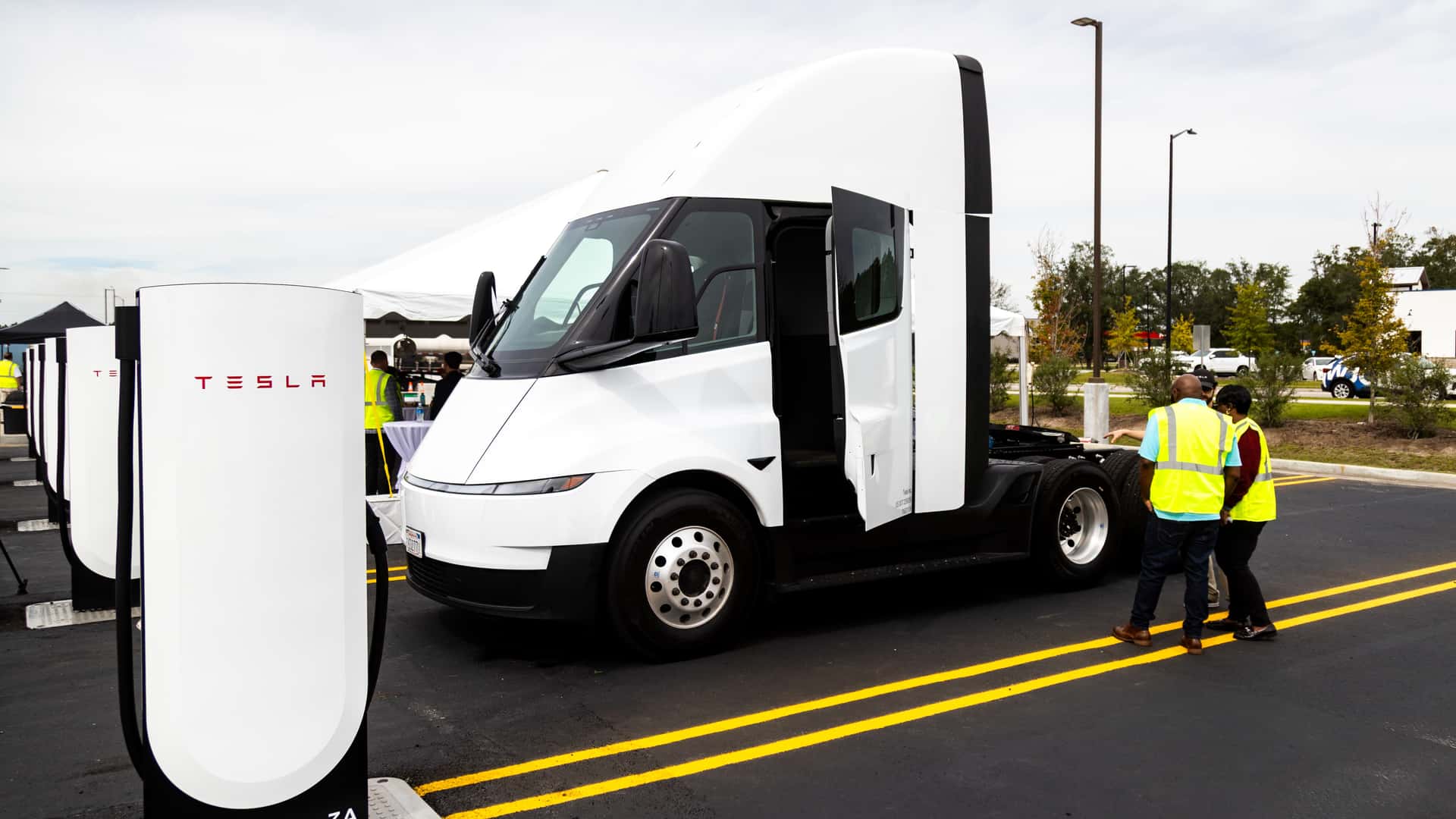
The roll-out of the Tesla Semi Megacharger Network has officially commenced, with the first station now actively serving electric trucks at a Pilot location in Ellabell, Georgia. This crucial hub features six advanced charging stalls, each engineered to deliver an impressive 1.2 megawatts of power. Such high-capacity charging is essential for the rapid turnaround required by commercial trucking schedules.
Drivers utilizing the Ellabell facility will need to back their Tesla Semis into the designated charging bays. This site design is tailored to accommodate the large dimensions of semi-trucks while ensuring efficient power delivery. The operational status of this station underscores a tangible step forward in building out the necessary infrastructure for a nationwide electric trucking ecosystem.
In a parallel development, Tesla also energized another dedicated Semi station in Conley, Georgia, earlier this week. While not affiliated with Pilot, this independent facility showcases a pull-through stall design, offering an alternative configuration for electric truck charging. Both sites highlight the growing momentum behind establishing a comprehensive charging infrastructure for the Tesla Semi.

Strategic Expansion Along Vital Freight Routes
The joint effort between Pilot and Tesla extends beyond individual stations, focusing on a strategic network of more than a dozen high-powered charging sites. These facilities are meticulously planned for placement along major freight corridors across the U.S., including key stretches of I-5 and I-10, as well as other significant routes spanning California, Indiana, Nevada, and Texas.
Each of the new Pilot-affiliated stations will host between four and eight Tesla Megachargers. This scalable approach allows for significant charging capacity at each location, designed to meet the demands of growing electric truck fleets. The deliberate choice of Pilot’s travel centers capitalizes on existing infrastructure that truckers already frequent, integrating electric charging into established logistical patterns.
Shannon Sturgil, senior vice president of alternative fuels at Pilot, emphasized the strategic importance of this collaboration. “Pilot is proud to bring heavy-duty charging directly to key trucking routes and pair it with the services and amenities drivers rely on,” Sturgil stated. “With these initial locations, we’re making fleet electrification a more accessible option for long-haul transportation and are excited to continue working with Tesla to move at the pace and preference of our customers.” This statement underscores the commitment to both technological advancement and driver convenience.
Upcoming Megacharger Locations and Development Pipeline
Following the successful launch in Ellabell, Georgia, the Tesla Semi Megacharger Network is poised for rapid expansion. The second Pilot-Tesla Semi charging station is slated to go online at a Flying J location on E. Paige Ave. in Tulare, California, demonstrating the cross-country reach of this initiative. Soon after, another Flying J in Fort Stockton, Texas, will receive a Megacharger station, further bolstering the network in critical transit areas.
North Las Vegas, Nevada, is also on the immediate horizon for a new Pilot Travel Center Megacharger installation. Beyond these named locations, an additional nine sites are currently under active construction, signaling a robust and ongoing development pipeline for the heavy-duty EV infrastructure. While the specific details of these nine sites remain undisclosed, their active development confirms the accelerated deployment strategy.
Unpacking Megacharger Technology and Its Impact
The Megacharger technology is a cornerstone of Tesla’s strategy for commercial vehicle electrification. Unlike conventional EV chargers designed for passenger vehicles, Megachargers deliver substantial power outputs, up to 1.2 megawatts, which is crucial for recharging large battery packs found in electric semi-trucks efficiently. This high-power delivery dramatically reduces charging times, mitigating one of the primary concerns for fleet operators considering the switch to electric.
For a Tesla Semi, a mere 30-minute top-up at a Megacharger can boost the state of charge by an impressive 60%. This rapid charging capability aligns with standard driver break times, allowing for seamless integration into existing long-haul trucking operations. Truck drivers can utilize the amenities available at Pilot’s travel centers, such as quick-service restaurants, during their charging stops, minimizing downtime and enhancing overall efficiency.
The widespread deployment of the Tesla Semi Megacharger Network at Pilot’s strategically located travel centers is critical for overcoming range anxiety and operational challenges associated with heavy-duty electric vehicles. By integrating these high-power chargers into existing, well-established trucking stops, the partnership significantly lowers the barrier to entry for commercial fleets looking to adopt electric trucks, contributing to broader transportation innovation and sustainability goals.
Pilot’s Commitment to Comprehensive EV Charging
Beyond its collaboration with Tesla for heavy-duty vehicles, Pilot Company is actively expanding its electric vehicle charging infrastructure for regular passenger EVs. The company has forged significant partnerships with industry leaders like General Motors and EVgo to build a vast network of fast-charging stalls. This dual-pronged approach showcases Pilot’s holistic vision for supporting the broader shift towards electric mobility.
To date, Pilot has energized 1,300 fast-charging stalls across 300 locations throughout the country, offering convenient and reliable charging options for a wide array of electric car drivers. The company’s ambition doesn’t stop there; plans are in motion to install no fewer than 2,000 chargers across 500 Pilot travel centers in the near future. This expansive network of EV charging points positions Pilot as a pivotal player in the evolving landscape of electric transportation, catering to both light-duty and heavy-duty electric vehicles.
Outlook for Heavy-Duty EV Infrastructure
The collaboration between Pilot and Tesla to build out the Tesla Semi Megacharger Network represents a significant investment in the future of commercial fleet electrification. By focusing on critical freight corridors and leveraging Pilot’s extensive network of travel centers, this initiative provides the essential charging infrastructure required for the widespread adoption of heavy-duty electric vehicles.
This strategic deployment not only supports the operational needs of the Tesla Semi but also signals a broader commitment from major industry players to sustainable logistics and transportation innovation. As more Megacharger stations come online, the long-haul trucking sector will witness an accelerated transition towards decarbonization, promising a future of cleaner, more efficient commercial transport across the United States.
FAQ Section
What is the purpose of the Tesla Semi Megacharger Network?
The Tesla Semi Megacharger Network aims to provide dedicated, high-power charging infrastructure for Tesla’s electric semi-trucks. This network, strategically located along major freight corridors at Pilot travel centers, is crucial for supporting long-haul commercial fleet electrification and addressing the unique charging needs of heavy-duty electric vehicles.
Where are the first Tesla Semi Megacharger stations located?
The inaugural Tesla Semi Megacharger station is operational at a Pilot Travel Center in Ellabell, Georgia. Additionally, Tesla has energized another independent Semi charging station in Conley, Georgia, featuring pull-through stalls. Further expansion includes sites in Tulare, California, Fort Stockton, Texas, and North Las Vegas, Nevada.
How powerful are the Tesla Megachargers, and how fast do they charge?
Each Tesla Megacharger stall is capable of delivering up to 1.2 megawatts of power. This high-capacity charging allows a Tesla Semi to boost its state of charge by approximately 60% with just a 30-minute top-up. This rapid charging capability is designed to align with typical driver break times, ensuring efficient logistics.
How many Megachargers will be available at each Pilot station?
Pilot’s new Megacharger stations will feature between four and eight Tesla Megachargers per location. This scalable design ensures sufficient charging capacity to accommodate multiple electric semi-trucks simultaneously, supporting the increasing demand for commercial fleet electrification across key transportation routes.
What is Pilot Company’s broader commitment to EV charging infrastructure?
Beyond its partnership with Tesla for heavy-duty trucks, Pilot Company is significantly expanding its fast-charging network for regular electric vehicles. In collaboration with General Motors and EVgo, Pilot has already energized 1,300 stalls at 300 locations and plans to deploy over 2,000 chargers across 500 travel centers nationwide in the near future.