
Key Takeaways
- Pilot Company and Tesla are jointly deploying over a dozen megawatt-capable charging stations across major U.S. freight corridors.
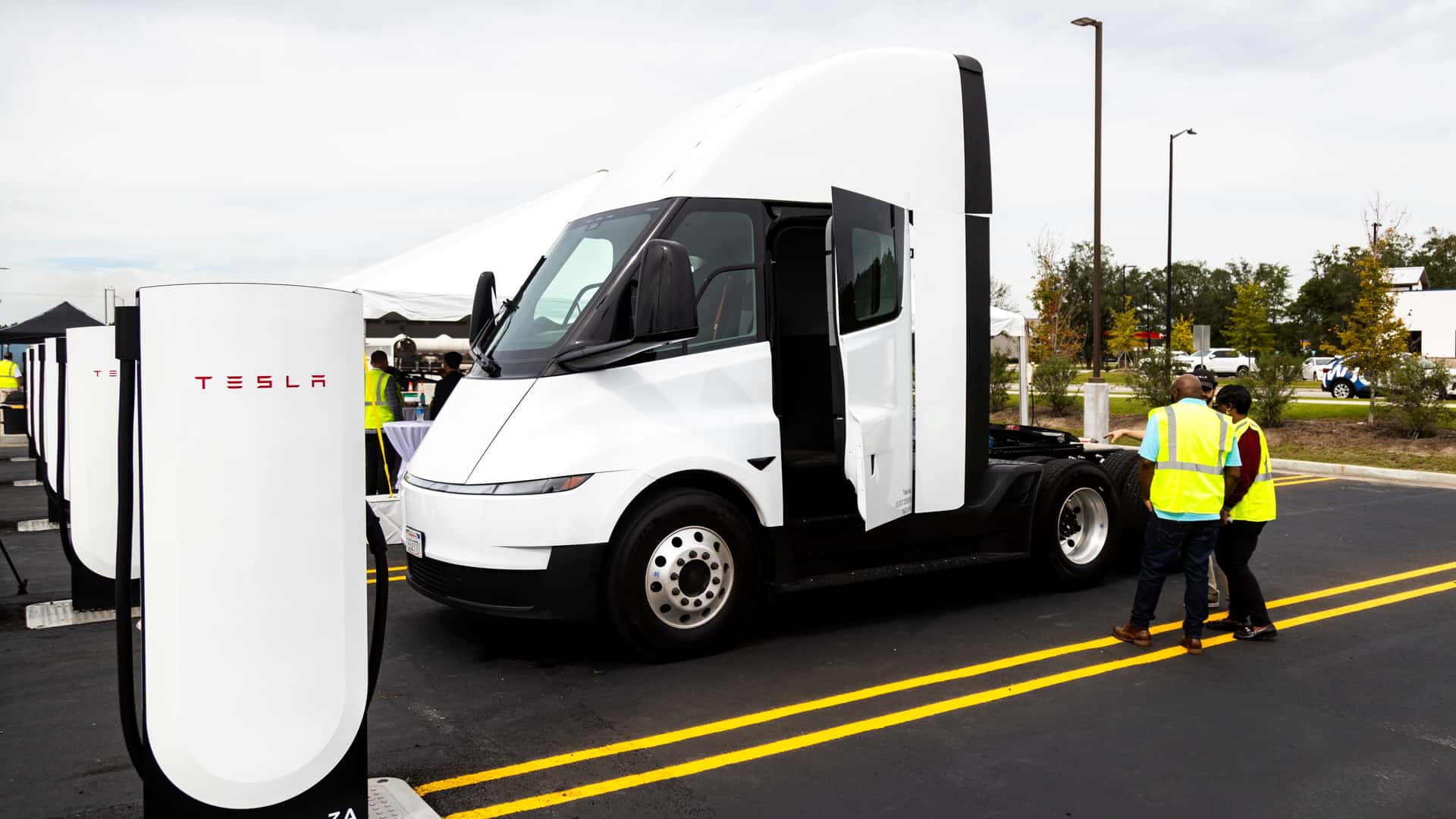
- The inaugural Tesla Megacharger station is now operational in Ellabell, Georgia, featuring six stalls each delivering up to 1.2 megawatts of power specifically for the Tesla Semi.
- These strategic charging hubs, located at established Pilot and Flying J travel centers, aim to integrate high-speed electric truck charging with essential driver amenities.
- Additional sites are rapidly under construction across California, Indiana, Nevada, and Texas, signaling a significant expansion of heavy-duty electric vehicle charging infrastructure.
- A 30-minute charge can boost a Tesla Semi’s battery by 60%, aligning with typical driver rest periods and enhancing operational efficiency for fleet operators.
In a significant stride towards the widespread adoption of electric heavy-duty vehicles, Pilot Company, North America’s largest travel center network, has partnered with Tesla to establish a critical charging infrastructure for the Tesla Semi. This ambitious collaboration will see the deployment of over a dozen high-powered charging stations along major freight corridors across the United States, marking a pivotal moment for the electrification of long-haul transportation.
The first of these dedicated Tesla Megachargers for Semis is already operational at a Pilot location in Ellabell, Georgia. This initial facility features six advanced charging stalls, each engineered to deliver an impressive 1.2 megawatts of power, tailored specifically for the energy demands of the Tesla Semi electric truck.

Strategic Rollout Across Major Freight Corridors
The joint initiative between Pilot and Tesla is strategically focused on integrating heavy-duty electric vehicle charging into existing, well-established trucking hubs. The Ellabell, Georgia site, for instance, requires drivers to back into the charging bay, a common practice that will become routine for electric truck operators.
Complementing this, another standalone Tesla Semi station, not affiliated with Pilot, recently became active in Conley, Georgia, offering a pull-through design for enhanced convenience. This dual development underscores a concerted effort to build out the nascent electric truck charging infrastructure.
Expansion Plans and Key Locations
Pilot’s extensive network of travel centers, which are indispensable stops for truckers, will host between four and eight Tesla Megachargers per location. These strategically vital stations are slated for construction along key interstate highways, including I-5 and I-10, as well as other critical freight arteries spanning California, Indiana, Nevada, and Texas.
Shannon Sturgil, Senior Vice President of Alternative Fuels at Pilot, articulated the company’s commitment to this transformative shift. “Pilot is proud to bring heavy-duty charging directly to key trucking routes and pair it with the services and amenities drivers rely on,” Sturgil stated. “With these initial locations, we’re making fleet electrification a more accessible option for long-haul transportation and are excited to continue working with Tesla to move at the pace and preference of our customers.”
Enhanced Efficiency and Driver Amenities
The second Pilot-Tesla Megacharger station is set to go online imminently at a Flying J location on E. Paige Ave. in Tulare, California. Following this, a Flying J in Fort Stockton will also receive a Megacharger station, with a Pilot Travel Center in North Las Vegas next in line. An additional nine sites are currently under active construction, though their precise locations have yet to be disclosed.
One of the most compelling advantages of this partnership lies in the integration of high-power charging with Pilot’s comprehensive amenities. These travel centers are renowned for providing quick-service restaurants, restroom facilities, and other essential services that truckers rely on during their long hauls.
Optimizing Charging for Operational Routines
This strategic co-location allows electric truck drivers to seamlessly incorporate charging into their mandatory rest periods, minimizing downtime and maximizing operational efficiency. For the Tesla Semi, a mere 30-minute top-up at one of these Megachargers is capable of boosting the state of charge by a substantial 60 percent. This rapid replenishment capability is crucial for maintaining tight delivery schedules in the demanding logistics sector.
The deployment of Tesla Megachargers for Semis at these highly frequented locations addresses a significant challenge in heavy-duty electric vehicle adoption: the need for reliable, high-speed charging infrastructure that aligns with existing logistical operations. By leveraging Pilot’s established footprint, the initiative aims to alleviate range anxiety and operational concerns for fleet operators transitioning to electric trucks.
Pilot’s Broader Commitment to EV Infrastructure
Beyond its pioneering role in heavy-duty electric truck charging, Pilot Company has demonstrated a robust commitment to the broader electric vehicle ecosystem. The company has already deployed over 1,000 fast-charging stalls for conventional electric passenger vehicles.
Through strategic partnerships with industry leaders such as General Motors and EVgo, Pilot has successfully energized 1,300 charging stalls across 300 locations nationwide. The company’s ambitious expansion plans aim to further escalate this figure, with a projected 2,000 chargers becoming available across 500 Pilot travel centers in the near future. This dual focus on both passenger and heavy-duty electric vehicle charging infrastructure positions Pilot as a key enabler of sustainable transportation across North America.
Facilitating the Transition to Sustainable Logistics
The introduction of Tesla Megachargers for Semis represents more than just new charging points; it signifies a maturing infrastructure ecosystem for electric freight transport. For fleet operators, this development promises reduced fuel costs, lower maintenance requirements, and a pathway to significantly decrease carbon emissions, aligning with global sustainability goals.
The natural integration of these Megachargers into high-traffic trucking routes, coupled with the convenient amenities offered by Pilot travel centers, is designed to make the transition to electric long-haul transportation both practical and economically viable. As construction progresses on the additional sites, the foundation for a truly electric logistics future continues to solidify.
FAQ Section
What is a Tesla Megacharger?
A Tesla Megacharger is a high-power charging station specifically designed for the Tesla Semi electric truck. It delivers up to 1.2 megawatts of power, enabling rapid charging for heavy-duty electric vehicles to support long-haul transportation needs effectively.
Where are the first Tesla Megacharger stations located?
The first operational Tesla Megacharger station at a Pilot Travel Center is in Ellabell, Georgia. Another Tesla Semi station, not affiliated with Pilot, has also been energized in Conley, Georgia, marking early deployment points for the crucial charging infrastructure.
How many Megacharger stations are planned by Pilot and Tesla?
Pilot and Tesla are collaborating to build over a dozen megawatt-capable charging stations. The initial rollout includes locations in California, Indiana, Nevada, and Texas, alongside the currently operational site in Georgia and others under construction.
How long does it take to charge a Tesla Semi at a Megacharger?
At a Tesla Megacharger, a Tesla Semi can receive a 60% battery boost with approximately 30 minutes of charging. This rapid charging capability is designed to align with standard driver rest periods, optimizing operational efficiency for fleet management.
Why are these Megacharger locations important for truckers?
Locating Tesla Megachargers at Pilot and Flying J travel centers is crucial because these hubs offer essential amenities like restaurants and restrooms. This allows electric truck drivers to charge their vehicles conveniently while fulfilling mandatory rest breaks, minimizing disruption to their schedules.
Does Pilot Company also support charging for regular electric vehicles?
Yes, Pilot Company has a significant existing infrastructure for conventional electric vehicles. Through partnerships with General Motors and EVgo, Pilot has over 1,000 fast-charging stalls, with plans to expand to 2,000 chargers across 500 travel centers nationwide.