
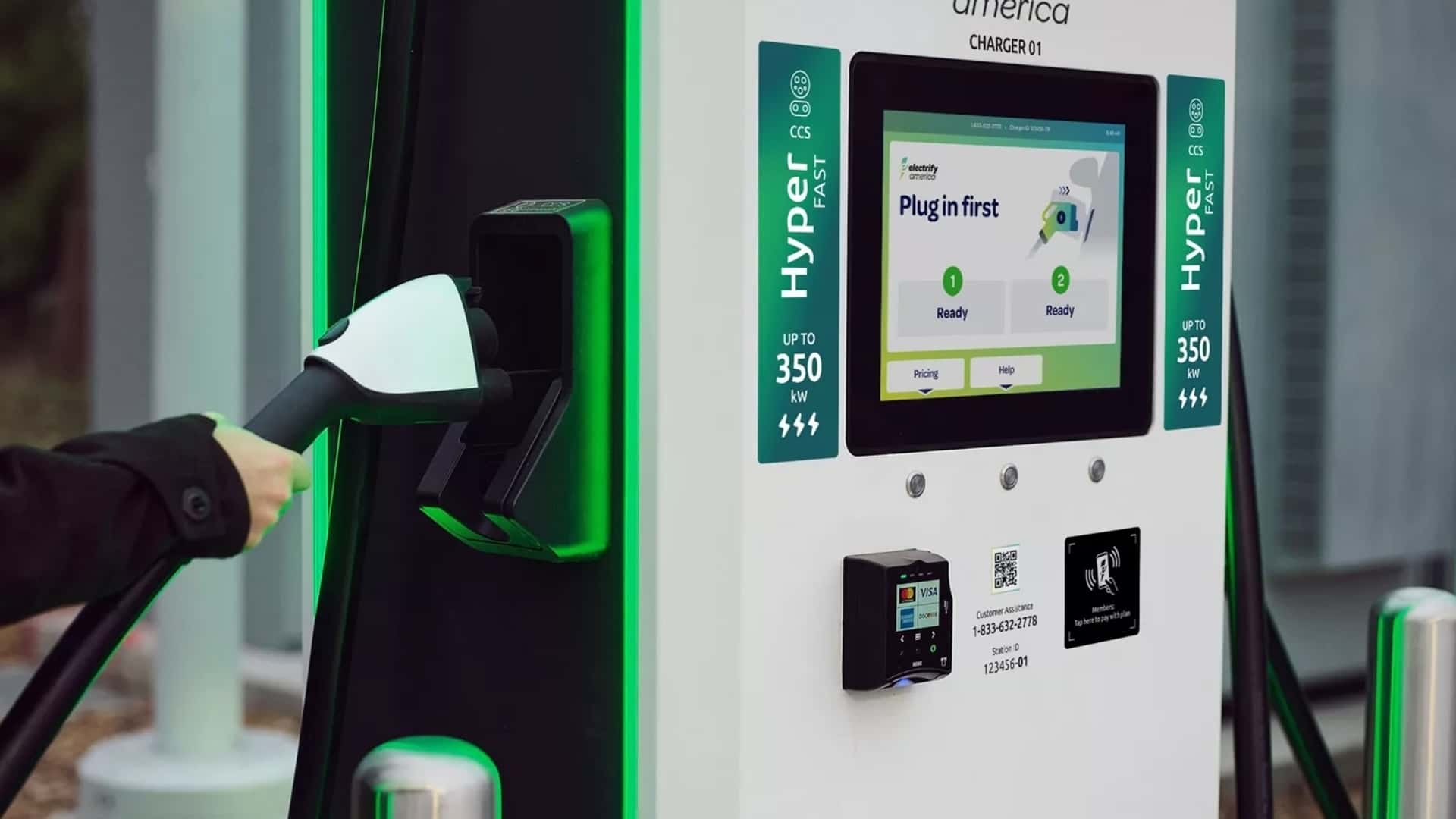
Electrify America, a leading provider in the United States’ electric vehicle charging sector, has announced a significant expansion of its direct current (DC) fast charging network. The company’s footprint now includes over 6,000 operational charging ports, solidifying its position as the second-largest non-Tesla EV fast charging network nationwide. This milestone underscores the ongoing commitment to bolstering the essential infrastructure required for widespread electric vehicle adoption.
The achievement comes at a critical juncture for the electric vehicle market, where reliable and accessible charging solutions are paramount for consumer confidence and sustained growth. Despite varying market dynamics for EV sales over the past year, Electrify America’s continuous investment reflects a strategic move to support the burgeoning electric car ecosystem across the country.
Key Takeaways: Electrify America’s Network Expansion
- Electrify America has exceeded 6,000 DC fast charging ports in the U.S., making it the second-largest non-Tesla network.
- The network now features 6,029 fast charging ports across 1,191 distinct charging sites.
- This represents a 16% increase in charging ports and approximately a 10% rise in operational stations compared to the previous year.
- The company primarily utilizes high-powered chargers, with most stalls delivering 350 kW, complemented by some 150 kW and 400 kW units.
- Recent service enhancements include a shift to simpler direct billing for charging sessions, eliminating the need for pre-funded account balances.
Electrify America’s Growth Trajectory and National Coverage
The latest data from the Department of Energy’s Alternative Fuels Data Center (AFDC) confirms Electrify America’s expanded operational capacity, detailing 6,029 fast charging ports across 1,191 sites nationwide. This substantial increase in the EV fast charging network is vital for electric vehicle drivers, providing enhanced convenience and accessibility for both daily commutes and longer journeys.
The growth figures are particularly noteworthy: the number of charging ports within Electrify America’s network has surged by 16% over the past year. Concurrently, the total count of operational stations has seen a healthy rise of approximately 10%, as highlighted by reports from EV Charging Stations. This consistent expansion rate is crucial for accommodating the increasing volume of electric cars on American roads and fostering greater trust in the developing electric vehicle charging infrastructure.
Understanding Charging Terminology: Ports, Stalls, and Connectors
To accurately assess the capacity of an EV fast charging network, it is essential to distinguish between various infrastructure components. The reported figure of 6,029 ports does not translate directly to 6,000 individual charging stalls or 6,000 simultaneously available plugs. Electrify America’s stations, similar to many contemporary charging hubs, incorporate diverse configurations.
For example, some charging stalls are equipped with a single port and a dedicated connector. In contrast, newer, more advanced setups, such as the Alpitronic chargers deployed under the Wawa brand in Pennsylvania, often feature two ports and four connectors per stall. While each port may offer both CCS1 and NACS connectors, such a configuration typically allows only two electric vehicles to charge simultaneously from that particular stall. This strategic design optimizes site efficiency and power distribution while ensuring connector compatibility for a broad spectrum of electric cars.
Navigating the Competitive Landscape of EV Fast Charging
While Electrify America solidifies its stature as the premier non-Tesla EV fast charging network, the market remains intensely competitive. Various operators are actively expanding their reach and technological capabilities, all striving to capture a significant share of the rapidly evolving electric vehicle charging market. Tesla’s Supercharger network continues to maintain its leadership position, setting a high standard for network size, reliability, and integrated user experience.
ChargePoint’s Strategic Advances
ChargePoint maintains its status as the third-largest fast charging operator in the U.S., demonstrating consistent and measured growth. During the second quarter of the reporting period, ChargePoint added 333 new charging ports to its network. This expansion contributed to its overall market share reaching 6.1%, as indicated by data from Paren, an analytical firm focused on electric vehicle infrastructure. ChargePoint’s approach often combines public access points with commercial and fleet installations, thereby broadening its influence across diverse sectors.
Walmart’s Dynamic Entry into EV Charging
A significant new entrant generating considerable momentum in the EV fast charging network is Walmart. In the second quarter, Walmart’s burgeoning charging network installed more ports than any other non-Tesla company, signalling an aggressive expansion strategy. Although its overall operational footprint is still developing compared to more established players, Walmart presently manages 110 stations providing a total of 916 charging ports across its retail locations.
Walmart’s long-term objectives are ambitious, with plans to deploy thousands of high-powered 400-kilowatt stalls by 2030. This substantial investment by a major retail corporation is poised to profoundly impact the accessibility and convenience of electric vehicle charging, particularly within high-traffic commercial zones and community hubs, enhancing the overall electric vehicle charging infrastructure.
Technological Innovations and Enhanced User Experience
Electrify America’s strategy encompasses not only expanding its physical EV fast charging network but also advancing the technological prowess and user convenience of its services. A core focus for the company is the deployment of high-powered chargers, with the majority of its stalls configured to deliver a rapid 350 kW.
In addition to these robust standard units, the network also incorporates a selection of 150 kW chargers and an increasing number of state-of-the-art 400 kW chargers, as tracked by DCFC Tracker. This diversity in power output caters to a wide spectrum of electric vehicles, ensuring optimal charging speeds for varying battery capacities and charging acceptance rates, thereby significantly reducing the time spent charging for compatible EVs.
Beyond hardware advancements, Electrify America has implemented improvements to the customer experience. The company recently transitioned away from an account balance requirement, opting for a streamlined direct billing system. This update means that each charging session is now automatically billed to the user’s designated payment method. This simpler, more direct approach aims to minimize transactional friction, enhance user convenience, and foster a more seamless and user-friendly electric vehicle charging experience.
Driving EV Adoption: The Broader Impact and Future Prospects
The continued and robust expansion of EV fast charging networks, such as Electrify America’s, represents a fundamental pillar in accelerating mainstream electric vehicle adoption. Despite occasional fluctuations, or periods of ‘lukewarm’ EV sales, the presence of reliable, widespread, and high-speed charging infrastructure is crucial for mitigating range anxiety—a primary concern for many potential electric vehicle owners. A comprehensive and efficient EV fast charging network empowers consumers to confidently transition from internal combustion engine vehicles by ensuring convenient and rapid charging options for both routine use and extended travel.
As the electric vehicle market matures and expands, the ongoing growth and diversification of charging solutions—including the introduction of even higher power outputs and simplified payment systems—will remain paramount. The competitive drive among charging providers to offer faster, more accessible, and exceptionally reliable electric vehicle charging infrastructure ultimately benefits all EV drivers and propels the global transition towards a more sustainable and electrified transportation future.
Frequently Asked Questions (FAQ)
What is Electrify America’s latest fast charging network milestone?
Electrify America has achieved a significant milestone by surpassing 6,000 operational DC fast charging ports across the United States. This expansion reinforces its position as the second-largest non-Tesla EV fast charging network, playing a crucial role in supporting the increasing number of electric vehicles.
How many charging sites does Electrify America operate nationwide?
According to the Department of Energy’s Alternative Fuels Data Center, Electrify America currently manages 1,191 fast charging sites throughout the U.S. These locations are strategically distributed to offer convenient charging services for electric vehicle drivers across various regions and key travel routes.
What was the network’s growth rate over the last year?
Over the past year, Electrify America’s network experienced substantial expansion. The number of charging ports increased by 16%, while the number of operational stations grew by approximately 10%. This steady development reflects the company’s commitment to enhancing the nation’s electric vehicle charging infrastructure.
What power levels are available at Electrify America chargers?
Electrify America prioritizes high-powered charging, with most stalls providing 350 kW (kilowatts) of power. Additionally, the network includes various 150 kW chargers and an expanding number of advanced 400 kW units. This range of power outputs caters to diverse electric vehicle models and optimizes charging times.
How has Electrify America simplified its billing process?
Electrify America recently transitioned to a direct billing model, eliminating the need for users to maintain an account balance. Now, each charging session is automatically billed directly to the user’s preferred payment method, streamlining transactions and enhancing the overall convenience for electric car owners.
Who are the primary competitors for Electrify America in the US EV charging market?
In the U.S. EV fast charging network, Tesla’s Supercharger network holds the top position. Electrify America’s main non-Tesla competitors include ChargePoint, which is the third-largest operator, and rapidly expanding networks such as Walmart’s, which is aggressively deploying high-powered charging infrastructure.
Why is the expansion of EV fast charging networks critical for EV adoption?
The ongoing expansion of EV fast charging networks is essential for accelerating electric vehicle adoption by directly addressing range anxiety, a significant concern for potential buyers. A robust and accessible charging infrastructure assures EV drivers that they can undertake long journeys and recharge conveniently, fostering greater confidence in electric transportation.
What is the distinction between a charging port and a charging stall?
A charging port refers to the physical connector on the charging station that plugs into an EV, facilitating power transfer. A charging stall is the designated parking space where an EV charges. Some stalls may be equipped with multiple ports or connectors, potentially allowing more than one EV to charge, though simultaneous sessions might be limited by the stall’s total power capacity.