
Key Takeaways
- The Paris Auto Show, once perceived as declining, has become a pivotal battleground for global EV innovation.
- Chinese automakers initially dominated the affordable EV segment in Europe, forcing a strategic shift among traditional European brands.
- European manufacturers are now vigorously competing, focusing on reasonably-priced, appealing electric models like the Citroën 2CV concept and Renault Twingo.
- Collaborations and investments are reshaping the industry, with Chinese brands establishing manufacturing in Europe and sharing expertise with European conglomerates.
- The rapid acceleration of EV development timelines highlights a global urgency to meet consumer demand for accessible electric vehicles, contrasting with the slower pace in the U.S. market.
Four years ago, the atmosphere surrounding the Paris Auto Show was markedly different. Much like many automotive exhibitions in the United States, a prevailing sentiment suggested the traditional auto show format was nearing its end. Major European manufacturers, including the likes of Mercedes-Benz, opted for off-site reveals, signaling a perceived irrelevance of the main event.
In 2022, the show’s floor appeared sparse, with many long-standing European brands conspicuously absent or presenting only minor refreshes of existing internal combustion engine models. This vacuum, however, proved to be a critical opening for a new wave of contenders, fundamentally altering the trajectory of the European electric vehicle market.
Chinese Automakers Drive Early EV Adoption in Europe
Despite the skepticism from established players, Chinese automakers arrived in Paris with a clear and compelling vision. Brands such as BYD and Great Wall Motors, through their Ora and WEY sub-brands, unveiled a range of new electric vehicle (EV) and plug-in hybrid electric vehicle (PHEV) models. These offerings were distinct: smaller, more accessible hatchbacks and crossovers that boasted competitive ranges and affordability.
At a time when European markets offered a limited selection of similarly priced electrified options, these Chinese imports resonated strongly with consumers. For many attendees, these manufacturers were largely unknown entities. Yet, the palpable interest from the French public underscored a significant market gap—a demand for value-conscious buyers seeking practical and **affordable EV choices**.
This early strategic move allowed Chinese manufacturers to make substantial inroads into the European market. They successfully tapped into a segment that incumbent European automakers had largely overlooked: consumers eager for electrified transport but deterred by the high price points of existing models. This shift marked the beginning of a new competitive era.
Europe’s Resurgent EV Strategy in 2026
Fast forward to 2026, and the narrative has undergone a dramatic transformation. While auto shows and the EV market in the United States continue to navigate uncertainties, Europe has demonstrated a robust and unified response. The palpable shift from the earlier show, where Chinese brands were pioneering, indicates a global automotive sector now fully engaged in the electric transition.
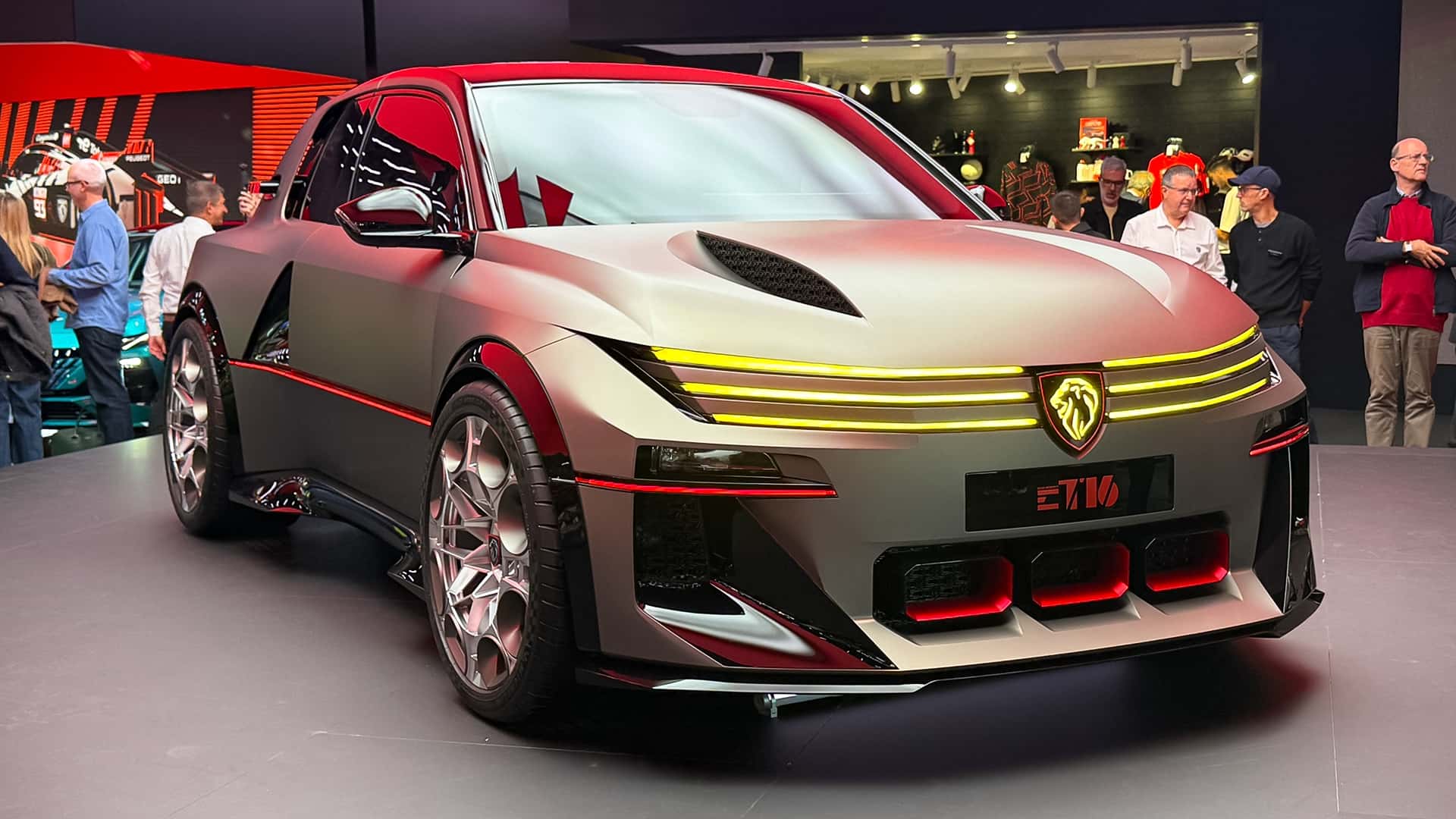
The recent Paris Auto Show was characterized by an overwhelming display of new models and innovative concepts from European manufacturers. This concerted effort signals a renewed commitment to reclaim market share and offer compelling alternatives to the previously unchallenged Chinese dominance in certain segments.
Renault Group’s Vision: “Voitures à vivre”
Renault, a prominent European player, captivated attendees with its production models from Dacia and avant-garde concepts from Alpine and Renault itself. A particular highlight was the Renault E-Space concept, an electric MPV that subtly evoked the classic design of the 1980s Renault Espace while pointing towards a future of sustainable family transport.
A recurring theme across all Renault Group presentations was electrification. Fabrice Cambolive, Renault Group Chief Growth Officer, articulated this philosophy as “Voitures à vivre,” or “cars for living.” This concept emphasizes vehicles designed to seamlessly integrate electrification into daily life, addressing practical needs and lifestyles rather than merely focusing on performance metrics.
The company is actively exploring how electrification can redefine its brands’ future directions and answer new questions about mobility and environmental responsibility. This strategic introspection reflects a broader industry trend of adapting to evolving consumer priorities and regulatory landscapes.
Stellantis and the Pursuit of Affordable Electric Mobility
Similarly, Stellantis showcased a diverse array of EV concepts from its various European brands, underscoring a collective push to meet the growing demand for accessible electric vehicles. European automakers are strategically working to counteract the market penetration of Chinese competitors by developing models that are both inexpensive and appealing.
The Citroën 2CV concept emerged as a showstopper, skillfully blending the nostalgic charm of the original icon with modern electric propulsion. Priced ambitiously at 15,000 euros, equivalent to just under $17,000 at current exchange rates, it exemplifies the industry’s commitment to delivering truly **affordable EV choices**.
This concept is not an isolated effort. Upon its market release, it is expected to join a burgeoning lineup of budget-friendly European EVs. This includes established names like the Renault Twingo and Dacia Spring, alongside upcoming models such as the Nissan Pixo, Kia EV2, and Volkswagen ID. Polo, all of which represent a significant expansion of options compared to 2022.
China’s Evolving Role: Investment and Collaboration
The presence of Chinese automakers at the 2026 Paris Auto Show was as formidable as ever, with an estimated 25 different brands presenting models across all price categories. However, this robust presence no longer necessarily signals an impending market meltdown for European counterparts; instead, it indicates a dynamic evolution of competitive strategies.
A notable shift is the increased investment by leading Chinese brands directly into Europe’s manufacturing infrastructure. Companies such as BYD, Geely, and Xpeng have initiated significant plans to establish or expand their production capabilities within the continent, fostering a more integrated economic relationship.
For instance, Xpeng announced that its L03 compact crossover has garnered 12,000 orders since its summer launch. This popular model is slated for production in Austria by Magna-Steyr, highlighting a trend of localized manufacturing that benefits European economies and supply chains while making **affordable EV choices** more readily available.
Expert Insight: Hope, Introspection, and Integration
Analyst and consultant Lei Xing offered a concise summary of the prevailing atmosphere at the event, stating, “If I had to summarize this year’s Paris Motor Show, it would be hope, introspection, and integration. European brands are trying hard, and they are starting to figure some things out, even if it means the Chinese providing a compromise in terms of halving the hybrid/plug-in export volume but at the same time getting help from the Chinese.”
This expert perspective underscores a critical understanding: the competitive landscape is not a zero-sum game but rather one characterized by complex interdependencies. European brands are not just reacting; they are engaging in a process of self-assessment and strategic adaptation.
Partnerships and Accelerated Development
Beyond direct competition, there is also evidence of strategic collaboration. Chinese brands like Leapmotor are emerging as valuable partners, sharing expertise and technological insights with long-standing European automotive giants. A report from Reuters quoted Antonio Filosa, head of Stellantis Pro One, acknowledging that working with Leapmotor has enabled a complementary relationship.
Filosa highlighted Leapmotor’s speed and technical proficiency as a significant asset for the conglomerate, particularly in its efforts to rapidly manufacture new models and meet market demand. This type of cross-cultural and cross-corporate learning is accelerating development timelines across the industry.
The 2026 Paris Auto Show, for example, saw the debut of the Leapmotor B03 hatchback, complementing the B03X small crossover. Both models were introduced merely weeks after their Chinese counterparts, demonstrating a remarkable acceleration in global product launches. This agile development mirrors the creation of the Dacia Spring, which went from concept to production in less than two years.
Such expedited timelines are a direct response to the urgent need to cater to consumers’ preferences and to effectively compete in a rapidly evolving market for accessible and **affordable EV choices** against Chinese manufacturers.
The Global Pursuit of Accessible EVs
From an external vantage point, the contrasting pace of EV adoption and the availability of diverse electric vehicle options in Europe compared to the United States remain a point of concern. While the discourse surrounding affordable EVs historically centered predominantly on China, its influence continues to be significant.
However, the current European landscape offers a refreshing breadth of electrified vehicles from a multitude of manufacturers. This diversification provides consumers with genuine **affordable EV choices** and reflects a healthy, competitive market.
The collective urgency demonstrated by both European and Chinese automakers to innovate and deliver affordable electric vehicles is a positive development for consumers and the environment alike. One can only hope that this momentum and commitment to widespread EV accessibility will soon translate to a similar variety and affordability within the U.S. market.
FAQ Section
What was the key sentiment at the Paris Auto Show in 2022?
In 2022, many felt the traditional auto show was “dead,” with several major European brands skipping the event or having off-site reveals, indicating a perceived lack of relevance for the main exhibition.
How did Chinese automakers capitalize on the situation in 2022?
Chinese brands like BYD and Great Wall Motors showcased new, relatively affordable EV and PHEV models, including small hatchbacks and crossovers. These offerings filled a gap for value-conscious buyers, establishing their presence in the European market.
What is the “Voitures à vivre” concept introduced by Renault Group?
“Voitures à vivre” (cars for living) is Renault Group’s philosophy focusing on designing electric vehicles that integrate seamlessly into everyday life, addressing practical needs and lifestyles through electrification rather than just performance.
Which European concept car at the 2026 show highlighted affordability?
The Citroën 2CV concept notably stole the show. It aims to capture the original’s charm while being an extremely affordable EV, targeting a price point of 15,000 euros (under $17,000).
How are Chinese brands evolving their strategy in Europe by 2026?
Chinese brands are increasingly investing in Europe’s manufacturing base, like Xpeng producing its L03 compact crossover in Austria. Some are also forming partnerships, sharing expertise with European conglomerates to accelerate development.
What does analyst Lei Xing’s summary of the 2026 show imply?
Lei Xing characterized the show with “hope, introspection, and integration,” suggesting that European brands are adapting and even collaborating with Chinese counterparts. This dynamic involves both competition and mutual assistance, especially concerning hybrid/plug-in export volumes.
Why is the availability of affordable EVs in Europe significant for the global market?
The increasing availability of diverse and **affordable EV choices** in Europe demonstrates a strong market response to consumer demand and environmental goals. This competitive push could serve as a model and drive similar advancements in other regions, including the U.S.