
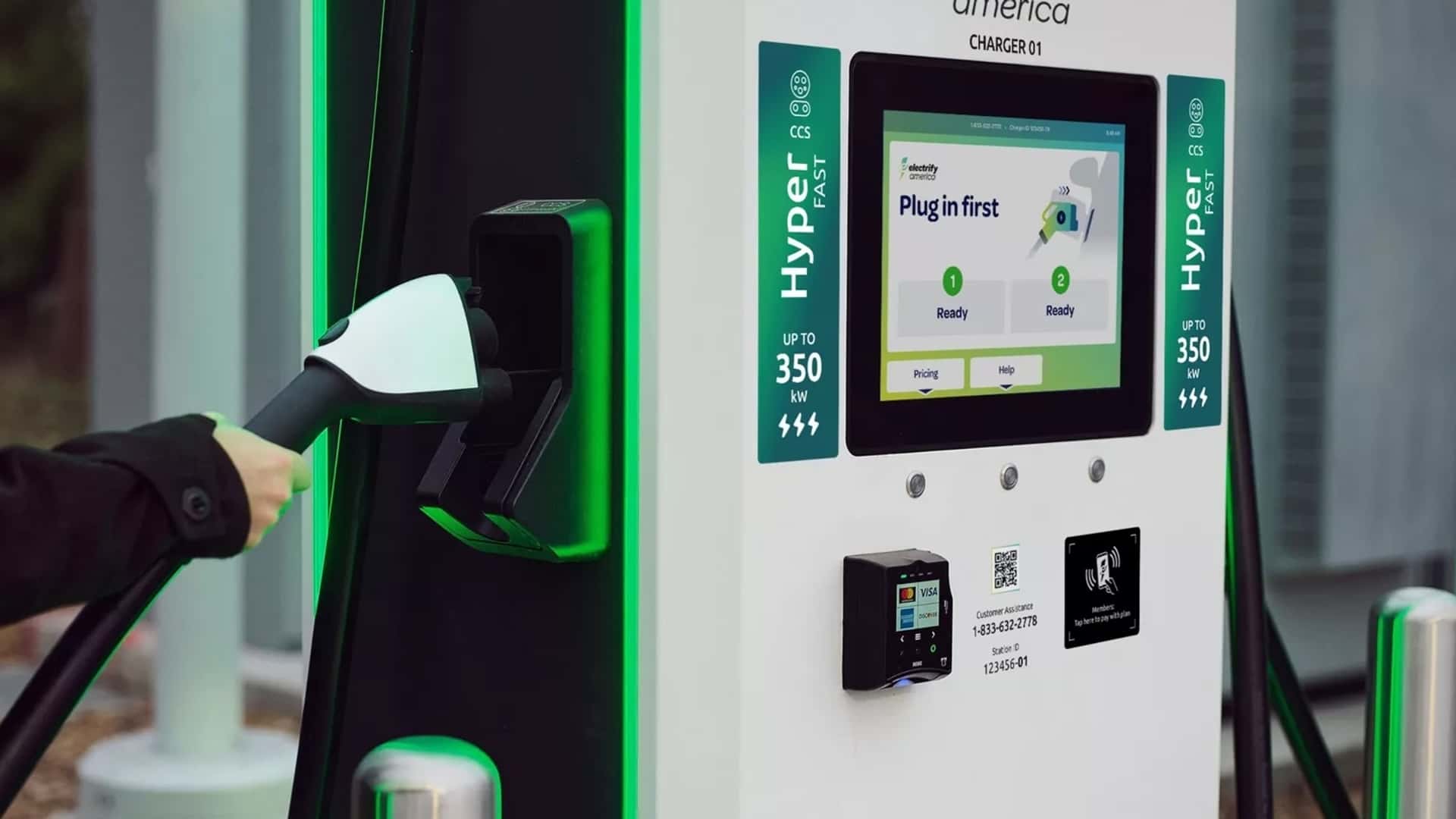
Electrify America, a pivotal player in the United States’ electric vehicle (EV) charging infrastructure, has announced a significant expansion, surpassing 6,000 high-powered DC fast charging ports nationwide. This milestone underscores the company’s continuous growth as the largest non-Tesla EV fast charging network in the country, despite broader fluctuations in EV sales over the past year. The expansion reflects a critical step in addressing the increasing demand for robust electric vehicle charging solutions.
As the EV market matures, the availability and reliability of public charging facilities become paramount for consumer adoption. Electrify America’s sustained growth trajectory positions it as a key enabler for the widespread transition to electric mobility across various regions in the U.S.
Key Takeaways:
- Electrify America now operates over 6,000 DC fast charging ports across the U.S.
- This represents a 16% increase in charging ports and a 10% increase in stations compared to the previous year.
- The network remains the second-largest overall in the U.S., trailing only Tesla’s Supercharger network.
- Strategic competitive growth continues amidst a dynamic EV charging landscape, with other operators also expanding their footprints.
- The company is prioritizing high-powered chargers and has simplified its billing process for enhanced user convenience.
Electrify America’s Growing Footprint in EV Fast Charging
The latest data from the Department of Energy’s Alternative Fuels Data Center (AFDC) confirms Electrify America’s current operational status. The network boasts 6,029 fast charging ports distributed across 1,191 distinct charging sites throughout the United States. This extensive coverage provides crucial support for electric vehicle owners seeking reliable and rapid charging solutions.
It is important to differentiate between ‘ports,’ ‘stalls,’ and ‘connectors’ when discussing charging infrastructure. Electrify America’s figures refer to individual charging ports, which are the physical interfaces where an EV connects to the charger. A single charging ‘stall’ often houses multiple ports and connectors. For example, some newer Alpitronic chargers, such as those recently deployed at Wawa locations in Pennsylvania, feature two ports and four connectors.
While such configurations offer both CCS1 and NACS connectors, they typically allow only two electric vehicles to charge simultaneously from a single stall. This design optimizes space and offers connector versatility, crucial for a diverse range of electric vehicles on the road today. Understanding these distinctions is vital for assessing true network capacity and user access.
Year-over-Year Expansion Demonstrates Steady Progress
Compared to the same period last year, Electrify America’s network has demonstrated consistent expansion. The number of charging ports has increased by a substantial 16%, signifying a robust commitment to infrastructure development. Concurrently, the total number of operational stations has grown by approximately 10%, according to analysis by EV Charging Stations.
This steady pace of expansion is instrumental in mitigating range anxiety for EV drivers and encouraging wider adoption of electric vehicles. The consistent addition of new charging locations and increased port density at existing sites enhances the overall convenience and practicality of EV ownership.
The Competitive Landscape of DC Fast Charging Networks
While Electrify America maintains its position as the leading non-Tesla EV fast charging network, the competitive environment is dynamic and rapidly evolving. Several other operators are aggressively expanding their infrastructure, vying for market share and aiming to challenge established rankings. The race to build out a comprehensive and reliable charging ecosystem is intensifying across the nation.
The second quarter of the current year showcased varied deployment strategies among key players. According to data compiled by Paren, Electrify America was responsible for deploying 202 new DC fast charging ports during this period. This contribution helped the company achieve an overall market share of 6.7% of all DC fast charging ports in the U.S.
Key Competitors and Their Growth Strategies
ChargePoint, currently ranked as the third-largest fast charging operator in the country, also demonstrated significant growth. The company deployed 333 new ports in Q2, surpassing Electrify America’s quarterly additions. This strong performance brought ChargePoint’s all-time market share to an impressive 6.1%, indicating its strategic focus on aggressive expansion.
Another notable entrant making considerable strides is Walmart’s burgeoning EV charging network. Despite its overall footprint still being smaller compared to the industry giants, Walmart emerged as the leader among non-Tesla companies in Q2 for new port installations. The retail behemoth’s network currently includes 110 stations and 916 charging ports, as reported by the AFDC.
Walmart’s ambitious plans include the installation of thousands of 400-kilowatt stalls by 2030, signaling a long-term commitment to becoming a major player in the electric vehicle charging infrastructure. This aggressive expansion strategy from a major retailer highlights the growing commercial interest and investment in supporting the electric mobility transition.
Technological Advancement and User Experience
Electrify America is not only focused on numerical expansion but also on enhancing the technological capabilities and user convenience of its network. The company has strategically leaned towards deploying high-powered chargers, aligning with the industry trend of reducing charging times for modern electric vehicles.
High-Powered Charging for Faster Sessions
A significant portion of Electrify America’s stalls are designed to deliver power outputs of up to 350 kW, enabling ultra-fast charging for compatible EVs. These high-capacity chargers are crucial for drivers on long journeys, allowing for quicker turnaround times and minimizing disruption. The network also incorporates a blend of 150 kW and some advanced 400 kW chargers, providing flexibility and catering to a wider range of EV models and battery capacities, as tracked by DCFC Tracker.
The deployment of these powerful chargers demonstrates Electrify America’s commitment to future-proofing its infrastructure. As EV battery technology continues to evolve, increasing charging speeds will remain a key factor in improving the overall electric vehicle ownership experience. This focus on advanced technology underscores the network’s dedication to supporting the rapid evolution of the EV market.
Simplified Billing and Payment Processes
In a move designed to streamline the user experience, Electrify America recently revised its billing procedures. The company has moved away from a system requiring users to maintain account balances. Instead, it has transitioned to a direct billing model, where each charging session is automatically processed and billed directly to the user’s preferred payment method.
This simplification aims to remove a common point of friction for EV drivers, making the charging process more intuitive and hassle-free. Such improvements in user interface and payment convenience are essential for attracting and retaining customers in a competitive EV fast charging network market.
Outlook for the EV Charging Infrastructure
The continued expansion of Electrify America and its competitors highlights a robust and competitive sector vital to the broader acceptance of electric vehicles. While EV sales have experienced periods of moderation, the long-term trend towards electrification remains strong, necessitating continued investment in charging infrastructure.
Government initiatives, private investments, and technological advancements are collectively contributing to a more extensive and efficient EV fast charging network. The concerted efforts of companies like Electrify America, ChargePoint, and new entrants such as Walmart are foundational to building a resilient and accessible charging ecosystem capable of supporting millions of electric vehicles in the coming years.
As the United States progresses towards its clean energy goals, the strategic deployment of reliable and high-speed EV charging stations will be paramount. The ongoing developments by Electrify America and its peers are crucial indicators of a positive trajectory for electric mobility infrastructure.
Frequently Asked Questions (FAQ)
What is Electrify America’s current fast charging network size?
Electrify America currently operates over 6,000 DC fast charging ports across 1,191 sites in the United States. This substantial network expansion solidifies its position as the largest non-Tesla EV fast charging network and a critical component of the national EV infrastructure.
How much has Electrify America grown in the last year?
In the past year, Electrify America’s network has grown significantly. The number of charging ports increased by 16%, while the total number of charging stations expanded by approximately 10%. This steady growth reflects ongoing investment in electric vehicle charging infrastructure.
How does Electrify America compare to other EV charging networks?
Electrify America is the second-largest DC fast charging network in the U.S., after Tesla’s Supercharger network. It holds a 6.7% market share of DC fast charging ports. Competitors like ChargePoint and Walmart are also rapidly expanding, intensifying the market competition for EV fast charging network dominance.
What power output do Electrify America chargers offer?
Most Electrify America stalls deliver up to 350 kW, enabling ultra-fast charging. The network also includes 150 kW and some 400 kW chargers. This variety ensures compatibility with a broad range of electric vehicles and provides efficient charging for drivers across the country.
Has Electrify America changed its billing process?
Yes, Electrify America recently streamlined its billing process. The company has eliminated the requirement for account balances in favor of direct billing. Each charging session is now automatically charged to the user’s preferred payment method, aiming for a simpler and more convenient experience.
What are the future plans for EV charging infrastructure in the US?
The future of EV charging infrastructure in the US involves continued aggressive expansion from various players. For instance, Walmart plans to install thousands of 400-kilowatt stalls by 2030. This robust growth across multiple networks indicates a strong commitment to supporting widespread electric vehicle adoption.