
Key Takeaways:
- The Rivian R2, positioned as a strong competitor to the Tesla Model Y, has garnered significant praise from automotive journalists for its comprehensive capabilities.
- Experts like Mack Hogan and Tim were particularly impressed by the vehicle’s exceptional ride quality, which combines robust off-road compliance with precise on-road handling, despite utilizing a conventional suspension system.
- The R2’s advanced in-car software, exemplified by the Halloween Update, intuitive UI tweaks, and the highly-regarded Rivian Assistant, underscores the brand’s control over its digital ecosystem.
- While not outmatching luxury rivals in every single metric, the Rivian R2’s balanced performance across technology, comfort, and adventure-readiness positions it as a unique and compelling electric SUV package.
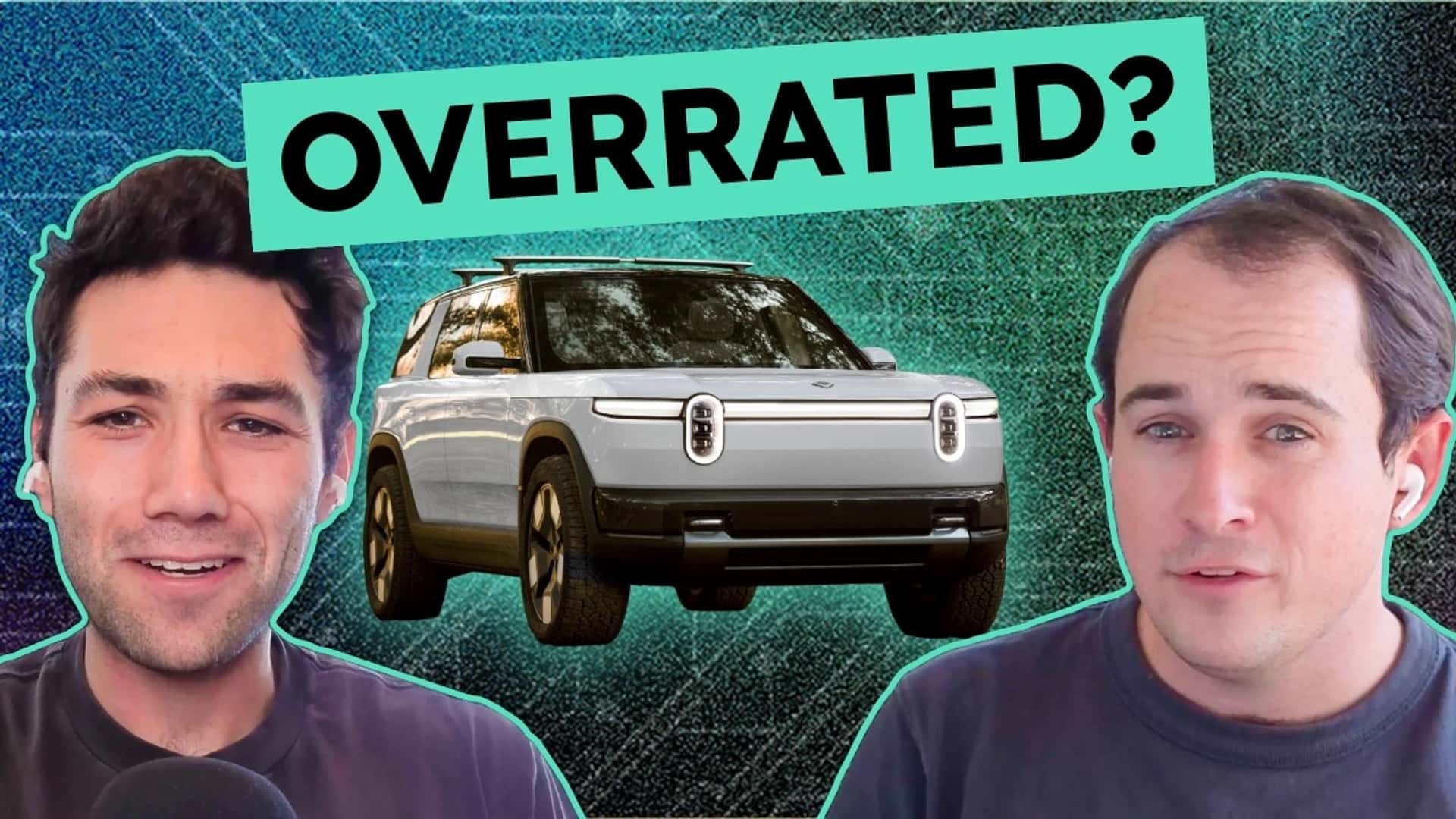
After a comprehensive week-long evaluation, the Rivian R2 has profoundly impressed automotive journalists, earning accolades for its blend of robust capability, sophisticated technology, and an unexpectedly superior ride quality. This assessment comes from firsthand experiences, including an initial brief drive and subsequent extended testing by industry experts Mack Hogan and Tim, who both reported being thoroughly ‘blown away’ by the electric SUV’s performance.

The Rivian R2, often cited as a direct challenger to models like the Tesla Model Y, has demonstrated an impressive versatility that sets it apart in the burgeoning electric vehicle market. Its ability to perform across diverse terrains and driving conditions has been highlighted as a core strength, resonating particularly with enthusiasts of outdoor activities.
Unpacking the Rivian R2’s Software Ecosystem
One of the prominent areas of praise for the Rivian R2 centers on its advanced in-car software experience. During his test period, journalist Tim experienced Rivian’s Halloween Update, which introduced playful elements like Ghostbusters-themed sound and lighting effects.
Beyond these engaging gimmicks, the update also brought a suite of practical UI tweaks, significantly enhancing the user interface. This level of dynamic software deployment illustrates the extensive control electric vehicle manufacturers, particularly Rivian, exert over their in-car systems.
This insight was previously affirmed by Rivian Chief Software Officer Wassym Bensaid, who highlighted the brand’s ability to consistently evolve and refine its vehicle software. Such capabilities allow for regular improvements and personalized user experiences, differentiating newer EV brands from traditional automotive manufacturers.
Another notable software innovation lauded by Tim was the Rivian Assistant. While Mack Hogan regretfully missed the opportunity to engage with this feature due to the timing of his loaner vehicle return, Tim’s high commendation of the assistant points to its intuitive functionality and beneficial integration into the driving experience.
The overall software experience, characterized by sleek graphic design, responsive animations, and a continually expanding feature set, contributes significantly to the Rivian R2’s modern appeal. It underscores a commitment to digital excellence that complements the vehicle’s physical attributes.
A Masterclass in Ride Quality: The Rivian R2’s Unexpected Advantage
While software enhancements are impressive, the most compelling aspect of the Rivian R2, according to Mack Hogan, is its remarkable ride quality. Even a month after his test drive, this particular attribute remains a focal point of his reflection.
The vehicle’s ability to maintain composure and comfort across a wide range of speeds and surfaces has been described as ‘shockingly compliant.’ Whether traversing gravel roads at 60 mph, navigating rocky paths at 10 mph, or cruising on freeways at 80 mph, the R2 delivers a consistently smooth experience.
Its capacity to absorb large impacts has been favorably compared to the Ford F-150 Raptor, a benchmark for rugged comfort. Yet, this plush ride does not compromise its dynamic capabilities; the R2 exhibits precise and predictable handling when cornering sharply, proving its versatility.
This dual proficiency—combining the adventurous spirit of a Toyota 4Runner on dirt with a significantly more refined on-road demeanor—is usually a hallmark of vehicles equipped with highly advanced, and often costly, active suspension systems.
Technical Underpinnings of Rivian R2’s Suspension Prowess
The exceptional ride quality of the Rivian R2 is particularly noteworthy given its conventional suspension architecture. Unlike its larger siblings, the Rivian R1T and R1S, which employ a hydraulic anti-roll system to balance flat cornering with smooth bump absorption, the R2 eschews such complex trickery.
The R2 does not feature air springs, active anti-roll bars, or sophisticated 48V electromechanical systems seen in high-end Mercedes or Porsche models. Instead, it relies on a more conventional setup: a MacPherson strut design at the front and a multi-link rear end, paired with standard springs and electronically adjustable dampers.
This configuration mirrors the basic hardware found in many contemporary performance-oriented SUVs or premium cars. The fact that Rivian has achieved such an incredibly effective and versatile suspension performance through mere ‘tuning wizardry’ speaks volumes about their engineering expertise, allowing the R2 to excel across all driving scenarios.
Competitive Landscape and Overall Value Proposition
While the Rivian R2 demonstrates outstanding qualities, it is important to contextualize its performance within the broader EV market. It is not presented as a flawless vehicle or definitively superior to all competitors in every single aspect.
For instance, its charging speed, while excellent for a 400-volt platform, operates within the parameters of that architectural design. Similarly, while its handling is exceptional for an off-road capable vehicle, it may not match the pure on-road dynamics of a specialized performance variant like the Tesla Model Y Performance.
Inside the cabin, the Rivian R2 offers a pleasant and high-quality environment. However, it does not aim to compete with the sheer luxury and premium feel found in higher-priced contenders such as the Mercedes GLC EV or the Volvo EX60, which occupy a different segment of the market.
Despite these specific comparisons, the Rivian R2’s strength lies in its holistic offering. Its robust performance, advanced technology, and versatile capabilities converge to create a package that ‘stands alone’ in the current electric SUV landscape.
For consumers with a proclivity for outdoor adventures and an appreciation for innovative design, the R2 presents a particularly exciting proposition. Its balanced combination of attributes positions it as a compelling choice for those seeking a highly capable and engaging electric vehicle.
FAQ Section
What makes the Rivian R2’s ride quality stand out?
The Rivian R2’s ride quality is exceptional because it offers both outstanding off-road compliance and precise on-road handling. It achieves this with a conventional suspension setup of MacPherson struts and multi-link rear, combined with electronically adjustable dampers, a testament to expert tuning.
How does the Rivian R2’s software enhance the user experience?
The R2’s software includes engaging features like the Halloween Update with themed effects, intuitive UI tweaks, and the highly praised Rivian Assistant. This demonstrates Rivian’s ability to provide dynamic, evolving in-car technology, offering users a rich and responsive digital environment.
Is the Rivian R2 considered a luxury vehicle?
While the Rivian R2 features a pleasant and high-quality cabin, it is positioned more as an adventure-oriented, highly capable SUV rather than a direct luxury competitor. Vehicles like the Mercedes GLC EV or Volvo EX60 offer a more premium interior, albeit at a higher price point.
How does the R2 compare to the Tesla Model Y?
The Rivian R2 is considered a strong competitor to the Tesla Model Y, especially for those with outdoor hobbies. While a Model Y Performance might offer sharper on-road handling, the R2 excels in its blend of off-road capability, ride comfort, and overall versatile package.
What kind of suspension system does the Rivian R2 use?
The Rivian R2 employs a conventional suspension system featuring a MacPherson strut design at the front and a multi-link rear end. It is equipped with traditional springs and electronically adjustable dampers, achieving its impressive ride quality through refined tuning rather than complex active systems.