
Key Takeaways: The automotive market is witnessing a significant shift towards hybrid vehicles, driven by rising fuel costs and evolving consumer preferences. Understanding the various hybrid technologies available, including Mild Hybrids (MHEV), Parallel Hybrids, Power-Split Hybrids, Plug-in Hybrids (PHEV), and Series Hybrids (EREV), is crucial for making an informed choice. Each system offers distinct advantages in terms of fuel efficiency, electric-only driving capability, and driving dynamics, catering to diverse needs without the full commitment to an all-electric vehicle.
As the automotive landscape continues its rapid transformation, American consumers are increasingly turning to hybrid vehicles. This growing preference is largely propelled by fluctuating fuel prices, with average gas prices in the United States often hovering around the $4/gallon mark, making fuel efficiency a top priority for many households. Hybrids present an attractive middle-ground, offering enhanced fuel economy compared to traditional internal combustion engine (ICE) vehicles without the perceived inconveniences often associated with fully electric cars.

Unlike battery electric vehicles (BEVs) that require dedicated charging infrastructure, most conventional hybrids operate much like any other gasoline car with an automatic transmission. This familiarity simplifies the transition for new owners, eliminating the need for a steep learning curve regarding driving mechanics or range management.
However, the term ‘hybrid’ encompasses a diverse array of technologies, each designed with different objectives and operational characteristics. From subtle electric assistance to substantial electric-only driving ranges, not all hybrid car explained systems are created equal. Understanding these distinctions is paramount for consumers looking to optimize their vehicle choice for fuel consumption, driving experience, and overall utility.
Understanding the Core of Hybrid Technology
At its fundamental level, a hybrid car integrates a conventional gasoline engine with one or more electric motors. This combination allows the vehicle to leverage both power sources to reduce fuel consumption and, in some configurations, offer periods of zero-emission electric driving.
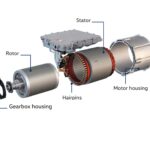
The electric motor in a hybrid vehicle is powered by a high-voltage traction battery. This battery’s capacity varies significantly across different hybrid types; traditional hybrids typically feature smaller batteries designed for energy storage and quick deployment, while plug-in hybrids (PHEVs) boast larger capacities enabling extended electric-only range.
It is important to note that this high-voltage traction battery, responsible for powering the electric motor and vehicle propulsion, is entirely separate from the standard 12-volt battery commonly found in all cars. The 12-volt battery continues to power conventional vehicle accessories such as the radio, lights, and other low-voltage electronic systems.
Diverse Types of Hybrid Vehicles Explained
The innovation in hybrid automotive engineering has led to several distinct categories, each offering unique approaches to blending electric and gasoline power for optimal performance and efficiency. Here, we delve into each type of hybrid car explained in detail.
Mild Hybrid Electric Vehicle (MHEV)
The mild hybrid represents the simplest form of hybrid technology available in the market. Often described as barely a hybrid, MHEVs are essentially conventional gasoline or diesel vehicles augmented with a more powerful alternator and starter motor combination, typically referred to as an integrated starter-generator.
These starter-generators, which can be belt-driven or directly integrated into the engine’s crankcase, operate off a dedicated 48-volt battery system. The primary role of this 48V system is to provide small boosts in efficiency and power, particularly during acceleration, and to enable more seamless engine stop-start functionality.
Mild hybrids also incorporate some level of regenerative braking, where kinetic energy during deceleration is converted back into electrical energy to recharge the 48-volt battery. Crucially, unlike more advanced hybrid systems, the electric motor in an MHEV typically cannot propel the vehicle independently. Its function is primarily assistive.
The enhanced starter-motor in mild hybrids significantly improves the durability and smoothness of the engine’s auto start-stop system, which can activate thousands of times during a vehicle’s lifespan, thereby contributing to minor fuel savings. Examples of vehicles employing 48V mild-hybrid systems include the Ram 1500, Mercedes C-Class, BMW X5, and Volvo XC60.
Parallel Hybrid
A parallel hybrid system is characterized by its ability to allow both the internal combustion engine and the electric motor to power the wheels, either individually or simultaneously. Both power sources are typically connected to the same driveshaft, enabling a direct and flexible application of power.
In this configuration, a relatively small electric motor is often positioned between the gasoline engine and the transmission. Clutches are used to engage or disengage either the gas engine or the electric motor from the drivetrain, facilitating the transition between different driving modes.
A small high-voltage battery stores and supplies energy to the electric motor. During deceleration, the electric motor also acts as a generator, recovering kinetic energy through regenerative braking and sending it back to the battery. This setup allows for electric-only driving at low speeds, combined power for acceleration, and efficient cruising.
Notable examples of vehicles utilising this hybrid car explained system include several Hyundai models such as the Tucson Hybrid, Santa Fe Hybrid, Elantra Hybrid, and Sonata Hybrid. Kia also employs parallel hybrid technology in models like the Sportage, Sorento, and Carnival, offering a balanced approach to performance and fuel economy.
Power-Split Hybrids (Series-Parallel Hybrids)
Power-split hybrids, often referred to as series-parallel hybrids, represent a more sophisticated evolution of hybrid technology. While they also combine two power sources for a single output, their power transmission mechanism distinguishes them from parallel systems, leading to even higher efficiency levels.
Instead of relying on conventional clutches and multi-speed automatic transmissions, power-split hybrid vehicles typically use a planetary gearset. This ingenious mechanical device effectively blends power from the gasoline engine and one or more electric motors. The combined power is then delivered to the driven wheels via an electronically controlled continuously variable transmission (e-CVT).
The e-CVT continuously adjusts gear ratios to maintain the system at its peak efficiency, optimizing fuel consumption across various driving conditions. In some power-split systems, the powertrain can operate predominantly in a ‘series’ mode, where the gas engine primarily functions as a generator to charge the high-voltage battery. However, at certain speeds and load conditions, the gas engine can also directly contribute power to the wheels.
Toyota’s highly acclaimed Hybrid Synergy Drive system is the quintessential example of a series-parallel setup. Ford, Subaru, and Honda have also adopted variations of this technology. These systems often utilise pairs of electronic motors linked via the planetary gearset, providing the flexibility to adjust ratios on the fly without the durability concerns associated with traditional mechanical CVTs.
Plug-in Hybrid Electric Vehicles (PHEVs)
A Plug-in Hybrid Electric Vehicle (PHEV) takes the hybrid concept a step further by incorporating a larger-capacity high-voltage battery. This significant increase in battery size allows PHEVs to be charged from an external power source, much like a fully electric vehicle, offering a substantial electric-only driving range.
While a PHEV’s traction battery is generally smaller than that of a dedicated BEV, modern advancements, particularly in some models from China, are narrowing the gap between PHEV electric range and full EV range. This expanded battery capacity enables PHEVs to cover typical daily commutes entirely on electric power, significantly reducing gasoline consumption.
PHEVs feature a wide variety of powertrain configurations. For instance, Volvo often employs a rear-mounted electric motor that operates independently of the front-mounted engine and transmission. This electric motor can power the vehicle on its own, or work in conjunction with the gasoline engine for increased performance or when the battery charge is low.
The Mitsubishi Outlander PHEV, once a global best-seller, is known for its flexible powertrain that can seamlessly switch between series and parallel hybrid modes depending on driving conditions. Other popular PHEVs include plug-in variants of the Toyota Prius and RAV4, along with the now-discontinued but once popular Jeep Wrangler 4Xe, demonstrating the versatility and appeal of this hybrid car explained segment.
Series Hybrid (Extended Range Electric Vehicle – EREV)
While seemingly a contemporary and innovative technology, the concept of a series hybrid, often rebranded today as an Extended Range Electric Vehicle (EREV), has a long history. This powertrain architecture has powered diesel-electric locomotives for decades and has appeared in several passenger cars, including the original BMW i3 REx and the new Karma Gyesera. The technology is also gaining considerable traction in China and is poised to enter the US market in a variety of upcoming vehicles.
The EREV powertrain is slated for integration into new models like the Scout Terra and Traveler, the next-generation Ford F-150 Lightning, the Ram 1500 REV, the Jeep Grand Wagoneer, and large SUVs from Hyundai and Kia, indicating a significant industry shift towards this design.
In a series hybrid setup, the vehicle’s powertrain is fundamentally designed as an electric vehicle. It features a large-capacity battery powering one or more electric motors, which are solely responsible for driving the wheels. The electric driving range is typically much higher than that of a traditional hybrid or even many plug-in hybrids.
A gasoline engine is present, but its singular function is to act as a generator. This internal combustion engine converts fuel into electricity, which then either charges the high-voltage battery or directly feeds power to the electric motors. Crucially, there is no physical connection between the engine and the wheels. This means EREVs offer an authentic EV-like driving experience, as all propulsion comes from the electric motors.
If conventional hybrids are best described as gasoline vehicles with electric assistance, series hybrids or EREVs represent the opposite: they are electric vehicles with a gasoline-powered range extender. EREVs often feature larger traction batteries and can accept higher charging power inputs than PHEVs.
A significant advantage of the EREV design is that the gasoline engine can operate at its most efficient state consistently, as its primary role is generating electricity, not directly propelling the vehicle through varying speeds and loads. This contrasts with plug-in hybrids that often use multi-speed automatic transmissions, which can lead to energy losses as they search for optimal gears. While some series hybrids, like the upcoming models, can be plug-in, others, such as the Nissan Rogue Hybrid with its E-Power system, are not.
The Nissan Rogue Hybrid, for instance, pairs a 1.5-liter, three-cylinder, turbocharged engine with a dual-motor electric powertrain, all fed by a 1.67 kWh battery. Here, the engine exclusively serves as a generator, ensuring the electric motors perform all the driving, resulting in a distinctly EV-like feel for the driver.
Choosing Your Ideal Hybrid Car Explained
The extensive array of hybrid technologies can initially seem overwhelming. However, the overarching benefit across all types of hybrid car explained systems is a marked improvement in fuel efficiency compared to conventional gasoline vehicles. The integration of electric motors provides a tangible boost, leading to reduced fuel consumption and lower operational costs for households, which explains their current surging popularity.
For those prioritizing absolute fuel efficiency above all else, a power-split hybrid equipped with an e-CVT often stands out as the optimal choice. While one might notice the engine’s consistent background hum as it works to maintain peak efficiency, the economic benefits are substantial.
Conversely, if a more dynamic and sporty driving experience is preferred, a parallel hybrid, especially one paired with a multi-speed automatic transmission, might be a more suitable selection. These systems often provide a more direct and engaging feel, blending electric and gasoline power for responsive acceleration.
For consumers who are not yet prepared to fully commit to an electric vehicle but have access to home charging and desire more extensive electric-only driving capabilities, a Plug-in Hybrid Electric Vehicle (PHEV) or an Extended Range Electric Vehicle (EREV) offers a compelling solution. These options bridge the gap between traditional combustion engines and full electrification.
Ultimately, for those ready to embrace the future of personal mobility, a full-fledged Battery Electric Vehicle (EV) presents the most significant long-term benefits for both the climate and personal finances. Exploring resources on the best electric SUVs and affordable EVs can guide informed decisions toward a fully electric future, delivering advantages that hybrids, by their nature, cannot fully replicate.
Frequently Asked Questions About Hybrid Vehicles
What is the fundamental difference between a mild hybrid and a full hybrid?
A mild hybrid (MHEV) uses a small electric motor primarily to assist the gasoline engine, improving stop-start functionality and offering minor efficiency gains. It cannot propel the vehicle using electricity alone. A full hybrid, in contrast, features a larger electric motor and battery, allowing for significant electric-only driving at low speeds and greater fuel efficiency improvements.
Can all plug-in hybrids drive on electricity alone?
Yes, all plug-in hybrids (PHEVs) are designed to drive on electricity alone for a certain range. Their larger battery capacity, rechargeable from an external source, allows for zero-emission driving over distances typically sufficient for daily commutes before the gasoline engine activates as needed.
How does a series hybrid (EREV) differ from a plug-in hybrid (PHEV)?
In a series hybrid (EREV), the gasoline engine solely acts as a generator to produce electricity for the electric motors or battery, never directly powering the wheels. A PHEV, however, typically allows both the gasoline engine and electric motor to directly power the wheels, often switching between electric-only, engine-only, or combined modes.
Which hybrid type generally offers the best fuel efficiency?
Power-split hybrids, often employing an e-CVT and sophisticated energy management systems, are generally considered to offer the best overall fuel efficiency, especially in varied driving conditions. Their ability to constantly optimize the blend of electric and gasoline power contributes to superior mileage.
Are hybrids complicated to drive compared to conventional cars?
Most traditional hybrids, particularly parallel and power-split types, drive very similarly to conventional automatic transmission vehicles. The integration of electric power is often seamless and automatic, requiring no special driving techniques from the driver. Plug-in and series hybrids might offer an EV-like feel, but remain straightforward to operate.
Why are hybrid vehicles gaining popularity now?
Hybrids are experiencing a surge in popularity due to a combination of factors, primarily elevated and volatile gasoline prices, which highlight their superior fuel economy. They also offer a transitional solution for consumers interested in reducing their carbon footprint without the full commitment or charging infrastructure requirements of a purely electric vehicle.