
Melbourne, Australia – While discussions around electric vehicle (EV) adoption often highlight incentives like the Fringe Benefits Tax (FBT) exemption, a significant disconnect persists between the economic viability of EVs and their uptake in Australia. Experts suggest that a different, more impactful tax lever could be pulled to significantly accelerate the transition to electric mobility.
Global Shift Towards Electrification Driven by Economics
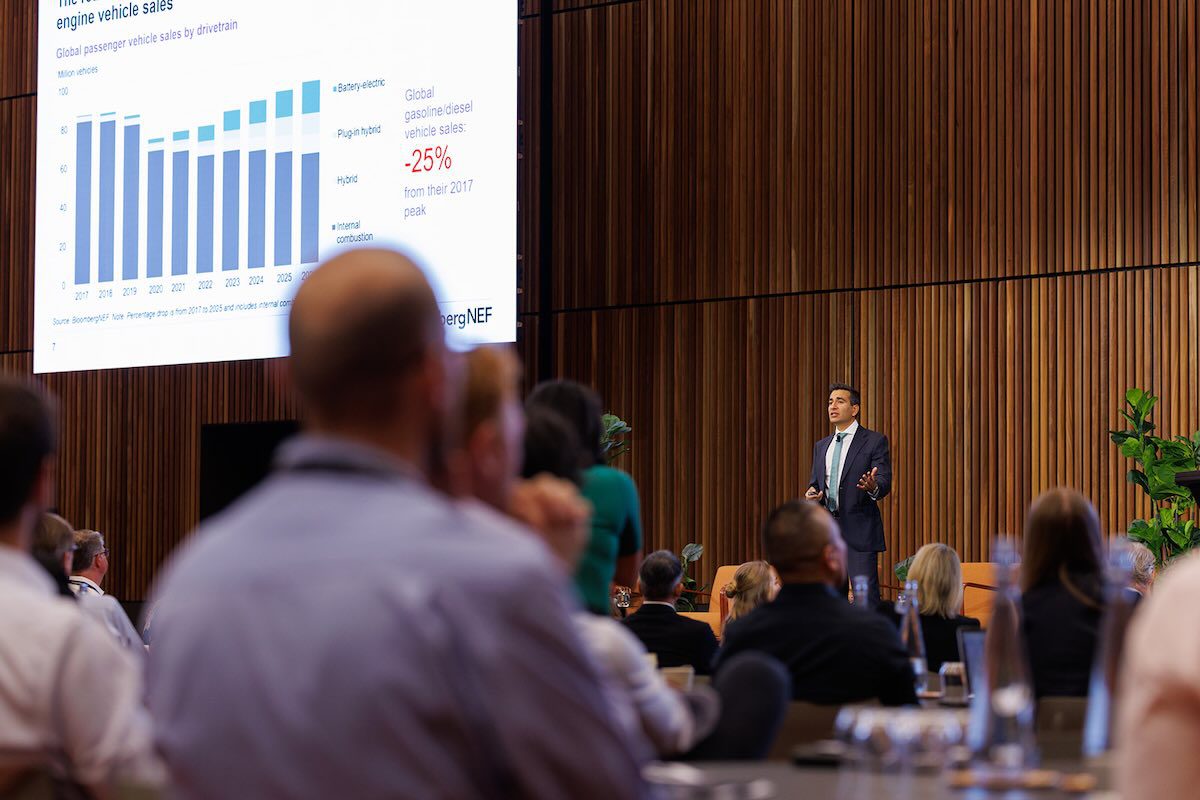
Globally, the narrative around the energy transition is increasingly dominated by economics. Kobad Bhavnagri, Global Head of Strategy at BloombergNEF, recently declared at the Climate Investor Forum in Melbourne that green hydrogen is largely uneconomical for most applications, including mobility. Instead, he posited that electrification, coupled with biological molecules, will be the primary drivers of the transition.

A key factor in this shift is the arrival of price parity between electric vehicles and their internal combustion engine (ICE) counterparts in numerous markets. China has already achieved this milestone, followed by Europe, with the United States projected to reach parity by 2027. This means that clean energy solutions are becoming the cheaper option for consumers, both in terms of upfront purchase price and long-term running costs.
Australia’s EV Adoption Lag: A Tale of Two Incentives
Australia, benefiting from strong trade ties with China, has seen rapid growth in its solar and battery industries, mirroring the global clean energy revolution. Chinese EVs are now leading sales charts and have achieved price parity in many vehicle segments. However, this economic advantage for EVs has not translated into widespread adoption, unlike the significant uptake of home batteries, which have been buoyed by government subsidies.
Despite pockets of success, such as the $72 million raised by EV charging solutions provider JetCharge, the broader investment landscape for EV charging infrastructure for passenger cars remains subdued. While there is interest in infrastructure for commercial trucks, it is often conditional on demonstrable market growth.
Investor confidence in infrastructure is intrinsically linked to sales growth, which has remained stagnant for EVs in Australia during 2024. Although the Climate Change Authority notes a slight decline in transport emissions for the first time since the COVID-19 pandemic, the contribution is minimal and far from the scale required to meet climate targets.
Homeowners Lead the Charge in Renewable Investment
The success story in Australia’s renewable energy sector has largely been driven by homeowners and small businesses. These early adopters have provided significant capital investment, building a distributed renewable energy superpower on their rooftops. This investment has been actively encouraged and supported by state governments, leveraging public funds to build a cleaner, more cost-effective energy future.
Australians have consistently demonstrated a willingness to invest when the benefits are clear, tangible, and offer a solid return. This includes understanding the immediate cost savings and long-term value propositions associated with adopting new technologies.
The Limited Reach of the FBT Exemption
For EVs, the perceived benefits include the potential for price parity and the existing Fringe Benefits Tax (FBT) exemption for novated lease EVs. This incentive is designed to make EVs more financially attractive for individuals who use their vehicles extensively for work and are willing to enter into a leasing arrangement.
However, the FBT exemption’s applicability is quite specific. It primarily benefits those with a salary sacrificing capacity, significant work-related car usage, a preference for leasing, and crucially, an awareness of the scheme. For a large segment of the population, including many small business owners, this particular incentive is either inaccessible or less beneficial than other potential measures.
A More Potent Incentive: The Instant Asset Write-Off
The article argues that a more universally effective incentive lies in expanding the Instant Asset Write-Off scheme, which has already proven successful in popularizing commercial vehicles like “business utes.” This policy allows businesses to immediately deduct the full cost of eligible assets, such as vehicles, from their taxable income in the year of purchase.
By accelerating depreciation, the Instant Asset Write-Off effectively pulls forward the investment returns associated with purchasing a new vehicle. This can make a significant difference for businesses that might otherwise delay or forgo such investments due to immediate cost considerations.
Boosting Small Business and EV Adoption
For small businesses considering an EV, the Total Cost of Ownership (TCO) benefits remain substantial over the vehicle’s lifespan. Combining the immediate tax relief from the Instant Asset Write-Off with the long-term savings from lower running costs (electricity versus fuel) and reduced maintenance can lead to a significant improvement in a business’s bottom line.
As the Instant Asset Write-Off is slated for review in the upcoming budget, the proposal is to specifically target this measure towards electric vehicles. The suggestion is to increase its value and potentially expand eligibility criteria to further incentivize small businesses to invest in EVs.
Expanding the Write-Off for Maximum Impact
The recommendation includes targeting the Instant Asset Write-Off exclusively at pure battery electric vehicles (BEVs) across all vehicle types. Key proposed adjustments include raising the threshold for the vehicle’s value eligible for write-off, increasing the number of vehicles a business can claim, and raising the revenue threshold for eligibility to $50 million.
Such a targeted expansion, proponents argue, would unlock significant private investment and dramatically accelerate transport decarbonisation efforts across Australia.
The Importance of Awareness and Accessibility
Beyond tax policy, effective communication and awareness campaigns are crucial. Numerous well-informed individuals, including those who have already invested in home solar and batteries, remain unaware of the novated lease opportunity for EVs. Ann Liao of Asian Australians for Climate Solutions has observed similar knowledge gaps within her community, where potential car buyers are often unaware of the valuable FBT incentive available to them.
Australians have a proven track record of embracing investments that offer clear financial advantages. By making the benefits of EV ownership – including the significant cost savings and environmental advantages – more accessible and widely understood, the country can unlock the substantial investment needed to drive widespread adoption.
EVs represent a readily available tool for decarbonisation, offering practical, exciting, and fun driving experiences alongside tangible cost savings for both households and businesses. Empowering Australians to access these benefits is seen as the key to catalyzing the necessary investment in electric mobility.
Ed Lynch-Bell is Principal at Second Mouse, an organisation focused on developing sustainable energy tech and mobility products, services, and businesses. He is also a co-host of EV Meetup, a forum for the e-mobility industry in Australia.