
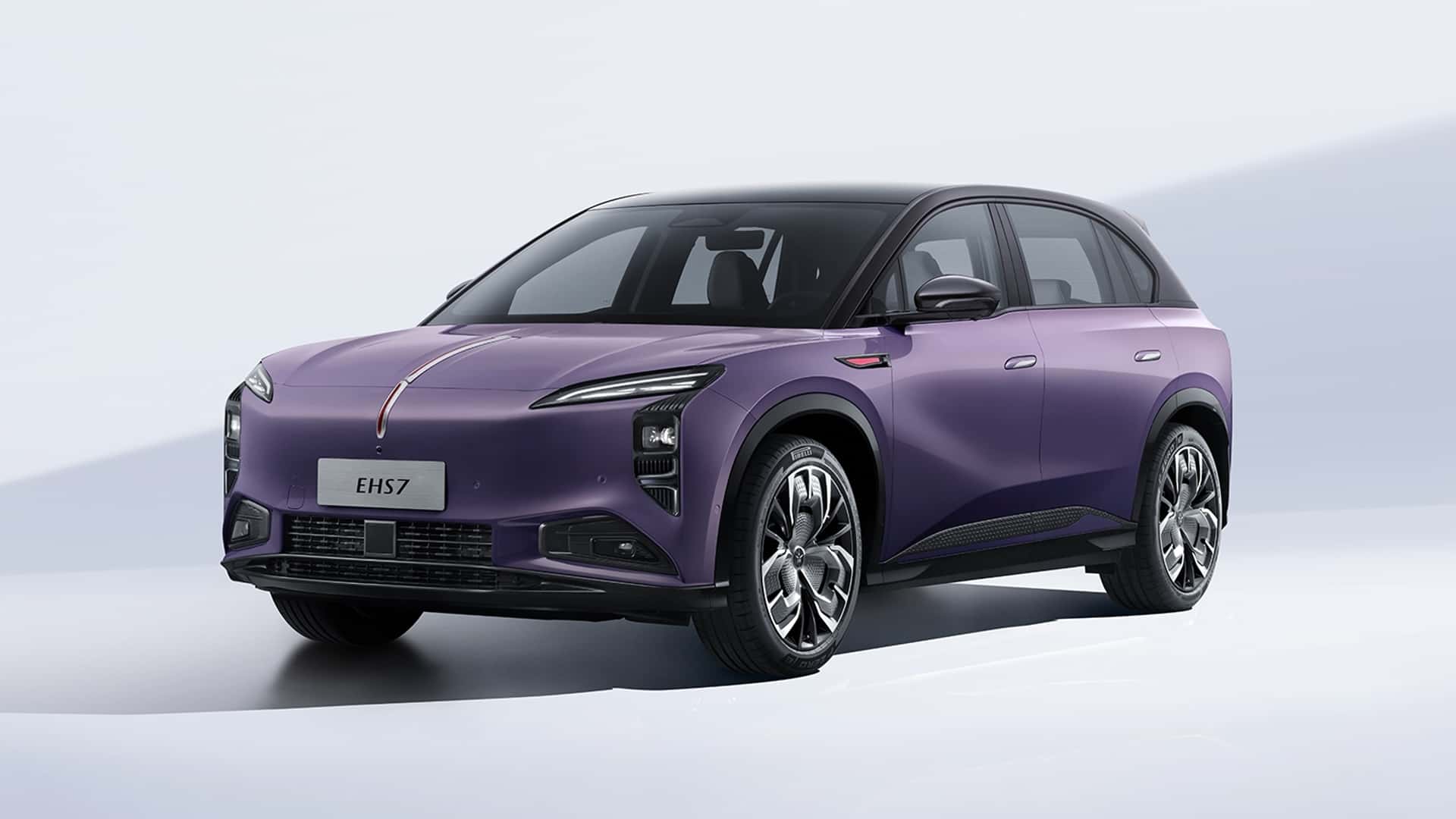
China’s FAW Group has unveiled a novel battery chemistry that could significantly extend the range of electric vehicles, with a new lithium-manganese semi-solid-state battery promising over 620 miles (1,000 kilometers) on a single charge. The automaker claims to have already integrated this advanced battery into a production vehicle, marking a potential leap forward in EV technology.
Advanced Battery Technology at FAW Group
FAW Group, a major Chinese automaker with established joint ventures with Volkswagen Group and Toyota, showcased a Hongqi-branded electric crossover equipped with the new battery. The 142-kilowatt-hour battery boasts an impressive energy density of 500 watt-hours per kilogram at the cell level, which is reportedly double that of current lithium-ion batteries. This high energy density is the key to achieving the vehicle’s advertised manufacturer-estimated range of 1,000 kilometers (620 miles) under the CLTC standard.
Understanding Real-World Range and Vehicle Factors
While the CLTC range figures are substantial, it’s important to note that real-world range, particularly under the EPA cycle, would likely be lower. Factors such as aerodynamics, vehicle weight, powertrain efficiency, and driving conditions significantly influence an EV’s actual distance capability.
The Role of Manganese in Next-Generation Batteries
A notable aspect of this new battery chemistry is its use of manganese. While most semi-solid-state batteries employ a gel-like electrolyte, their cathode materials often mirror those in conventional lithium-ion cells, like nickel-manganese-cobalt (NMC) or nickel-cobalt-aluminum (NCA). However, there is a growing industry trend towards manganese-rich cathodes, a shift that is gaining momentum globally, including in China.
This trend is also evident in the U.S., with General Motors and Ford announcing plans to integrate lithium-manganese-rich (LMR) batteries into future EVs. These initiatives aim to reduce reliance on nickel and cobalt, materials that are not only costly but also present ethical and environmental concerns. Furthermore, some Chinese battery manufacturers are exploring lithium iron manganese phosphate (LMFP) batteries to enhance the performance and range of cost-effective lithium iron phosphate (LFP) batteries. This indicates a broader industry pivot towards manganese as a crucial cathode active material.
Industry-Wide Advancements in Battery Technology
The announcement from FAW Group comes amid a flurry of battery innovation news from various automakers. BYD recently reported significant improvements in cycle life and charging speeds for its solid-state cells, while a key Toyota battery partner has begun constructing a large-scale pilot production line in Japan. While not all of these advancements may materialize as quickly or affordably as initially projected, the collective progress suggests that the electric vehicle landscape in the next decade could be dramatically transformed by enhanced battery performance.