
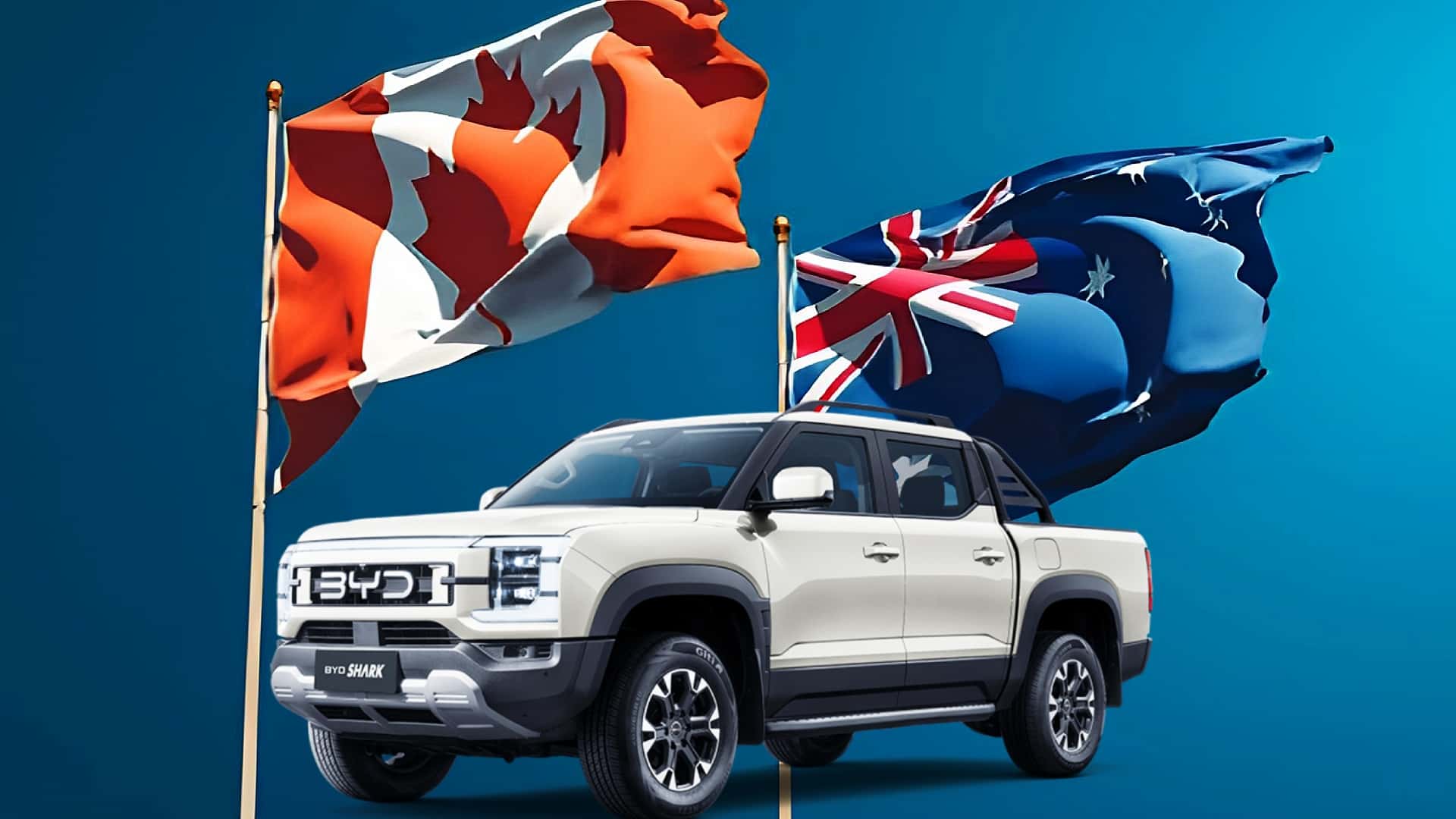
The Canadian electric vehicle (EV) market may soon see a significant influx of Chinese brands, a trend already well underway in Australia. With numerous Chinese automakers seeking export markets to bolster sales and profitability, Australia’s experience provides a compelling case study for what Canada could expect.
Australia’s Experience with Chinese EV Brands
In Australia, Chinese auto manufacturers have rapidly expanded their market presence, particularly as local production by global giants like Ford and General Motors has ceased. Mike Costello, an analyst at Cox Automotive Australia and New Zealand, noted that the market share for Chinese brands has surged to approximately 17%, a tenfold increase since 2019.

While this figure encompasses various vehicle types, the impact on the EV sector is particularly pronounced. “A full 77% of all EVs sold in Australia in 2025 were made in China—even ones from non-Chinese brands,” Costello stated. He further elaborated that Chinese brands currently hold 41% of Australia’s EV market, represented by 22 distinct brands offering over 30 models. BYD, in particular, dominates the plug-in hybrid segment, capturing 68% of all sales in that category.
Market Similarities and Differences Between Australia and Canada
Despite differences in market size, with Canada selling 1.8 million cars last year compared to Australia’s 1.2 million, the two countries share certain similarities that could influence EV adoption. Geographically, Australia is closer to China, and Chinese brands have had a longer presence there, with Great Wall Motors launching in 2009 and Chery in 2011. Chery’s initial exit in 2015, attributed to quality and safety concerns, was followed by a successful re-entry in 2023, driven by demand for affordable and electrified vehicles.
Lessons Learned and Future Prospects
Chinese brands in Australia have evolved significantly, improving vehicle quality and performance. Great Wall Motors, once known for lower-quality trucks, now ranks as Australia’s seventh most popular car brand with its range of SUVs, trucks, and EVs. Chery has also seen substantial growth, with sales increasing by 200% since its return, largely due to its gasoline crossovers.

“Chinese brands are learning a lot, hiring good managers and dealers, committing to having a go, using Australia as a place to send excess production,” Costello observed. The Tesla Model Y remains Australia’s top-selling EV, but the BYD Sealion 7 has quickly climbed to second place. In the pickup truck segment, the BYD Shark has outsold the Toyota Hilux among private buyers, a notable achievement given Toyota’s significant market share.
Canada’s Regulatory Landscape
Canada presents a different entry point for Chinese EVs, with existing regulations aimed at protecting its domestic auto industry and preventing market dumping. Unlike Australia, Canada has import limits and tariffs on Chinese EVs. A recent deal restricts imported units to 49,000 at a 6% tariff rate, with a potential increase to 70,000 units. This will likely compel Chinese brands to be selective in their market entry strategy.
Transport Canada has indicated that all vehicles sold in the country must meet its crash and emissions standards, but further details on brand or volume limitations remain unclear. Nevertheless, the Australian experience suggests that Chinese EVs are poised for success in Canada once they navigate these entry barriers. As Costello cautioned, the long-term success of these brands will depend on their commitment to investing in marketing, support, and service networks, rather than solely exporting excess production.