
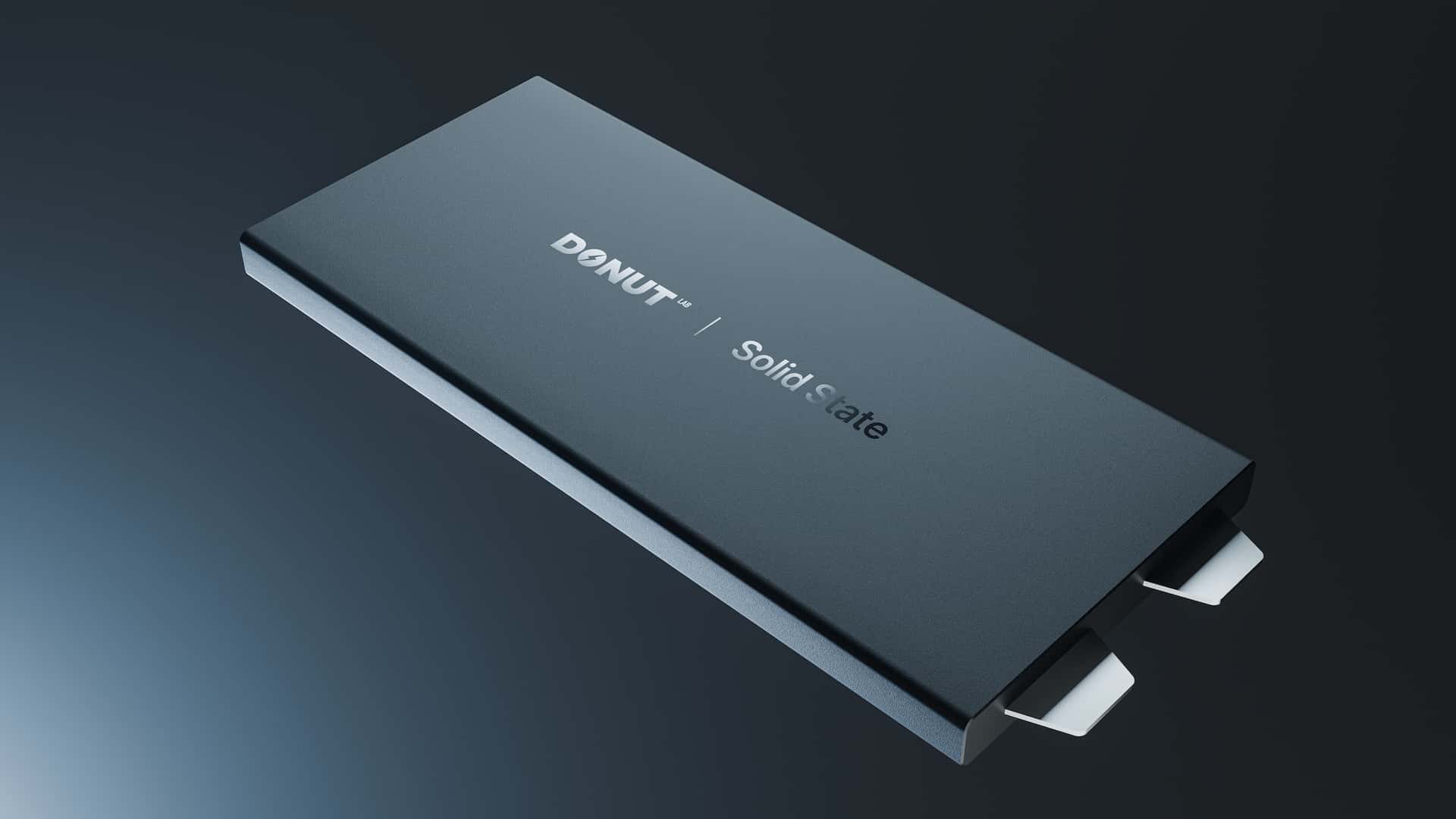
Finnish startup Donut Lab is seeking to validate its ambitious claims of producing the world’s first production-ready all-solid-state battery for electric vehicles. Following initial skepticism at CES in January, the company has released findings from independent tests conducted by Finland’s VTT Technical Research Centre. While these tests demonstrate impressive charging speeds for a single cell, key questions remain regarding its real-world performance and durability at a pack level.
Independent Tests Reveal Rapid Charging Capability
The independent tests commissioned by Donut Lab focused on the charging performance of its solid-state pouch cell. VTT Technical Research Centre conducted seven charging tests on a 94-watt-hour cell. These tests aimed to replicate conditions that would stress the battery’s ability to accept a rapid charge.
Two specific tests involved charging the cell at high rates: 5C and 11C. A 1C charge rate signifies a full charge within one hour. Therefore, 5C and 11C represent significantly accelerated charging times.
Impressive Results Under High Charge Rates
During the 5C charging test, the solid-state cell was subjected to 130 amps and 4.3 volts. The cell reached 80% charge in under 10 minutes and achieved a full 100% charge in approximately 13 minutes. Crucially, the peak temperature recorded during this test was a manageable 47 degrees Celsius (116.6 degrees Fahrenheit).
The 11C charging test yielded even faster results, largely aligning with Donut Lab’s claims. In this test, the cell achieved 80% charge in just 4.6 minutes and a full charge in under eight minutes. The temperature during the 11C test rose to 63 degrees Celsius (145 degrees Fahrenheit).
Both of these high-speed charging tests were performed using single- and double-sided heat sinks. These heat sinks are designed to simulate real-world thermal management, allowing excess heat to dissipate under high voltage and current loads. The use of heat sinks, even basic ones, represents a step towards accounting for thermal challenges in practical applications.
Experts Raise Concerns Over Scope and Durability
While the VTT test results are compelling for single-cell charging speed, battery experts emphasize that these findings do not fully validate all of Donut Lab’s broader claims. A significant point of contention is the lack of disclosed battery chemistry.
Shirley Meng, a professor at the University of Chicago’s Pritzker School of Molecular Engineering, stated, “Anyone who does not reveal the chemistry cannot be the real deal.” This sentiment highlights a critical gap, as understanding the underlying chemistry is fundamental to assessing a battery’s true capabilities and potential.
Solid-State Definition and Lab-Scale Limitations
Experts also question whether Donut Lab’s cells are truly solid-state, given the absence of detailed chemical composition information. The startup has made several extraordinary claims beyond fast charging, including a lifespan of 100,000 cycles and an energy density of 400 watt-hours per kilogram, along with immunity to thermal runaway.
The VTT tests specifically address charging speed, but do not offer data on cycle life or energy density. “11C at lab scale is not unique,” noted Meng, who has extensive experience in solid-state battery research. She further explained the limitations, “My lab has shown 20C in lab-scale cells, but it does not mean it can be translated to pack level in the real world.”
Performance at Pack Level Remains Unknown
The transition from a single cell’s performance in a controlled lab environment to the complex dynamics of a full battery pack is a significant hurdle. Real-world electric vehicles utilize sophisticated active cooling systems, and how Donut Lab’s cells would integrate and perform within such a system is yet to be demonstrated.
Jiayan Shi, an associate at research firm BloombergNEF specializing in electrochemistry, commented, “However, the discharge rate and duration/capacity retention will be equally critical, as they directly influence how consumers can use the battery in real-world applications.” This underscores the need for data beyond just rapid charging to assess practical usability.
Furthermore, the VTT tests, while informative about charging, do not provide evidence for Donut Lab’s claim of 100,000-cycle durability. Rapid charging is only beneficial if it can be sustained over the expected lifespan of a vehicle without significant degradation.
Thermal Performance and Comparison to Lithium-Ion
An interesting observation from the VTT tests was the cell’s performance under varying thermal conditions. When less cooling was applied (using only a single heat sink), the cell temperature rose to 90 degrees Celsius (194 degrees Fahrenheit). VTT reported that this higher temperature reduced the cell’s internal resistance, allowing it to charge even faster.
This behavior contrasts sharply with traditional lithium-ion batteries. These batteries often experience reduced energy efficiency and can become unstable or suffer permanent damage at high temperatures. The optimal operating temperature range for current lithium-ion batteries is typically between 25-40 degrees Celsius (77-104 degrees Fahrenheit).
The ability of Donut Lab’s cell to perform well at higher temperatures could be a significant advantage if it can be reliably managed. However, without knowing the underlying chemistry, it remains unclear if this performance stems from a novel solid-state composition or clever engineering optimizations.
Advancements in Lithium-Ion Technology
It is also important to note that conventional lithium-ion battery technology is also making strides in fast-charging capabilities. CATL’s latest lithium-iron phosphate (LFP) batteries can achieve peak charge rates of 12C, and BYD’s LFP battery, previously tested, peaks at 10C. These advancements suggest that ultra-fast charging is becoming more attainable even within established battery chemistries.
Donut Lab’s Strategy Amidst Skepticism
Donut Lab has faced considerable criticism for unveiling its battery technology without disclosing sufficient technical details. The company has acknowledged that negative media attention has hampered its ability to secure capital for manufacturing scale-up.
The current approach of releasing independent test results appears to be a recalibrated communication strategy. This is coupled with a defiant stance, including a video that reiterates all of the company’s claims.
Donut Lab has indicated that it plans to release further independent test results in the coming weeks. Key areas to monitor in future reports will include detailed information on battery chemistry, confirmed energy density figures, and evidence of long-term durability. Until then, the current findings, while promising for charging speed, remain inconclusive regarding the overall viability and revolutionary potential of Donut Lab’s solid-state battery technology.