
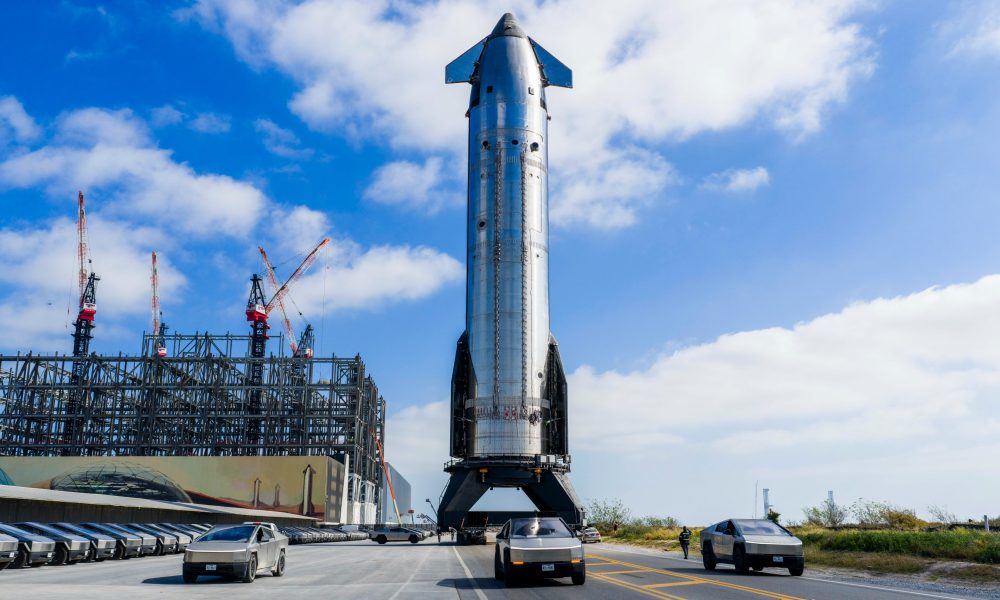
SpaceX is poised to attempt a groundbreaking maneuver in its Starship program: catching the upper stage of the rocket with its launch tower. CEO Elon Musk recently shared the conditions under which the company plans to execute this first-of-its-kind recovery operation, signaling a significant step towards full vehicle reusability.
Starship V3 Ship 1 Undergoing Ground Tests
Musk confirmed that Starship V3 Ship 1 (SN1) is progressing towards ground tests. He expressed considerable optimism about the latest iteration of the Starship vehicle, highlighting its updated design and potential for achieving complete reusability.

“Starship V3 SN1 headed for ground tests. I am highly confident that the V3 design will achieve full reusability,” Musk stated in a recent post on the social media platform X.
Phased Approach to Tower Catch
The SpaceX chief elaborated on the specific requirements that must be met before the ambitious tower catch attempt. He clarified that the company will not proceed with catching the Starship upper stage with the launch tower until after two successful soft landings in the ocean have been completed.
“Should note that SpaceX will only try to catch the ship with the tower after two perfect soft landings in the ocean. The risk of the ship breaking up over land needs to be very low,” Musk explained.

This cautious, phased approach underscores SpaceX’s commitment to risk mitigation. Successfully catching Starship with the launch tower’s mechanical arms is a critical milestone that would dramatically accelerate the timeline for rapid and frequent reuse of the Starship system.
Starship V3: Key Upgrades and Future Prospects
SpaceX is reportedly targeting March 2026 for the first flight of the Starship V3. This version of the spacecraft is considered pivotal for the company’s long-term vision of making Starship a fully reusable transportation solution.
The V3 design incorporates several substantial upgrades. Notably, it features SpaceX’s Raptor V3 engines. These engines are engineered to generate considerably higher thrust compared to previous versions, while simultaneously reducing manufacturing costs and overall weight.
Beyond engine improvements, the V3 is also being optimized for enhanced manufacturability. This focus is crucial for SpaceX’s ambition to scale Starship production to support its various missions, including regular Starlink satellite deployments, lunar missions, and its ultimate goal of enabling human colonization of Mars.