
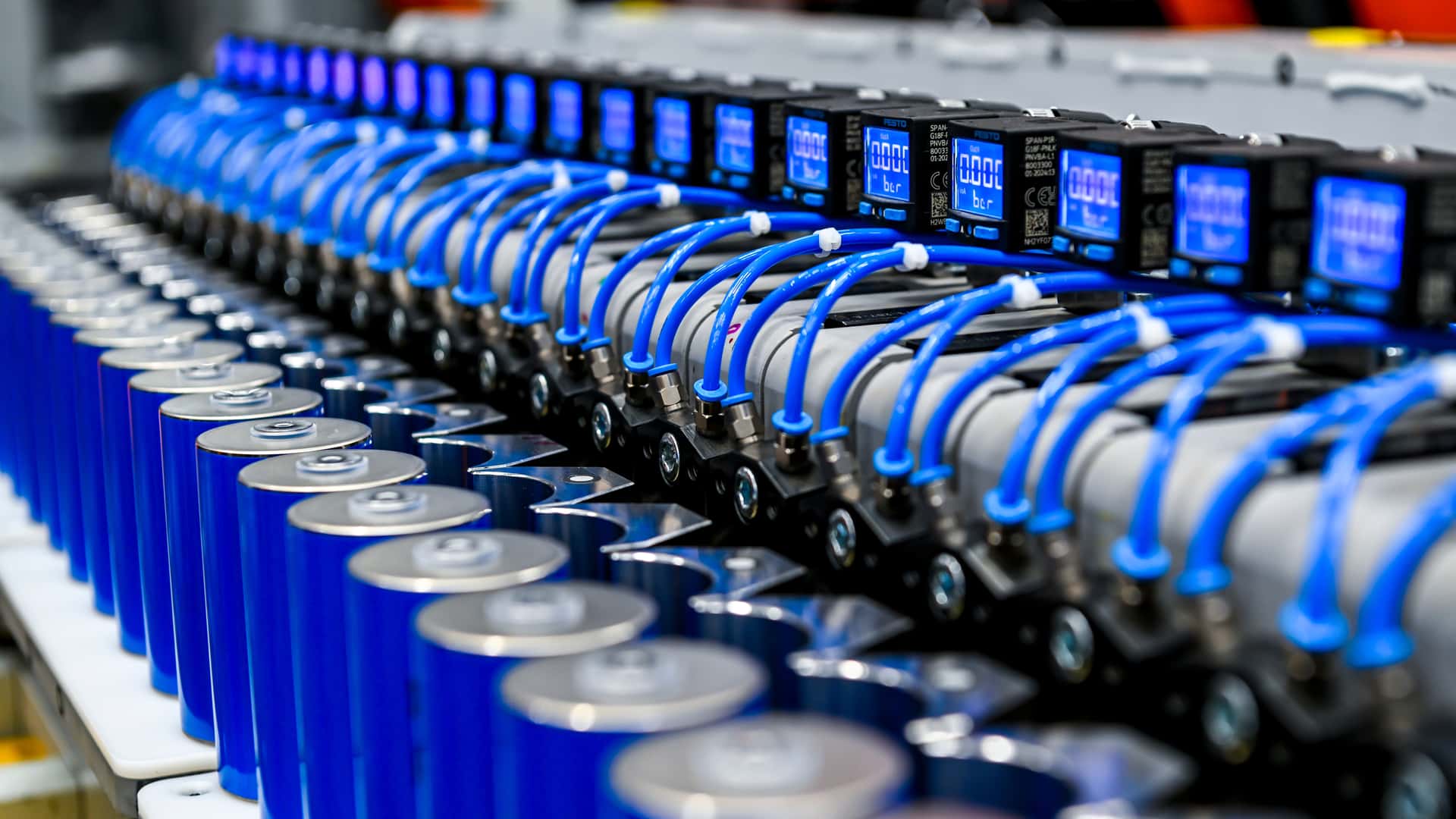
Europe’s ambitious drive to establish a robust, localized electric vehicle (EV) battery manufacturing sector is facing significant economic headwinds, primarily due to intense competition from China. A wave of high-profile project cancellations and scaling-back initiatives highlights the challenges European automakers and battery producers are encountering in their quest for supply chain independence.
Localization Efforts Hampered by Cost Disparities
While the demand for electric vehicles continues to surge across Europe, the continent is finding it increasingly difficult to shift away from its reliance on Chinese battery components and finished cells. This dependency is largely driven by China’s established manufacturing scale, a mature supply chain, and substantial state-backed incentives, which allow for significantly lower production costs.
The stark reality of this economic challenge has led to several prominent setbacks for European battery initiatives. Porsche, for instance, announced it was scaling back its Cellforce battery division’s production last year, citing that manufacturing was no longer “economically viable.” This move underscores a growing concern that even premium automotive brands are struggling to make local battery production cost-competitive.
Prominent Project Cancellations Signal Economic Hurdles
Further illustrating the difficulties, Sweden’s Northvolt, once hailed as a potential European battery champion, filed for bankruptcy in 2024. The company cited mounting losses and significant production-related challenges as primary reasons for its collapse. This development serves as a major blow to Europe’s aspirations of becoming a global leader in battery manufacturing.
In another significant development, Stellantis, a major automotive group, recently shelved plans for two battery factory projects in Germany and Italy. The company stated that the necessary “prerequisites” to commence operations at these proposed plants had not been met, indicating potential issues with investment viability or operational readiness.

The China Factor: Scale, Cost, and LFP Dominance
Industry observers and company leaders alike point to China’s overwhelming dominance in the global battery supply chain as a key impediment for European producers. China controls a vast majority of the sector, from raw material refining to the final assembly of battery cells. This extensive control allows Chinese manufacturers to leverage economies of scale and advanced production techniques.
The country is particularly dominant in the production of Lithium Iron Phosphate (LFP) batteries, which are known for their lower cost and are increasingly favored for mass-market EVs. China’s extensive overcapacity in battery production means it can offer these cells at prices that are extremely difficult for European manufacturers to match.
The sentiment was clearly articulated in a joint statement by the CEOs of Volkswagen Group and Stellantis earlier this month. They emphasized the need for affordable EVs for consumers while simultaneously highlighting the pressure to import cheaper batteries to meet those price expectations. “We are investing heavily to build an integrated European sector, essential for our technological sovereignty, but consumers legitimately expect affordable electric vehicles,” the statement read. “However, the more prices need to be kept down, the greater the need to import the cheapest batteries.”
US Market Experiences Different, Yet Related, Challenges
While Europe grapples with cost competitiveness, the United States faces its own set of challenges in battery production. Here, the scaling back of battery plants is often attributed to shifts in government policy and demand fluctuations. The reduction in EV tax credits and evolving regulatory landscapes have led some companies, including GM, Ford, and Stellantis, to delay projects or repurpose resources toward stationary energy storage solutions rather than EV batteries.
However, the U.S. market differs in that Chinese EV batteries face higher demand due to significant tariffs, creating a somewhat different competitive dynamic compared to Europe. Despite these hurdles, the U.S. battery industry is showing signs of maturation.
Europe’s Efforts and Future Outlook
Despite the setbacks, Europe is not abandoning its pursuit of battery manufacturing independence. Volkswagen Group’s PowerCo division is actively ramping up production at its Salzgitter, Germany, plant, which boasts an annual capacity of 20 gigawatt-hours, sufficient for approximately 250,000 EVs. However, even this significant European operation relies heavily on manufacturing tools imported from Asia, primarily China, according to reports.
European policymakers are implementing measures to bolster local production. The European Union has allocated €1.8 billion in interest-free loans through programs like “Battery Booster” to support domestic cell manufacturing. Furthermore, the bloc is exploring local sourcing requirements for critical battery minerals, mirroring initiatives like the U.S. Inflation Reduction Act (IRA).
The experience of the U.S. under the IRA, which initially spurred a surge in battery project announcements followed by cancellations under a later administration, serves as a cautionary tale. Europe’s EV market, which appears less politically polarized than the U.S. market and continues to experience strong sales growth, may offer a more stable environment for its policy frameworks to succeed.
If Europe can successfully navigate these economic and logistical challenges, its approach could potentially serve as a valuable blueprint for other regions seeking to diversify their EV supply chains and reduce reliance on China.