
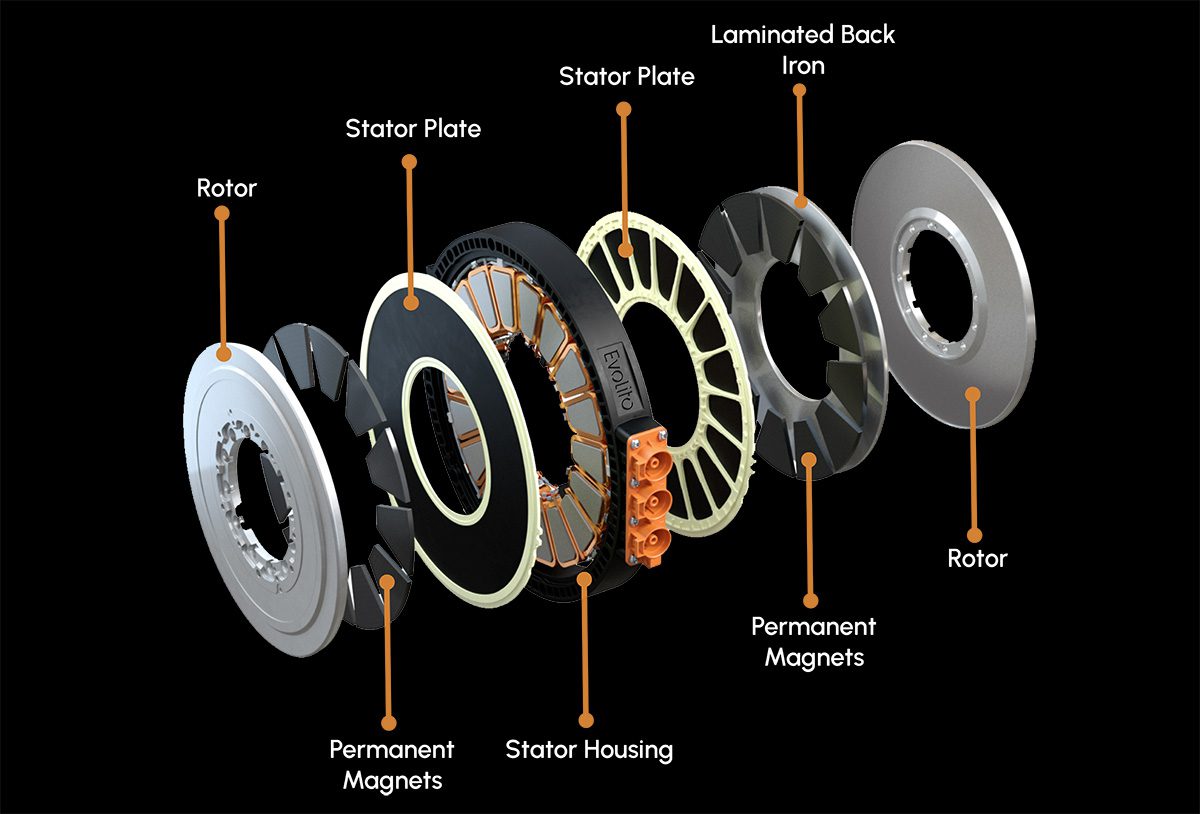
Evolito, a key player in electric propulsion technology, is embarking on a significant project to develop an innovative on-aircraft electric wheel taxi system. This initiative, a collaboration with aerospace giant Airbus, aims to enable aircraft to move on the ground using electric power, allowing main engines to be switched off during taxiing. The project is supported by prominent UK government bodies, including the Aerospace Technology Institute (ATI) and Innovate UK.
Cutting Emissions and Costs in Aviation Ground Operations
The primary objective of this collaboration is to substantially reduce aviation’s environmental footprint and operational expenses. The program, codenamed Project SONATA (System Optimisation of Non-propulsive energy in Aircraft Taxi technologies and Architectures), is specifically targeting a 47% reduction in emissions generated during the ground taxiing phase. This aligns with global efforts to achieve ‘Jet Zero’ emissions in the aviation sector.

By decoupling ground movement from main engine operation, airlines can anticipate significant savings in fuel consumption and a reduction in noise pollution around airports. This technological advancement is crucial for making air travel more sustainable.
Evolito’s Axial-Flux Technology at the Core
Evolito has been entrusted with the development of a specialized electric motor for Project SONATA. The company will leverage its expertise in axial-flux motor technology to create a unit designed for low-speed, high-torque applications. This configuration is ideal for the demanding requirements of aircraft landing gear systems.
The proposed motor is engineered to deliver impressive performance metrics, with an expected output of approximately 56 Newton-meters per kilogram (Nm/kg). It will also be capable of providing 350 kilowatts (kW) of peak power. Crucially, the motor must meet stringent integration requirements for seamless incorporation into future landing gear designs.

Axial-flux motors are known for their high power density and efficiency, making them well-suited for applications where space and weight are critical constraints. Evolito’s commitment to advancing this technology positions them at the forefront of electric aviation innovation.
Leadership Insights and Project Scope
Chris Harris, CEO of Evolito, expressed enthusiasm about the project’s potential. “By developing low speed, high torque motors for aircraft landing systems, we are extending the performance envelope of our technology and contributing to the reduction of aviation’s environmental impact whilst also reducing operating costs,” Harris stated. His remarks underscore the dual benefits of the project: environmental stewardship and economic efficiency.
The scope of Project SONATA extends beyond Evolito and Airbus. The initiative brings together a consortium of leading academic institutions and industrial partners. The University of Southampton, Compound Semiconductor Applications Catapult, Magnomatics, Drive System Design, and DePe Gear are all contributing their expertise to the program.
This collaborative approach ensures that diverse technical challenges are addressed by specialists from various fields, fostering innovation and accelerating development. The collective knowledge base within the project is expected to drive significant breakthroughs in electric propulsion for aviation.
Government Support for Future Aviation
The project has garnered significant attention and support from the UK government, recognizing its potential to advance the nation’s aerospace capabilities and environmental goals. UK Industry Minister Chris McDonald highlighted the project’s contribution to the ‘Jet Zero’ strategy, emphasizing the government’s commitment to sustainable aviation.
Financial backing through the Aerospace Technology Institute (ATI) is a testament to the strategic importance of Project SONATA. The ATI plays a vital role in funding cutting-edge research and development within the UK aerospace sector, aiming to maintain the country’s competitive edge in global aviation markets.
The development of electric wheel taxi systems is a critical step towards electrifying various aspects of aircraft operations. While fully electric or hybrid-electric propulsion for flight is still in its nascent stages, electrifying ground operations presents a more immediate and achievable pathway to reducing the environmental impact of air travel.
Evolito’s role in Project SONATA underscores the growing trend of specialized electric motor manufacturers partnering with major aerospace companies to drive innovation. The successful implementation of this technology could pave the way for wider adoption of electric systems across the aviation industry, contributing to a cleaner and more cost-effective future for air transport.