
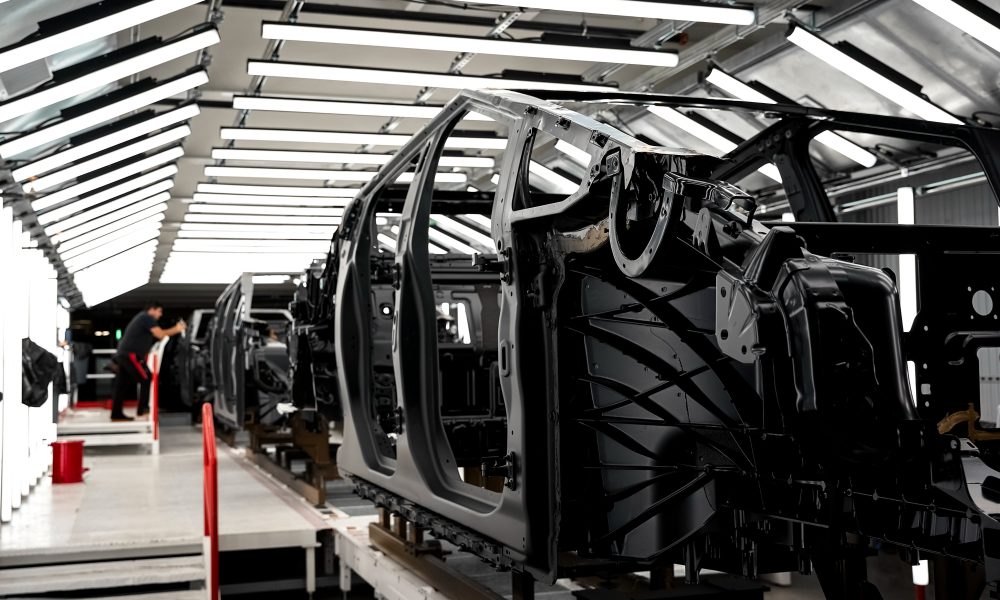
Ford Motor Company is set to integrate advanced automotive technologies pioneered by Tesla into its next generation of electric vehicles. The move signals a significant shift in Ford’s manufacturing and electrical systems strategy, aiming to enhance efficiency and reduce costs, drawing direct inspiration from innovations seen in vehicles like the Tesla Cybertruck.
Key Technological Adoptions for Future Ford EVs
Ford’s upcoming electric vehicle platform, slated to debut with a new small electric pickup truck expected around 2027, will feature a 48-volt electrical architecture. This system represents a substantial departure from the traditional 12-volt systems that have been standard across the automotive industry for decades.

This strategic adoption is part of Ford’s broader $5 billion investment in its new Universal EV platform, as reported by CNBC. The 48-volt system, first commercialized in the U.S. by the Tesla Cybertruck in 2023, offers several key advantages. It reduces the need for extensive wiring, thereby lowering vehicle weight and improving overall electrical efficiency.
The system works by drawing power directly from the vehicle’s high-voltage battery, with new electronic control units stepping down the voltage to 12 volts as required by specific components. This approach simplifies the vehicle’s electrical infrastructure and contributes to cost savings.
Expert Endorsement of the 48-Volt System
Alan Clarke, Ford’s executive director of advanced EV development and a former Tesla engineer, has voiced strong support for the 48-volt architecture. He described it as “the future of automotive” due to its inherent cost benefits and reduced wiring requirements.

Ford anticipates significant reductions in its new pickup’s wiring harness. The company estimates the harness will be over 4,000 feet shorter and approximately 22 pounds lighter compared to the wiring used in its first-generation electric SUV. These weight and complexity reductions are crucial for improving vehicle range and manufacturing efficiency.
Embracing Gigacasting for Structural Innovation
In addition to adopting the 48-volt electrical system, Ford is also embracing Tesla’s innovative approach to vehicle manufacturing: gigacasting. This technique involves using massive casting machines to produce large, integrated structural components, drastically reducing the number of individual parts required.
Ford’s upcoming electric vehicle will reportedly utilize just two major structural castings for the front and rear of the vehicle. This contrasts sharply with the 146 comparable components currently used in the assembly of the gas-powered Maverick pickup. Gigacasting simplifies the manufacturing process, enhances structural integrity, and contributes to overall weight reduction.
CEO’s Vision: A ‘Model T Moment’ for Ford
Ford CEO Jim Farley has characterized these technological shifts as a significant “bet” and a “Model T moment” for the company. He emphasized that system-level innovation is essential for Ford to lower production costs and remain competitive on a global scale.
Farley’s strategic vision aims to position Ford as a formidable competitor, even against international players. “At Ford, we took on the challenge many others have stopped doing. We’re taking the fight to our competition, including the Chinese,” Farley stated, underscoring the company’s aggressive stance in the evolving automotive landscape.
By adopting these advanced manufacturing and electrical technologies, Ford is strategically aligning itself with some of the most impactful innovations in the electric vehicle sector, demonstrating a commitment to cost reduction, efficiency improvements, and competitive positioning in the future automotive market.