

Ford Eyes Chinese Battery Giant BYD for Hybrid Power: Report
Automaker reportedly in talks with BYD for lithium-ion batteries, signaling a strategic shift amidst evolving EV market.
In a significant development that could reshape its hybrid strategy, Ford is reportedly in discussions with Chinese automotive and battery powerhouse BYD for a potential supply of lithium-ion batteries. This move comes as the U.S. automaker seeks to bolster its hybrid offerings globally, navigating a landscape where electric vehicle sales growth has shown signs of cooling.
The Wall Street Journal, citing sources close to the matter, revealed that Ford is exploring a partnership with BYD to source battery packs for its upcoming hybrid models. While Ford has not officially confirmed or denied the report, a spokesperson commented to the WSJ, “We talk to lots of companies about many things,” a standard response that neither confirms nor refutes such strategic explorations.
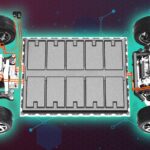
BYD, a global leader not only in vehicle manufacturing but also in battery production, is a significant player in the supply chain for several major automakers. The company already supplies its cost-effective lithium-iron phosphate (LFP) batteries to prominent brands like Tesla, Stellantis, Mercedes-Benz, and Toyota, primarily for electric vehicles sold in Europe and China. BYD’s battery deployments saw a substantial increase of 31.3% between January and November last year, positioning it as a major force behind CATL in battery market share, according to SNE Research.
The specifics of a potential Ford-BYD deal remain undisclosed. However, one possibility is that Ford could import BYD batteries for vehicles manufactured outside the United States. It’s important to note that U.S. import tariffs currently present a significant barrier for Chinese-made EVs and batteries entering the American market.
Ford’s strategic plans include launching a plug-in hybrid version of the Bronco in Spain in 2027, though it is currently unclear if this model would utilize BYD’s battery technology. In the U.S. market, Ford has recently recalibrated its EV strategy, halting production of the all-electric F-150 Lightning last year and postponing plans for its electric successor, incurring significant charges in the process. The next-generation F-150 Lightning is now slated to be an extended-range electric vehicle (EREV).
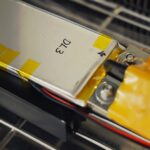
Meanwhile, Ford’s hybrid models, such as the Maverick and F-150 Hybrids, have experienced remarkable success, achieving record sales in 2025. If the talks with BYD materialize, it would mark Ford’s second major collaboration with a Chinese industry leader. The company is already set to integrate low-cost LFP batteries, licensed from CATL, into its upcoming $30,000 electric truck, manufactured at its BlueOval Battery Park in Michigan.
Ford has a history of utilizing BYD batteries in China through its joint venture with Changan, indicating that this potential partnership would not be uncharted territory. The key question now is whether these batteries will be designated for traditional hybrids, plug-in hybrids (PHEVs), or extended-range electric vehicles (EREVs) within Ford’s diverse portfolio.