
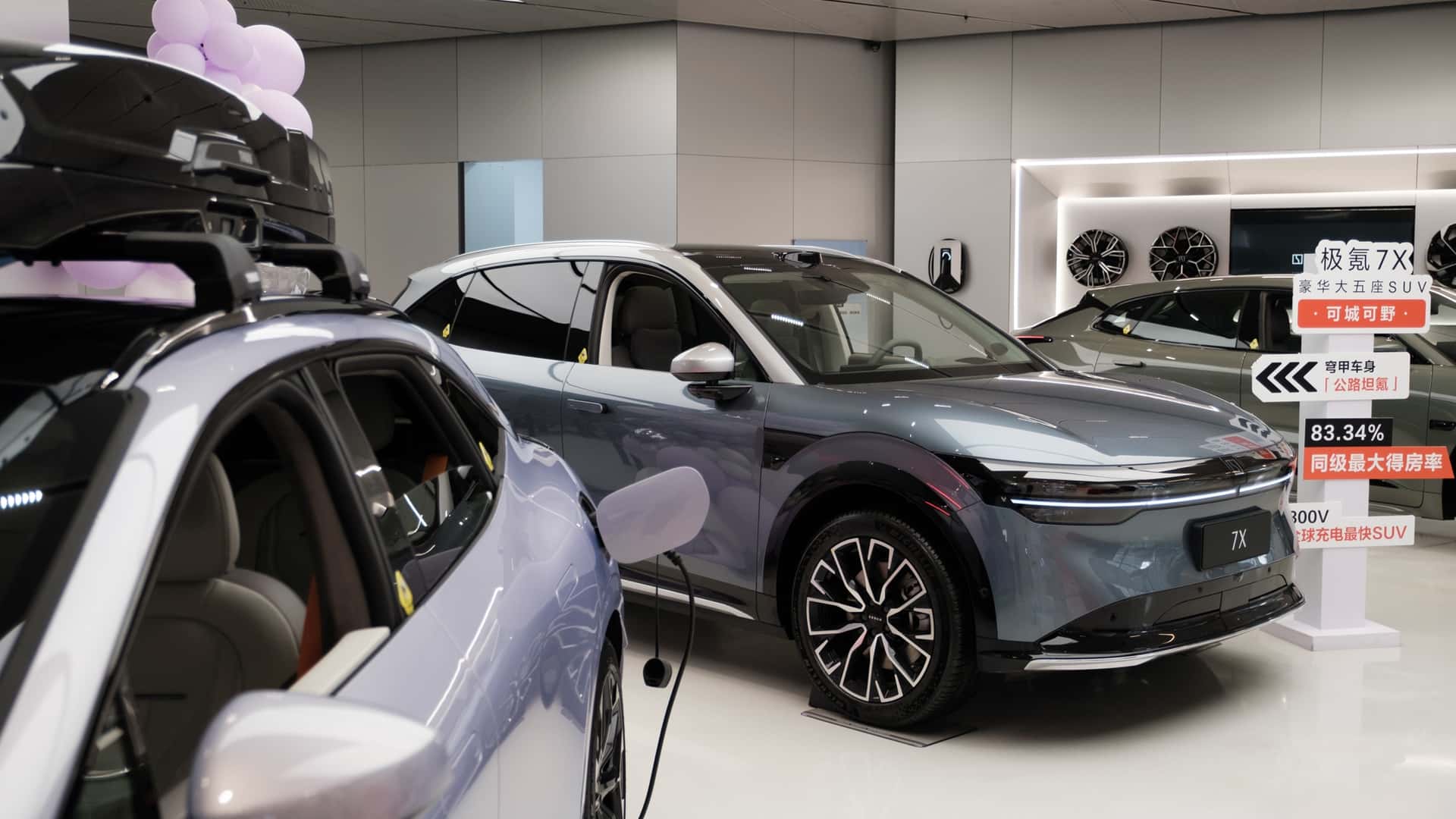
BEIJING – Geely, China’s second-largest automaker, is reportedly considering an expansion into the United States market, with a potential announcement expected within the next 24 to 36 months. The company, which already owns prominent brands like Volvo and Polestar, has yet to introduce its domestic Chinese brands to American consumers.
Potential US Market Offerings from Geely
Geely’s top communications executive, Ash Sutcliffe, has indicated that the Zeekr and Lynk & Co brands could be a strong fit for the U.S. market. This strategic move comes as China’s automotive consumer preferences increasingly mirror those in the U.S., unlike markets with a stronger affinity for smaller, less popular vehicles in America.
While Geely boasts a diverse portfolio, not every model may be suitable for the U.S. landscape. However, insights from driving various Geely products suggest several compelling options that could resonate with American buyers.
Zeekr and Lynk & Co: Premium Electric and Plug-in Hybrids

Both Zeekr and Lynk & Co offer a range of electric vehicles (EVs) and plug-in hybrid (PHEVs) models that are currently available globally, excluding the U.S. and Canada. Zeekr positions itself as a competitor to luxury brands like Audi and BMW, while Lynk & Co targets the segment occupied by Buick and Acura.
Notable models include the Zeekr 007, a sedan comparable in size to the BMW i4, and its station wagon variant, the Zeekr 007 GT. The Zeekr 7x crossover is also a sophisticated offering. While the distinctively designed, bus-like Zeekr Mix is noted for its innovation, its unconventional styling might be a challenge for broader American market acceptance.
Smart: A Revitalized Luxury Brand
The Smart brand, once known for its compact Fortwo model, withdrew from the U.S. in 2019. Following its acquisition by Geely and a pivot to an EV-only strategy, Smart has been repositioned as a luxury marque, aiming to compete with brands like Mini.
Current Smart offerings include the #1 and #3 models, which share a platform with the Volvo EX30 but feature enhanced interiors. The upcoming #5 crossover will be available in full electric or hybrid variants, comparable in size to the Mercedes-Benz GLB. Additionally, the iconic city car is slated for a return as the Smart #2.
While compact cars have a limited market share in the U.S., Sutcliffe suggests the American market is seeking “something different.” The modern Smart cars, with their distinctive, stylish designs, offer a visual departure from the predominantly medium-to-large beige crossovers commonly found on U.S. dealer lots.
Geely Galaxy E5 (EX5): Accessible and Feature-Rich Crossover
In contrast to Smart’s avant-garde approach, the Geely Galaxy E5 (also known as the Geely EX5 outside China) presents a more conventional design. This crossover, slightly smaller than a Toyota RAV4, offers a pleasant, unassuming aesthetic.
During a CES event, the EX5 was noted for its surprisingly premium feel for its price point, with an interior that felt spacious, a smooth ride, and an exceptionally responsive infotainment system. The EV version is powered by a 214-horsepower motor and a 60 kWh battery. Its PHEV counterpart, the EX5 EM-i, features a 1.5-liter gasoline engine and a smaller 18.4 kWh battery.
Geely Xingyuan (EX2): An Affordable Contender
Addressing the demand for more affordable electric mobility, the Geely Xingyuan (EX2 outside China) stands out as China’s best-selling plug-in vehicle, recently overtaking the BYD Seagull in sales.
While specific driving impressions are pending, the Xingyuan offers a larger size and more power than the BYD Seagull for a comparable price. Measuring 162 inches long, it accommodates five passengers, unlike the four-seater Seagull. It also boasts up to 114 horsepower driving the rear wheels and a battery capacity of up to 40 kWh.
While its approximate $9,000 price in China is unlikely to be replicated directly, markets like Australia are anticipating its arrival with a price point just under $20,000. This pricing strategy could lead to significant sales volume in the U.S. if replicated.
The potential U.S. market entry for Geely, beyond its existing Volvo and Polestar brands, hinges on the company’s commitment to expanding its presence. If Geely does proceed with its expansion plans, American consumers could soon have a diverse and compelling selection of vehicles to consider.