
A recent global survey from ABB Robotics has unveiled a significant shift in the electric vehicle (EV) manufacturing sector, indicating a marked increase in confidence among automotive manufacturers worldwide. The comprehensive findings suggest that EV production is rapidly transitioning from a nascent, often disruptive process to a more established, streamlined, and predictable manufacturing discipline, signaling a maturing industry landscape.
The latest Automotive Manufacturing Outlook Survey by ABB Robotics highlights a distinctly buoyant outlook across the sector. A substantial majority of manufacturers — more than two-thirds of respondents — are projecting a notable increase in EV production for 2026 compared to 2025. This forward-looking sentiment underscores a growing belief in the sustained market demand and long-term viability of the electric vehicle segment.

EV Manufacturing Becomes Easier and More Cost-Effective
A particularly noteworthy aspect of the survey’s results pertains to the evolving perception among manufacturers regarding the ease of production. A significant 51% of respondents indicated that electric vehicles and their crucial components are now simpler and less complex to manufacture than they were just a year ago. This positive shift points to a successful assimilation of new technologies and a steep learning curve within the industry.
In stark contrast to this prevailing sentiment, only a minimal 8% of those surveyed reported that EV production has become more challenging. This disparity illustrates a widespread improvement in manufacturing processes, component design, and overall operational capabilities. The industry is clearly overcoming initial hurdles through iterative improvements and technological advancements.
This evolving landscape extends compellingly to cost efficiency as well, a crucial factor for mass market adoption and profitability. The survey found that a notable 41% of respondents experienced a reduction in EV manufacturing costs over the past 12 months. Concurrently, another 39% reported that their production costs remained stable during the same period, indicating successful cost containment efforts.

These figures collectively point towards an EV manufacturing sector that is not only becoming more proficient and less complex but also demonstrably more economically viable. The initial high costs associated with pioneering new technologies and establishing dedicated production lines are gradually giving way to economies of scale and optimized processes, directly impacting EV production efficiency.
The insights from the survey strongly suggest that the assembly of electric vehicles is becoming increasingly faster, more stable, and less prone to disruption. This positive trajectory is largely attributed to the accumulating experience within the manufacturing sector and strategic, ongoing investments in advanced automation technologies, which are proving pivotal in enhancing overall EV production efficiency and output.
Commenting on these significant developments, Joerg Reger, Managing Director of ABB Robotics Automotive Business Line, affirmed the industry’s progression and its newfound stability. “Key indicators such as manufacturing time, cost and integration show that EV production is increasingly becoming a known quantity,” Reger stated, highlighting the growing familiarity and mastery over what was once considered a complex and novel manufacturing domain.
The maturation of EV production efficiency is a multifaceted phenomenon. It encompasses improvements across the entire value chain, from optimized raw material sourcing and more efficient battery cell production to streamlined powertrain integration and precise final vehicle assembly. The initial hurdles associated with a completely new technology, such as specialized tooling, extensive workforce training, and the development of robust supply chains, are progressively being overcome through persistent innovation and collaborative efforts.
The Pivotal Role of Automation in Streamlining EV Production
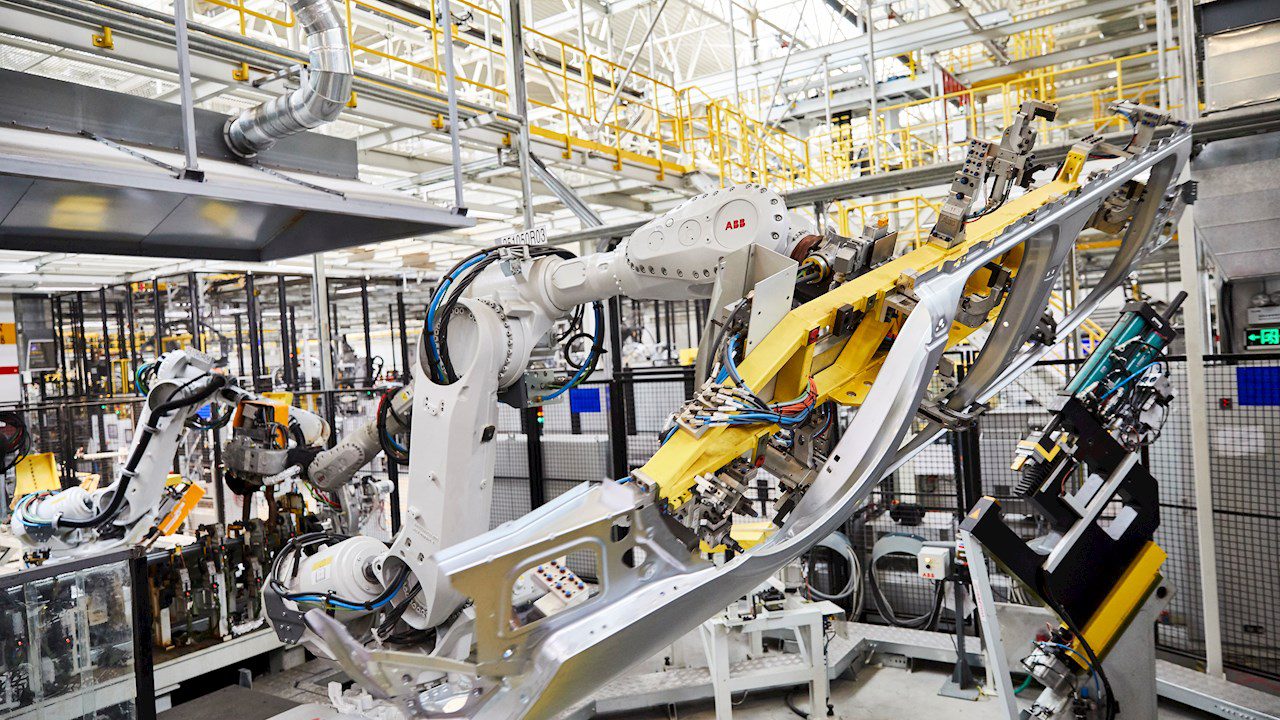
Automation stands out as a critical enabler in this profound transformation within the automotive sector. Robotic solutions are increasingly deployed across various stages of EV manufacturing, including intricate battery module assembly, high-precision motor production, and complex vehicle body construction. These advanced systems are instrumental in enhancing precision, ensuring repeatability, and significantly boosting production speed, directly contributing to improved quality and substantially reduced manufacturing cycle times.
The strategic adoption of industrial robots, advanced vision systems, and autonomous guided vehicles (AGVs) allows manufacturers to handle the unique challenges associated with EV components, such as heavy battery packs and intricate high-voltage electrical systems, with far greater safety and effectiveness. This not only optimizes human labor utilization by reassigning repetitive or hazardous tasks but also minimizes the potential for human error, ensuring higher product consistency and reliability.
Furthermore, the integration of digital twin technology, which creates virtual replicas of physical production lines, and artificial intelligence in manufacturing processes is allowing companies to simulate, test, and refine entire production lines virtually before physical implementation. This proactive, data-driven approach significantly cuts down on development time and costs, further boosting EV production efficiency and overall predictability.
Hybrid Powertrains: A Strategic Bridge Technology
While the accelerating focus on full electric vehicles is undeniable, the ABB Robotics survey also shed important light on the continued strategic significance of hybrid powertrains. The findings indicate that manufacturers anticipate hybrid powertrain production to grow even faster than pure EV production in the near term. This suggests a nuanced market strategy where many original equipment manufacturers (OEMs) still view hybrids as a practical, necessary, and commercially viable bridge technology for the foreseeable future.
The rationale behind this sustained emphasis on hybrids is multi-faceted. Hybrids offer a crucial transition solution for a broad segment of consumers who may be hesitant to fully commit to pure EVs due to concerns about the availability and density of charging infrastructure, range anxiety on long journeys, or the initial higher purchase costs associated with all-electric models. They effectively combine the familiarity of internal combustion engines with the efficiency and environmental benefits of electric propulsion, offering a balanced and appealing proposition.
For manufacturers, investing in hybrid technology allows them to meet evolving global emissions regulations and corporate average fuel economy (CAFE) standards while simultaneously and gradually scaling up their full EV capabilities and supply chains. It also provides a valuable buffer against potential market fluctuations or unforeseen challenges in the rapid, ambitious transition to an all-electric future, ensuring a diversified and resilient product portfolio that caters to varied market demands across different regions.
Global Insights from Industry Leaders
The comprehensive nature and broad geographical reach of the ABB Robotics survey lend significant weight and credibility to its conclusions. ABB Robotics compiled its findings based on responses from 473 automotive decision-makers, encompassing both major vehicle manufacturers and their critical tier-one and tier-two suppliers from across the globe. This broad international participation ensures that the survey’s insights reflect a truly global perspective on the current state and future direction of automotive manufacturing.
The respondents represented a diverse array of functions and expertise within the automotive ecosystem, including production heads, supply chain managers, research and development leaders, and senior executives. Their collective experience and strategic perspectives underpin the credibility and authority of the survey’s conclusions regarding enhanced EV production efficiency, evolving market dynamics, and future investment trends.
Looking Ahead: A Predictable Path for EV Growth
The insights gleaned from the ABB Robotics survey paint a compelling and optimistic picture of an automotive industry that is not only embracing electrification with increasing vigour but is also becoming remarkably adept at its intricate execution. The journey from initial disruption to established and optimized processes for EV production is gaining significant momentum, consistently fueled by rapid technological advancements, strategic and sustained investments in automation, and invaluable accumulated manufacturing experience.
The clear trend towards easier, cheaper, and more predictable EV production, coupled with the continued strategic role of hybrid technologies, collectively positions the global automotive sector for sustained growth, profound innovation, and heightened competitiveness. This evolving landscape promises a more efficient, resilient, and robust future for electric mobility, offering greater confidence to both manufacturers and consumers around the world, as the industry navigates towards a sustainable transportation paradigm.
Download the survey results here.