
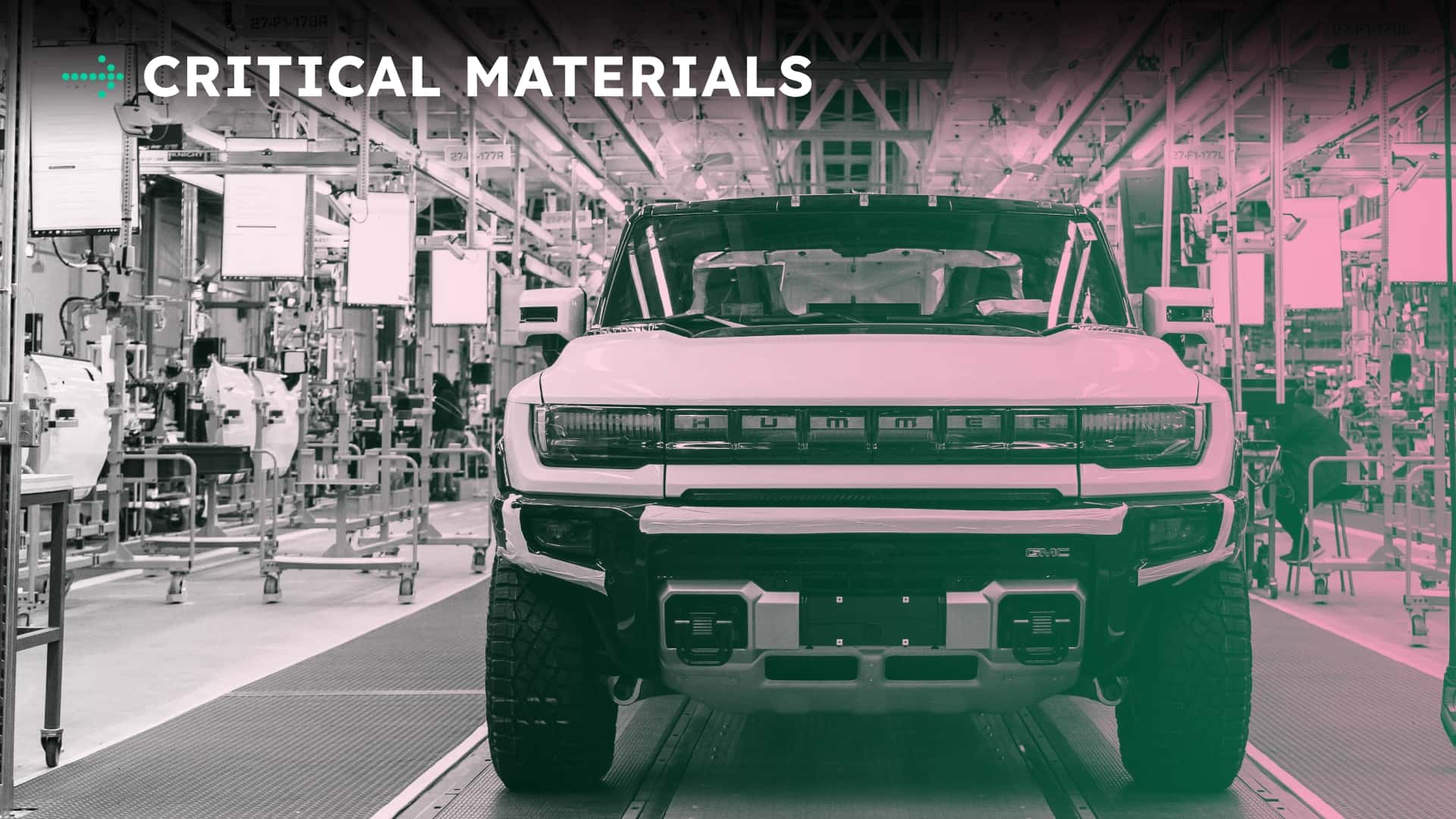
GM Faces Steep Costs as EV Ambitions Shift Amid Policy Changes
General Motors (GM) is undergoing a significant financial reckoning, announcing a substantial $7.1 billion in charges for the fourth quarter of last year. This considerable hit stems largely from a strategic pivot away from some of its ambitious electric vehicle (EV) plans, a move influenced by shifting government policies and a subsequent slowdown in consumer demand.
EV Investment Reversal Comes at a High Price for GM
The automotive industry has invested billions in the transition to electric vehicles over the past decade. However, recent policy shifts, including changes to tax incentives and emissions regulations, have created a more challenging landscape. Automakers are now reassessing their EV strategies, leading to costly adjustments. For GM, this retreat has manifested in significant financial charges.
According to a recent SEC filing, the $7.1 billion charge includes $1.1 billion allocated to restructuring costs for its China joint venture, SAIC-GM. The lion’s share, approximately $6 billion, is directly linked to scaling back EV production and related investments in North America. This is in addition to a $1.6 billion charge incurred last year due to a slowdown in EV sales.
GM cited the termination of certain consumer tax incentives and the relaxation of emissions regulations as key factors contributing to a slowdown in EV demand. In response, the company has proactively reduced its EV manufacturing capacity. This includes repurposing its Orion, Michigan assembly plant from EV production to internal combustion engine (ICE) SUVs and pickup trucks, where demand is perceived to be stronger. GM has also reduced its battery cell manufacturing capacity, notably by selling its stake in the Ultium Cells LLC facility in Lansing, Michigan, to LG Energy Solution.
The $6 billion in charges comprises $1.8 billion in non-cash write-downs and $4.2 billion with a direct cash impact, such as contract termination fees. This move echoes a similar announcement from rival Ford, which anticipates a hit of over $19 billion due to its own strategic recalibrations, including the cancellation of the F-150 Lightning’s initial rollout plans.

Despite these adjustments, GM emphasized that its current retail EV portfolio, featuring models across Chevrolet, Cadillac, and GMC brands, remains unaffected and will continue to be available to consumers. The company was the second-highest EV seller in the U.S. last year, trailing only Tesla.
China Aims to Tackle Battery Production Overcapacity
Meanwhile, in China, the government is taking steps to address overcapacity in the battery manufacturing sector. Beijing has reportedly convened a meeting with major battery producers, including CATL, BYD, and Gotion, to curb intense price wars and manage the surplus production. Chinese regulators are set to increase oversight, enforce stricter pricing rules, improve product quality, and crack down on intellectual property infringements.
Research from BloombergNEF indicates a significant oversupply of batteries in China, with production capacity exceeding current global demand, even before considering future projects. While this oversupply has driven down battery prices, unchecked growth poses potential challenges.
Brussels Motor Show Spotlights New EV Models
This weekend’s Brussels Motor Show will serve as the stage for the unveiling of several new electric vehicles, with a particular focus on Europe-centric models. The European market is more advanced in EV adoption compared to the U.S., though it still lags behind China.
Among the anticipated reveals are the Kia EV2, Citroën’s Elo Concept electric van, a battery-powered Hyundai Staria van, Mazda’s next European-exclusive EV, and Renault’s reimagined electric Twingo. BYD is expected to showcase up to nine models, while Tesla will feature lower-priced trims of the Model 3 and Model Y.
The Future of EV Demand
The article concludes by posing a critical question: Will the introduction of more affordable EVs be enough to stimulate demand, or will incentives remain essential for widespread adoption?
Contact the author: Suvrat.Kothari@InsideEVs.com