
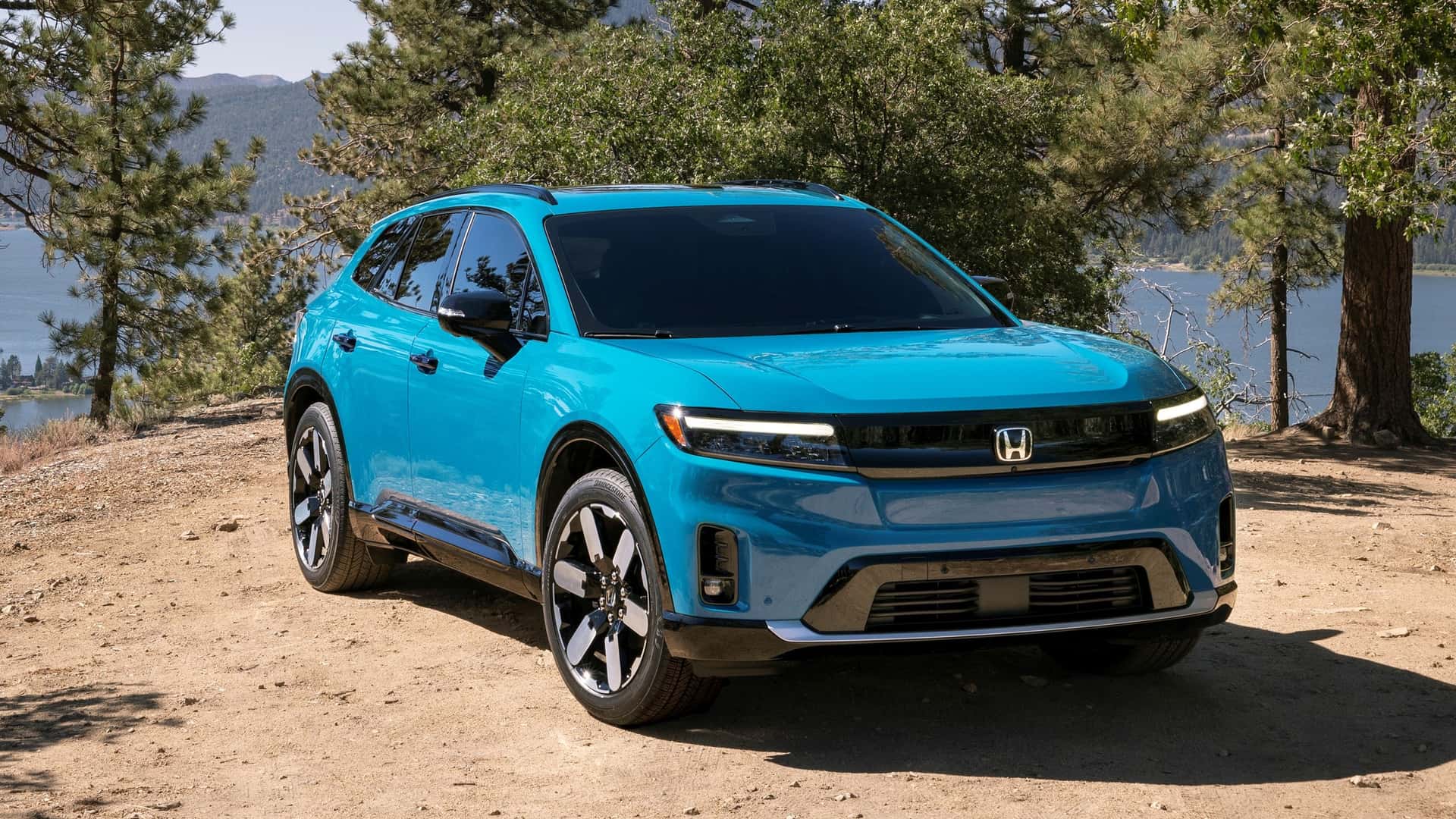
Honda’s global electric vehicle sales experienced a significant decline in the financial quarter ending December, with a halving of units sold compared to previous periods. The Japanese automaker’s EV business is now projected to incur substantial losses for the full fiscal year, a situation where General Motors could unexpectedly emerge as a beneficiary.
Sales Dip and Production Adjustments
During the October-December quarter, Honda’s worldwide electric car sales fell to approximately 15,000 units. This sharp downturn led Honda to reduce its orders with General Motors for jointly developed electric models, including the Honda Prologue and the now-discontinued Acura ZDX. As a consequence, Honda will reportedly need to compensate GM for the decreased production volume, according to reports from Automotive News.
Joint Venture Challenges
The Honda Prologue and Acura ZDX were developed in collaboration with General Motors, utilizing the same electric platform as the Chevrolet Blazer EV. Both models were also manufactured at GM’s facilities. The Acura ZDX, assembled at GM’s Spring Hill plant in Tennessee, saw its production end after just one model year, having sold a total of 19,411 units. The Honda Prologue, produced at GM’s Ramos Arizpe plant in Mexico, initially showed promise but experienced a dramatic sales drop of 86% in the latest quarter, reaching only 2,641 units. For the entirety of the previous year, Honda sold 39,194 Prologue EVs in the U.S., a figure that represented an 18.7% increase from 2024, underscoring the recent quarterly decline.
Financial Repercussions and Strategic Review
These sales challenges have prompted Honda to initiate a “fundamental review” of its automotive strategy. The company has recorded its fourth consecutive quarter of operating losses, with consolidated profits dropping by 61% in the fiscal third quarter. Through the first nine months of the fiscal year ending March 2026, Honda’s expenses related to its EV business have reached $1.71 billion, and the company anticipates these losses to escalate to $4.48 billion by the fiscal year’s conclusion. Furthermore, U.S. import duties are expected to add an additional $1.98 billion in losses by the end of March, potentially reducing the automaker’s operating profit by 55%.
Mitigation Efforts and Future Plans
To counteract these financial pressures, Honda plans to increase fleet sales of the Prologue crossover and invest in manufacturer incentives. Despite a significant incentive package of over $17,000 per Prologue sold in the U.S. last month, sales remained sluggish, with only 664 units sold in January. Following the discontinuation of the Acura ZDX and the underperformance of the Honda Prologue, the Japanese automaker is shifting its focus to a new generation of EVs. These will be built on an in-house developed platform known as the 0 Series. The first vehicle from this new lineup, the Acura RSX crossover, is slated for release by the end of this year, with two additional Honda models, the 0 Series SUV and 0 Series Saloon, to follow.

Shifting EV Aspirations
Honda’s ambitious initial vision for electric vehicles has been tempered by evolving market conditions and regulatory shifts. The company had previously aimed to sell two million EVs globally by 2030, a target that has since been revised downward to approximately 700,000 to 750,000 units annually.