
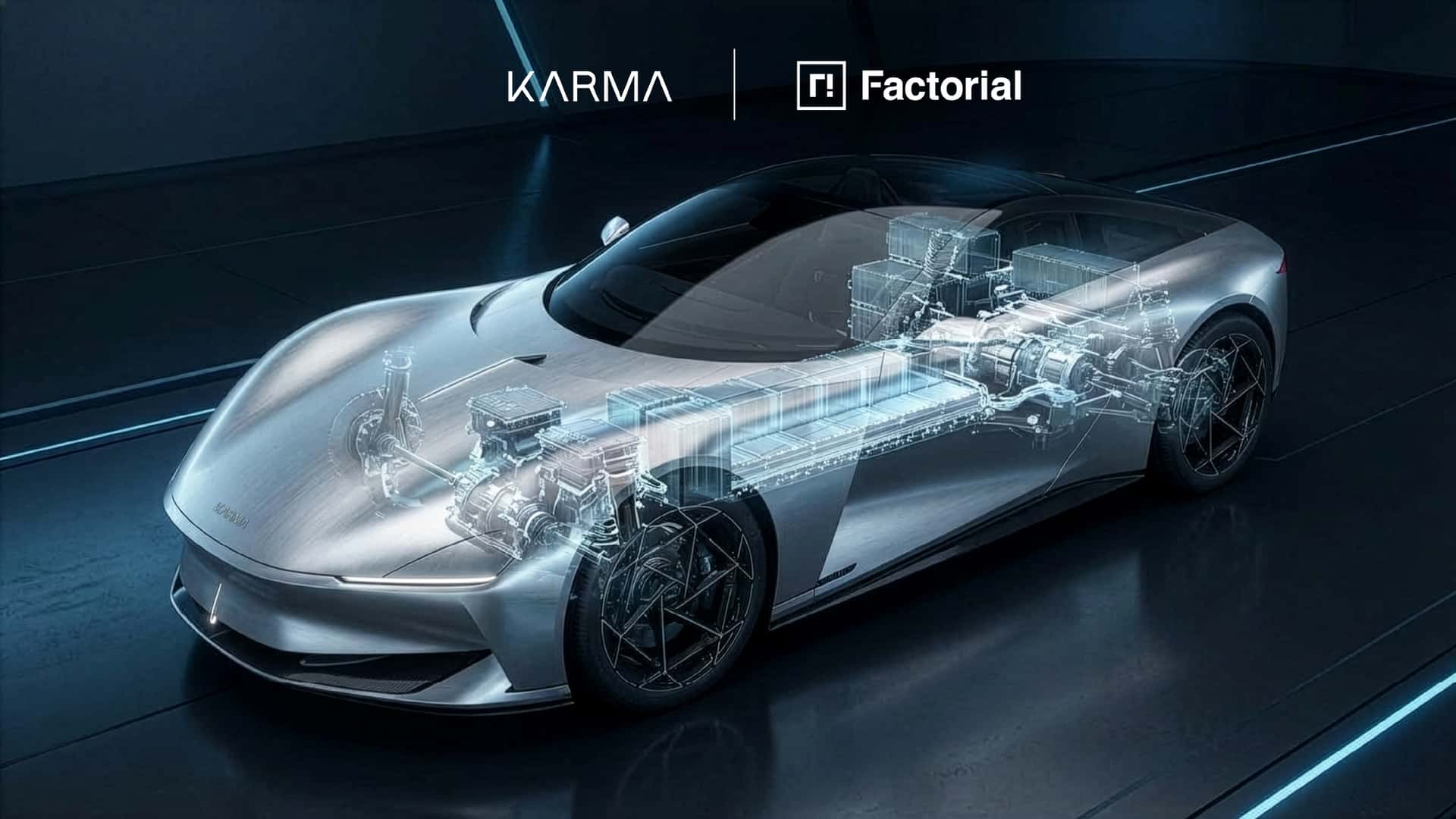
In the rapidly evolving electric vehicle market, California-based Karma Automotive is preparing to make a significant technological leap. The company, which emerged from the bankruptcy of Fisker Automotive in 2014, plans to integrate semi-solid-state batteries into one of its upcoming electric models, potentially marking the first U.S. deployment of this advanced battery technology in a vehicle.
Karma’s Path to Electrification
While Karma has primarily focused on extended-range electric vehicles (EREVs) to date, its future product pipeline includes a shift towards fully electric models. The company has announced that its first all-electric vehicle, the Kaveya, slated for a 2027 release, will utilize semi-solid-state battery cells developed by Massachusetts-based Factorial Energy. This move positions Karma to potentially bring a technology often referred to as the ‘holy grail’ of battery development to American consumers sooner than many established automakers anticipate.
Understanding Solid-State Technology
Solid-state batteries are a significant advancement over current lithium-ion technology, promising enhanced safety, higher energy density, and faster charging capabilities. While fully solid-state batteries are still largely in development, semi-solid-state variants are beginning to emerge. Currently, no vehicles on the U.S. market feature this type of battery, making Karma’s potential integration a notable industry first.
A Niche Strategy for New Tech
Karma Automotive’s CEO, Marques McCammon, explained that the company’s strategic positioning as a low-volume, high-end manufacturer makes it an ideal candidate for piloting new technologies. “We’re a three to five thousand unit per year type of manufacturer, and that’s the perfect place to pilot new technologies,” McCammon stated. This approach allows Karma to test and refine cutting-edge advancements without the immense scale required by mass-market producers.
Karma’s History and Future Models
Karma Automotive, originally established by Chinese conglomerate Wanxiang after acquiring the assets of the first Fisker Automotive, has produced several iterations of its Revero EREV. The Revero, which shares design cues with the original Fisker Karma, has been redesigned with updated body panels and a powertrain supplied by BMW, replacing the original GM system. The company emphasizes that all its vehicles are designed, engineered, and built in the U.S., with no powertrain technology sourced from China, despite its parent company’s origins. The final Revero model concluded production in December.
Looking ahead, Karma plans to introduce two new EREV models this year: the Gyesera, a four-door GT replacing the Revero, and the Amaris, a two-door coupe. These models will follow a similar powertrain strategy to the Revero, which featured a 1.5-liter gas engine charging a 28-kilowatt-hour battery for a total range of 360 miles.
The Karma Kaveya: A Glimpse into the Future
The upcoming Kaveya electric vehicle is engineered to deliver impressive performance, with an expected range of over 250 miles, more than 1,000 horsepower, and a top speed exceeding 200 miles per hour. Its design features a striking Ferrari-esque aesthetic, complete with gullwing doors and a yoke steering wheel. The Kaveya will utilize a distinctive “dog bone” architecture, where the battery pack is configured in a bone shape with horizontal sections at the front and rear connected by a central tunnel. This design contributes to a lower seating position, enhancing the vehicle’s sporty profile, and allows for efficient packaging due to the lighter weight and smaller dimensions of solid-state cells, according to McCammon.
Factorial Energy’s Technology
Factorial Energy is actively developing its semi-solid-state batteries and has already engaged in advanced projects with major automakers. Mercedes-Benz has tested a prototype equipped with Factorial’s technology, reportedly achieving 749 miles on a single charge. Stellantis is also slated to integrate a Factorial battery into a Dodge Charger Daytona EV prototype this year. The company claims its semi-solid-state batteries can offer significant improvements in weight and range; for example, a 90-kilowatt-hour pack could provide 500 to 600 miles of range while weighing approximately 580 pounds.
Karma’s Market Position
Karma Automotive maintains that it does not aim to compete as a high-volume manufacturer like Rivian or Lucid. The company has reported selling approximately 1,000 vehicles globally since its inception. Production of the Revero in the past year reached 146 units, with some units listed for sale at prices exceeding $150,000. While other battery startups like QuantumScape and Solid Power are also working towards bringing solid-state technology to market, widespread adoption in more common vehicles is still anticipated to be several years away.