
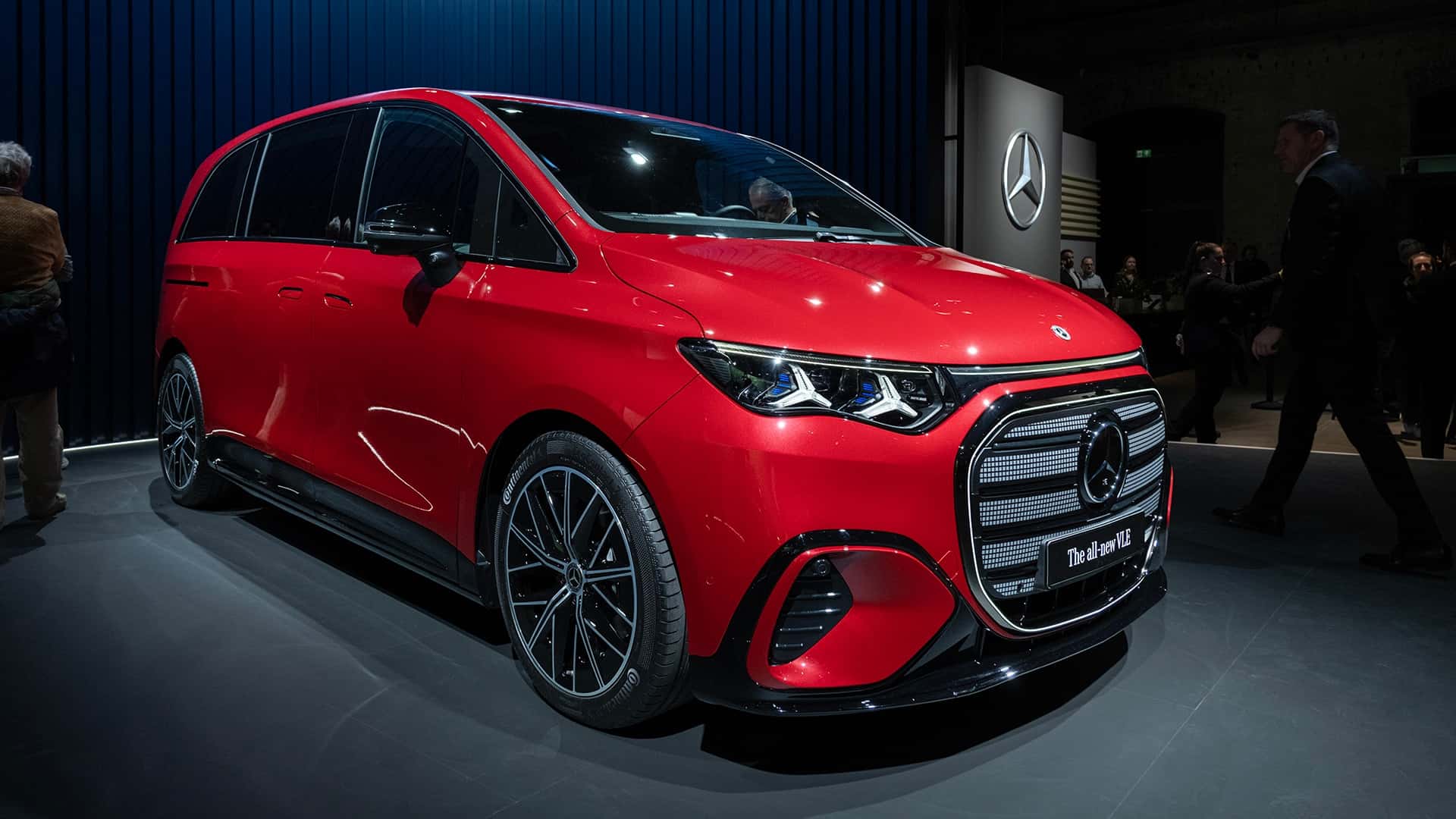
Mercedes-Benz is set to transform the perception of luxury vans with its new VLE model, aiming to rectify the shortcomings of previous V-Class iterations. The VLE, built on an innovative electric-first platform, is designed to offer a more refined and passenger-centric experience, moving away from the inherent compromises of traditional van architecture.
Addressing Van Vanities: The VLE’s Ambitious Overhaul
Riding in the back of Mercedes-Benz V-Class vans, even in their most luxurious configurations, often revealed a persistent reality: they still felt like vans, complete with associated compromises. This was particularly noticeable in the fully electric European-market EQV, which, despite its electric powertrain, inherited many of the V-Class’s inherent van-like characteristics.

Mercedes-Benz appears to have recognized these limitations. The VLE represents a significant effort to overcome these challenges. While retaining the familiar van silhouette, the VLE is engineered with a fundamentally more sophisticated undercarriage. Its new electric-first platform is a strategic move, explicitly intended to elevate the vehicle beyond its utilitarian roots, positioning it closer to a luxury passenger car.
The previous EQV offered a glimpse into the potential of an electrified V-Class, demonstrating how the absence of combustion engine noise and powertrain vibrations could enhance refinement. However, the EQV was essentially a converted combustion van, equipped with a relatively small battery pack. This resulted in a limited range, often cited as around 213 miles (342 km) on the generous WLTP cycle, with real-world figures typically falling short.
Enhanced Performance and Range for the VLE
The VLE directly addresses the range anxiety associated with its predecessor. It boasts a substantial 115-kilowatt-hour battery pack, projecting an impressive WLTP range exceeding 434 miles (700 km). This significant increase in energy capacity positions the VLE as a viable option for longer journeys.

Furthermore, the VLE benefits from an advanced 800-volt architecture. This cutting-edge system not only supports faster charging capabilities compared to the EQV but also contributes to a more efficient and seamless charging experience, crucial for facilitating long-distance travel.
A New Foundation: Luxury Features on an Electric Platform
Beyond its improved specifications, the VLE represents a departure in its fundamental design philosophy. The designation of a vehicle that visually resembles a van as a ‘grand limousine’ might initially seem counterintuitive. However, an understanding of its underlying engineering quickly justifies the description.
The VLE is constructed on a new electric-first platform that integrates advanced features such as air suspension and rear-wheel steering. These are typically found in high-end luxury vehicles and are essential for delivering a superior ride quality and enhanced maneuverability, features that are now expected in a premium passenger vehicle.
Structural Integrity and Enhanced Safety
During trials in previous V-Class models, a notable issue was the vehicle’s torsional rigidity. The body structure exhibited flex over uneven road surfaces, leading to audible creaks from the doors and tailgate. This phenomenon, more pronounced in the quiet cabin of the EQV, underscored the fact that these vehicles were not originally designed with passenger comfort as the primary consideration.
The VLE, conversely, is engineered with passenger orientation at its core. This focus on a more robust and passenger-centric structure is expected to mitigate, if not eliminate, the rattling and creaking issues, while also significantly improving overall safety.
The current V-Class, launched in 2014, achieved a five-star safety rating from Euro NCAP. However, its safety provisions for rear occupants, particularly in side-impact scenarios, were limited. The inclusion of only rear curtain airbags, despite otherwise good structural integrity, meant that side collisions posed a greater risk to passengers in the rear compared to those in a standard car.
Mercedes-Benz asserts that the VLE can be equipped with as many as 11 airbags, providing substantially enhanced protection for all occupants, especially those in the rear seats. This is complemented by advanced active and passive safety systems designed to proactively prevent accidents.
Refined Interior and Passenger Experience
The VLE incorporates amenities such as electric side windows that can be rolled down. Mercedes-Benz highlights the utility of these windows, suggesting they are for children to wave goodbye to family members. However, the practical benefit of improved cabin ventilation, especially on warm days in congested traffic, is undeniable and contributes to a more comfortable passenger experience.
The company’s messaging suggests that the VLE is not solely targeted at the luxury shuttle market but also at families seeking a more sophisticated and practical alternative to traditional SUVs and crossovers. The VLE aims to offer a spacious environment that rivals the luxury of large sedans and SUVs.
Reimagining the Luxury Vehicle Segment
What may ultimately distinguish the VLE from many large luxury SUVs is not necessarily its technological features, such as a large rear screen or advanced climate control, but its fundamental spatial advantage. The inherent design of a van – characterized by a low floor, high roof, and wide-opening doors – facilitates easier ingress and egress, greater interior mobility, and the ability to utilize the cabin as a functional living space rather than merely a seating area.
In contrast, many luxury SUVs continue to prioritize outward appearance and road presence over the comfort of rear-seat passengers, particularly those in the third row. The VLE appears to invert this convention, placing passenger comfort and utility at the forefront.
Mercedes-Benz’s strategy with the VLE is to appeal to buyers who might typically opt for large luxury SUVs as status symbols. By blending the practical advantages of a van with genuine luxury, the automaker aims to create a more desirable and sensible alternative. This innovative approach, merging van practicality with high-end refinement, positions the VLE as a compelling proposition in the evolving automotive landscape.
The VLE is slated for launch in the U.S. and European markets next year. While its market success remains to be determined, the fundamental concept of a luxury van designed from the ground up for passenger experience appears promising.