
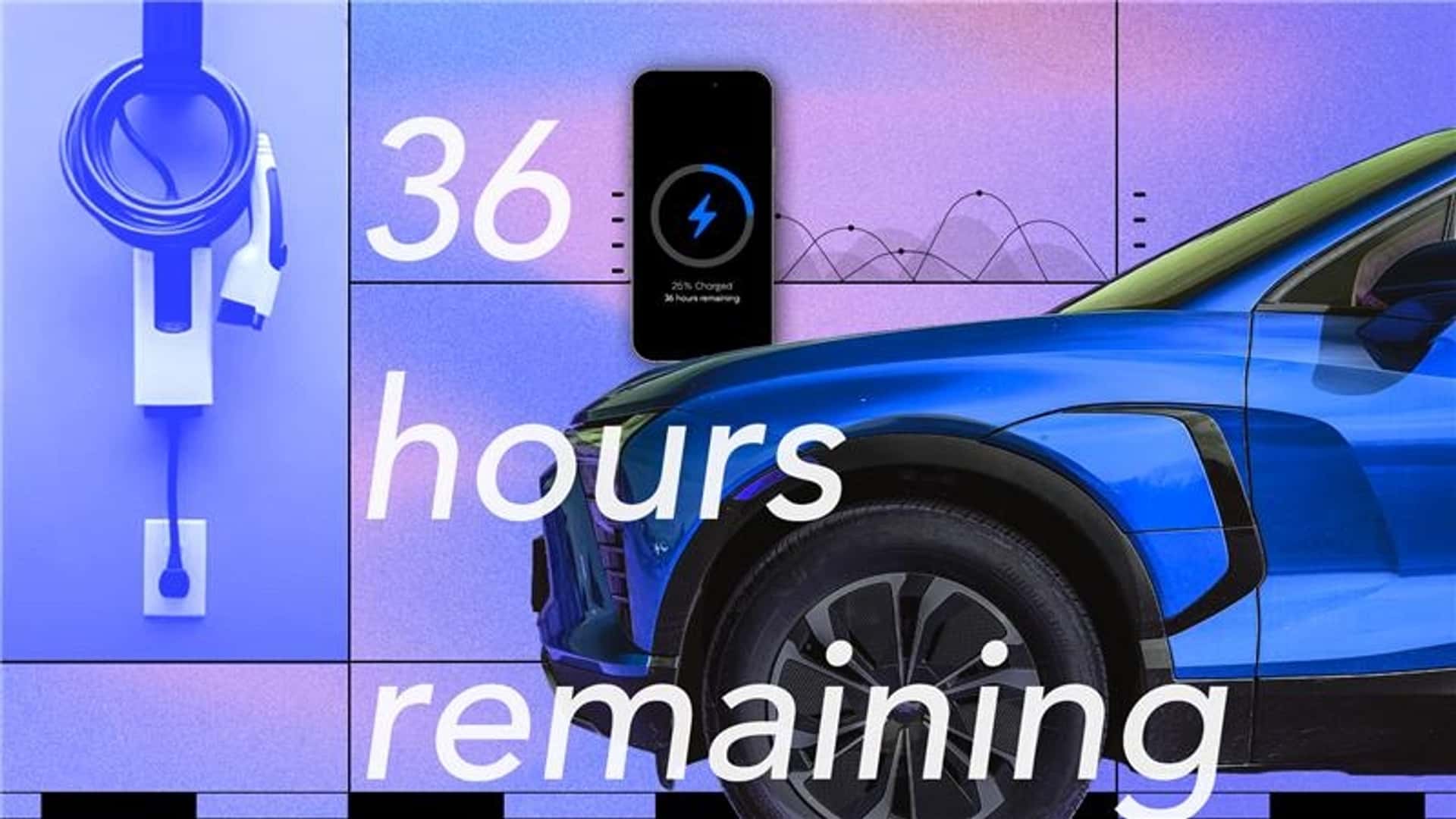
An experiment in electric vehicle ownership has led to significant frustration for one owner who has spent nearly two years relying solely on Level 1 charging for their Chevrolet Blazer EV. Despite working from home, having access to public charging stations, and driving a relatively low mileage, the experience has become a considerable challenge.
The Setup: A Rental Home with Charging Hurdles
The owner, Mack Hogan, leased a 2024 Chevrolet Blazer EV in July 2024 with a specific goal: to test the feasibility of living with an electric vehicle without the convenience of a Level 2 home charger. His living situation presented unique obstacles: a rented beach cottage in San Diego with no driveway, no exterior power outlets, and an outdated electrical system with limited amperage. The exterior of the house offered no easy charging solution, and even interior outlets were unreliable.

This setup mirrors the reality for many Americans who may not own their homes or have guaranteed parking spaces with access to power. Hogan aimed to determine if an EV could be a viable option under such constraints.

Mitigating the Lack of Home Charging
Hogan’s strategy involved several steps to make Level 1 charging work. First, he secured permission from his landlord and hired an electrician to install a new breaker and outlet on the exterior of the house. This cost approximately $350.
However, the newly installed outlet was still a significant distance from where the car could be parked. The factory-provided General Motors Dual Voltage Charge Cord, measuring 25 feet, required an additional extension cord. This led to the use of a 50-foot, 10-gauge extension cord rated for 30 amps, to carry the 12 amps of continuous load.

Manufacturers generally advise against using extension cords with EV chargers due to potential risks, including overheating, ground-fault detection issues, and physical damage. Hogan acknowledges these risks and states he does not recommend this practice, even with a heavy-duty cord.
Further complicating matters, the charging setup required running the cord across a public sidewalk. To mitigate tripping hazards for pedestrians, Hogan used a ramped cable cover. This process of setting up and dismantling the charging station daily became a tedious and grimy routine.
The Charging Experience: Slow and Unreliable
After navigating the setup challenges, the reward is minimal. Hogan reports gaining approximately 50 miles of range per 24 hours of Level 1 charging. This slow pace necessitates significant advance planning for any trips.
For instance, a weekend trip requiring a 20% battery top-up means plugging in days in advance. If the charging spot is unexpectedly taken, the entire setup must be dismantled and reassembled, causing considerable disruption. Hogan recounts an instance where a Friday night parking spot loss forced a complete reevaluation of his Saturday plans.
The High Cost of Electricity and Charging
The expense associated with charging is another major drawback. San Diego Gas & Electric’s electricity rates are among the highest in the nation. Hogan faces a delivery charge of 32.9 cents per kilowatt-hour, in addition to the electricity cost of 12 cents per kWh during peak hours. This results in a total cost significantly above the national average for electricity.
While off-peak hours offer a lower delivery rate (4.3 cents per kWh), Level 1 charging’s slow speed makes it impossible to gain sufficient range within the limited six-hour window (12 a.m. to 6 a.m.) available on weekdays.
Reliance on Expensive Public Fast Charging
The cumulative effect of slow Level 1 charging and high electricity costs forces Hogan to frequently rely on public DC fast chargers. This presents its own set of problems:
- Availability: Hogan notes a choice between Electrify America stations, which are often full but located near amenities like grocery stores, and Tesla Superchargers, which are consistently available but more expensive and lack nearby services.
- Cost: Electrify America charges $0.65 per kWh, while Tesla Superchargers charge $0.72 per kWh for non-Tesla vehicles.
For his Blazer EV’s 85-kWh battery, a full charge at Electrify America costs approximately $55.25, translating to about $0.22 per mile (based on 3.0 miles per kWh real-world efficiency). At Tesla Superchargers, the cost rises to around $61.20, or $0.24 per mile.
Hogan contrasts this with the cost of operating a hypothetical gasoline-powered Chevrolet Blazer, which would achieve approximately 24 miles per gallon. At an average gas price of $4.64 per gallon, the cost per mile would be around $0.19, significantly less than his EV charging expenses, not to mention the time spent at charging stations.
The Lost Sense of Spontaneity and Adventure
While Hogan acknowledges the environmental benefits and the enjoyable aspects of driving an EV, such as instant torque and quiet operation, the charging limitations have diminished his enthusiasm for driving. He recognizes that the ideal EV ownership experience involves waking up to a fully charged vehicle daily, a luxury he lacks.
The constant need to plan charging sessions, the inconvenience of public charging, and the associated costs have eroded the spontaneity that defines the joy of driving for him. Impromptu trips to the mountains, visiting friends, or taking scenic routes are now complicated by the prospect of lengthy charging stops or the necessity of meticulous planning days in advance.
With less than five months remaining on his lease, Hogan has only used 11,000 of the 20,000 miles included. He compares this to the freedom offered by his former gasoline truck, which was always ready for immediate use without extensive forethought.
The author concludes that while EVs excel in daily commuting and urban driving, the current charging infrastructure, particularly for those without convenient home charging, limits their appeal for spontaneous travel and adventure. He believes that access to Level 2 charging at home would significantly improve the ownership experience, making public charging more suitable for occasional long trips rather than daily reliance. This, he suggests, leaves the full EV dream out of reach for a substantial portion of the population.
Contact the author: Mack.Hogan@InsideEVs.com