
Porsche has officially commenced manufacturing operations for its highly anticipated Cayenne Electric model at its facility in Bratislava. Concurrently, the German automaker has announced the successful development and in-house production of its own battery modules, marking a significant step in its electrification strategy.
Flexible Production Line Accommodates Diverse Powertrains
The new Cayenne Electric is being produced on an advanced, flexible assembly line. This strategic setup allows for the simultaneous manufacturing of combustion engine and hybrid drive variants alongside the all-electric version. Porsche highlights that this adaptability enables the company to swiftly respond to evolving market demands and consumer preferences, ensuring optimal production efficiency.
In-House Battery Production for Enhanced Control
A key development accompanying the Cayenne Electric’s launch is Porsche’s establishment of its own battery module manufacturing capability. These battery modules are produced at the newly established Porsche Smart Battery Shop located in Horná Streda, approximately 100 kilometers northeast of the Bratislava production plant. This vertical integration of battery production signifies Porsche’s commitment to controlling critical aspects of its electric vehicle technology.
Advanced Battery Technology Powers Extended Range and Performance
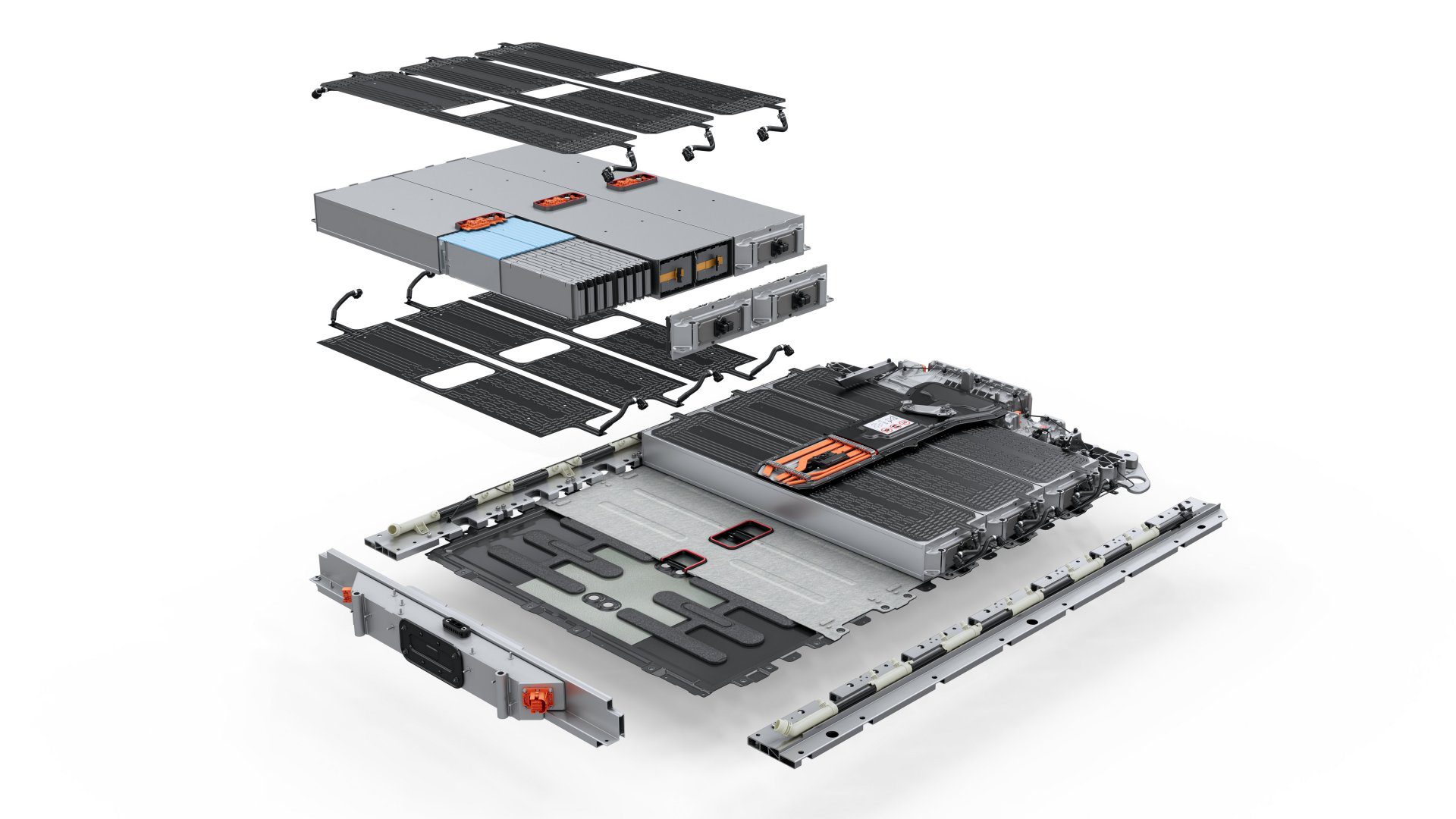
The newly developed battery modules feature large pouch cells, boasting a gross energy content of 113 kWh. This substantial capacity is engineered to deliver driving ranges exceeding 600 kilometers on a single charge, addressing one of the primary concerns for electric vehicle adoption. Furthermore, the battery system is equipped to support 800-volt fast-charging technology, allowing for significantly reduced charging times.
To ensure optimal performance and longevity, the high-voltage battery incorporates an advanced thermal management system. Two cooling plates are strategically positioned to cool or heat the battery from both the top and bottom as needed. This precise temperature regulation is crucial for maintaining the battery’s efficiency and its ability to deliver consistent power, especially under demanding driving conditions or during rapid charging.

Cayenne Turbo Sets New Benchmark for Power
The flagship Cayenne Turbo variant is poised to redefine performance standards, boasting an impressive output of up to 850 kW. Porsche states that this power output makes the new Cayenne Turbo the most powerful production model in the company’s storied history. This underscores Porsche’s dedication to blending electrification with its renowned performance DNA.
Vertical Integration Drives Quality and Future Innovation
Markus Kreutel, Chairman of the Executive Board of Porsche Werkzeugbau, emphasized the strategic importance of the Smart Battery Shop. “With the Smart Battery Shop, we are bundling decades of industrialisation experience with state-of-the-art battery technology—from cell processing to fully automated end-of-line testing,” Kreutel stated. He further elaborated on the benefits of this approach, adding, “This end-to-end vertical integration gives Porsche control over the quality, precision and scalability of a key technology that will significantly shape our future.”
This in-house expertise in battery manufacturing allows Porsche to maintain stringent quality control throughout the production process, from the initial handling of individual cells to the final automated testing of completed modules. This comprehensive oversight is vital for ensuring the reliability, safety, and performance of a core component integral to the future of Porsche’s electric vehicle lineup.
Looking Ahead: EV Engineering and Innovation
The successful launch of the Cayenne Electric and its accompanying in-house battery production capability highlights Porsche’s forward-thinking approach to electric mobility. As the automotive industry continues its rapid transition towards electrification, such strategic investments in core technologies like battery development and flexible manufacturing are critical for sustained success and leadership in the competitive EV market.
The development also signals a broader trend within the automotive sector, where manufacturers are increasingly seeking greater control over their supply chains and the technological components that define their electric vehicles. This pursuit of vertical integration aims to foster innovation, enhance product quality, and secure a competitive edge in the evolving landscape of electric vehicle engineering and manufacturing.