
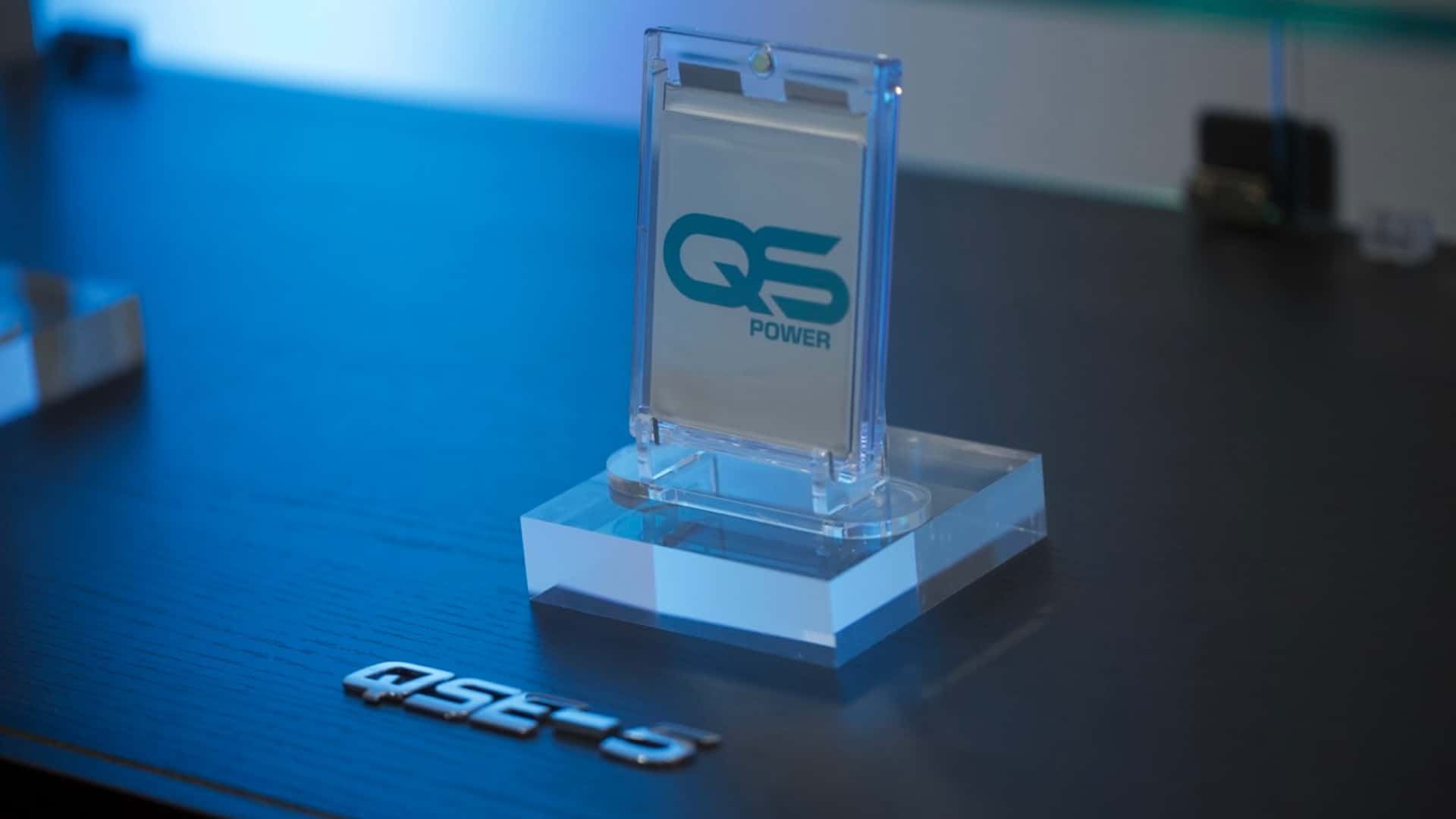
Fifteen years after its founding, California-based QuantumScape has announced a significant advancement in solid-state battery technology, initiating pilot production at its San Jose facility. The company’s innovative anode-free, lithium-metal cells aim to overcome the limitations of current lithium-ion batteries, promising enhanced energy density, faster charging, increased power, and improved safety for electric vehicles.
Pilot Production Marks Key Milestone
The commencement of pilot production at the “Eagle Line” facility represents a crucial step towards commercialization. QuantumScape CEO Siva Sivaram described the event as a “Kitty Hawk moment” and an “Apollo mission launch,” highlighting its significance in transitioning the technology from laboratory development to a tangible product. Despite years of investment by various companies in solid-state battery research, mass production has remained an elusive goal.
Challenges and Future Vision
While semi-solid-state batteries using gel electrolytes are already available in China and expected soon in the U.S., true solid-state batteries with greater performance and safety benefits have yet to reach consumers. QuantumScape CTO and co-founder Tim Holme acknowledged the significant work ahead but expressed confidence in the company’s vision to introduce its batteries into low-volume, high-performance vehicles by the end of the decade. The long-term strategy also includes applications in consumer robots and stationary energy storage.
“Batteries are coming online everywhere,” Holme stated. “The long-term vision is [that QuantumScape becomes] competitive in a lot of big markets.”
Manufacturing Process and Business Model
The Eagle line utilizes nickel-based cathodes and ceramic separators laminated into thin “unit cells.” These are then assembled into 5-amp-hour batteries, the company’s initial commercial product. The immediate focus is on monitoring the line’s performance, yield, uptime, and battery quality. QuantumScape’s strategy is not centered on becoming a large-scale manufacturer but rather on licensing its intellectual property to automakers and other companies for their own production.

“I can’t tell you how important it is to actually begin to have a higher volume of cells,” said Asim Hussain, the company’s chief business development and marketing officer. “One of the key intentions of the line is to create a repeatable manufacturing process, but also to mature our customer relationships by providing more technology to them. As a licensing company, that’s absolutely critical.”
Industry Partnerships and Technological Evolution
QuantumScape has secured significant backing from Volkswagen and previously demonstrated its technology in a Ducati motorcycle. The company is also collaborating with other undisclosed major automotive manufacturers.
Holme drew a parallel to Tesla’s “manufacturing hell” during the Model 3 ramp-up, emphasizing the importance of automating only when the process is sufficiently understood and flexible. “It’s an important marker in the maturity of our process that we felt we knew enough to automate it,” he explained.
Looking ahead, QuantumScape plans to scale production with partners and improve cell performance. Holme anticipates an “S-curve of improvements” for solid-state technology, similar to the decades-long evolution of lithium-ion batteries, which have seen significant gains in performance since their introduction in the early 1990s.
Market Positioning and Competitive Landscape
In a competitive market where lithium-ion batteries have become both highly advanced and cost-effective, QuantumScape aims to differentiate through performance. While not seeking to be the cheapest, the company expects its technology to be competitive for the performance it offers. Utilizing common cathode materials, including high-nickel and potentially lithium-iron-phosphate, allows QuantumScape to leverage industry advancements in cost and scale.
The initial market entry is expected in “specialized, lower volume vehicles that are ultra high-performance,” rather than motorcycles, according to Holme. He likened this strategy to Tesla’s initial launch of the Roadster before moving to mass-market models.
QuantumScape anticipates a future where both lithium-ion and solid-state technologies coexist, serving different applications based on requirements like cost, longevity, volume, and mass. “It’s not going to be like, one battery takes all markets,” Holme commented.
Addressing the concept of being first to market, Holme stated, “That’s not the way I think about it. Like, who made the first smartphone? It wasn’t Apple. Who made the first social network? It wasn’t Facebook.” He believes long-term market success hinges on continuous improvement and outperforming competitors year after year. “We want to go fast for a bunch of reasons. It’ll help our market cap, it’ll help the world to get better batteries. There’s a lot of reasons we want to go fast. But I don’t think race is the right framework.”