
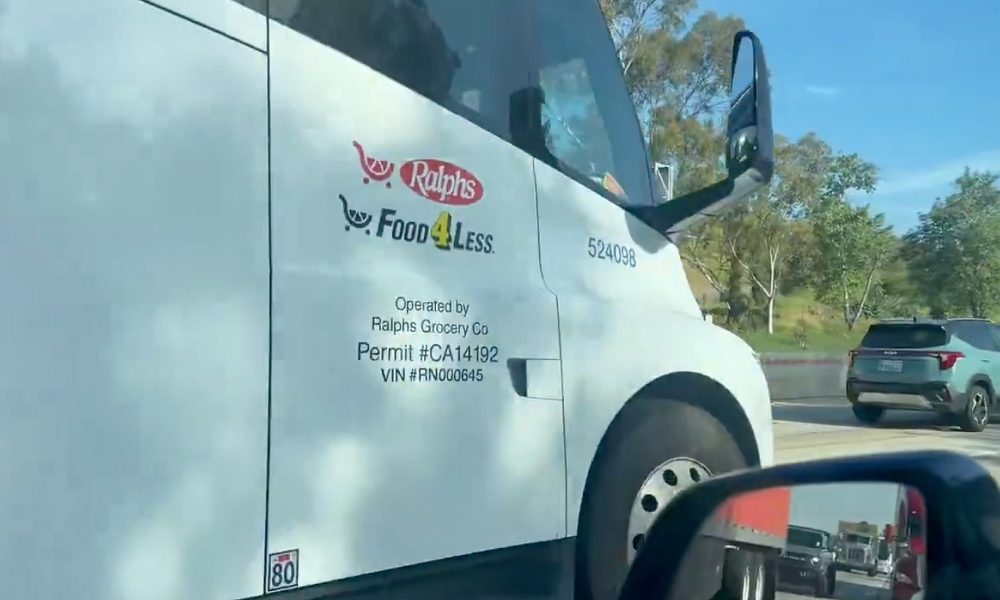
The increasing public visibility of Tesla’s all-electric Class 8 truck, the Semi, is poised to encourage wider adoption among commercial fleets, particularly within the grocery sector. A recent sighting of a Tesla Semi branded for Ralph’s Supermarkets operating on a Southern California highway provides compelling evidence of real-world integration and functionality.
Ralph’s Deploys Tesla Semi in California
A video shared on X by user ChargePozitive on March 2, 2026, captured a distinctive Tesla Semi truck bearing the Ralph’s Supermarkets logo. This sighting confirms the expansion of Kroger’s partnership with Tesla, which was initially announced in March 2025 with a target of deploying up to 500 autonomous electric Semis.
While the initial focus of the deployment was on Midwest supply chains, the appearance of the Semi in California under the Ralph’s banner highlights the program’s extension to Kroger’s West Coast operations. Ralph’s, a prominent grocery chain serving millions in Southern California, is now utilizing the Semi for its logistical needs. The Tesla Semi boasts zero tailpipe emissions and a claimed range of up to 500 miles on a single charge.
Tesla Semi pricing revealed after company uncovers trim levels
Sustainable Logistics and Operational Benefits
The adoption of electric trucks like the Tesla Semi aligns with the growing imperative for sustainable logistics. Traditional trucking operations contribute significantly to retail emissions. The Tesla Semi offers a solution by reducing fuel and maintenance costs, while its autonomous capabilities can help address driver shortages and enhance safety.

Tesla’s ongoing expansion of its Megacharger network is crucial for enabling widespread adoption. New charging sites along major freight corridors, coupled with strategic partnerships such as the recent agreement with Pilot Travel Centers, are actively working to alleviate range anxiety and support nationwide scaling of electric trucking.
Public Visibility Drives Acceptance
Public demonstration plays a critical role in dispelling skepticism surrounding new technologies. When consumers observe trusted brands like Ralph’s operating advanced, clean-energy trucks on public roads, it fosters greater acceptance and confidence in electric autonomy.
This real-world application provides a tangible proof point for competitors such as Albertsons, which had previously pre-ordered Semis. It also offers validation for other retail chains aiming to meet environmental, social, and governance (ESG) targets. The successful deployment of the Tesla Semi in grocery fleet operations demonstrates that electric autonomy is a viable solution for the industry.
Previous successful pilot programs, notably by PepsiCo, have already showcased the viability of the Tesla Semi. The Ralph’s sighting further bolsters the credibility of electric trucking within the retail sector.
Catalyst for Industry Decarbonization
As Tesla works to ramp up high-volume production of the Semi throughout 2026, this development should be viewed not as an isolated event but as a significant catalyst for change. Increased adoption of the Semi platform by additional grocers is expected to accelerate the decarbonization efforts across the entire trucking industry.
Furthermore, the shift to electric trucks promises to reduce operational expenses for businesses and deliver measurable environmental benefits. The sight of the Ralph’s Tesla Semi on the highway signifies a tangible step towards the future of sustainable supply chains, making the transition increasingly difficult to ignore.
International Expansion Prospects
Looking ahead, Tesla aims to extend the Semi program to other international markets. CEO Elon Musk has previously indicated that expansion into Europe is a distinct possibility within the next year, suggesting a global ambition for the electric truck’s deployment.