
{
“title”: “Tesla Full Self-Driving Nears European Rollout Amidst Regulatory Milestone”,
“content”: “
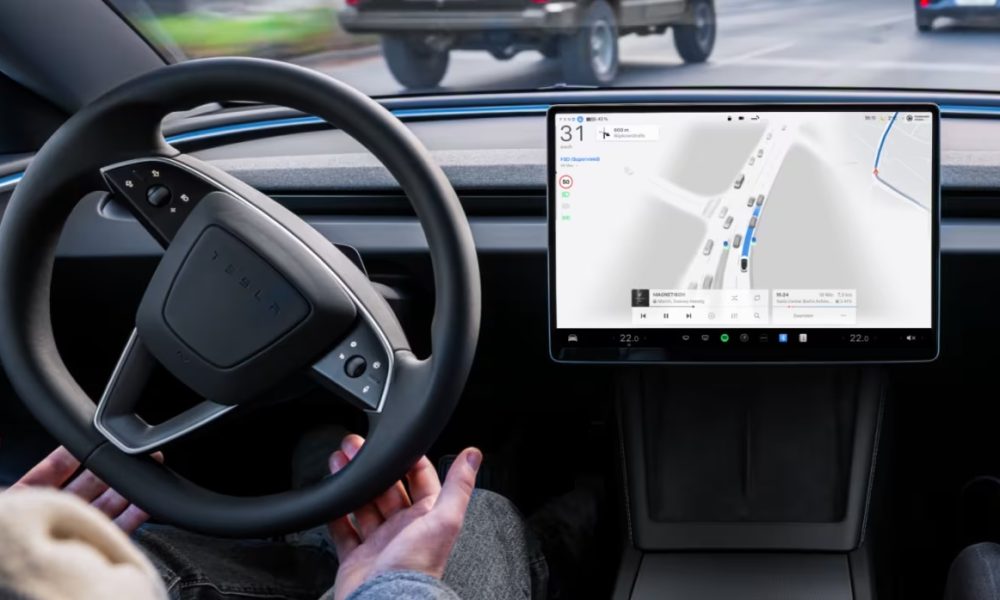
Tesla’s long-anticipated Full Self-Driving (Supervised) system is poised for a significant expansion into Europe, marking a critical breakthrough after an extensive 18-month collaboration with Dutch vehicle authorities. This development signals a pivotal moment for advanced driver-assistance systems on the continent, which has historically presented a complex regulatory landscape for autonomous driving technologies.

The company has officially completed the final vehicle testing phase for FSD (Supervised) in partnership with the Netherlands Vehicle Authority (RDW). All necessary documentation for UN R-171 approval and specific Article 39 exemptions has been formally submitted, and the RDW is now conducting its meticulous internal review. Approval in the Netherlands, a crucial step for wider European adoption, is currently projected for April 10, a slight adjustment from the initial target of March 20.
This ongoing engagement underscores Tesla’s commitment to navigating the stringent regulatory pathways required to deploy its advanced driver-assistance technology in one of the world’s most demanding markets. The collaboration with RDW highlights a mutual dedication to ensuring safety and compliance before the system reaches European consumers.
Extensive Testing Validates System Robustness
The journey towards European approval for Tesla Full Self-Driving (Supervised) has been characterized by an exhaustive and rigorous validation process. Tesla has accumulated an impressive volume of data and experience, showcasing the system’s capabilities and safety under diverse conditions.
Over 1.6 million kilometers of FSD (Supervised) testing have been logged on a variety of European roads, providing crucial real-world data. These extensive road tests have been complemented by more than 13,000 customer ride-alongs, offering valuable insights into user interaction and system performance in varied driving scenarios.
Further reinforcing its commitment to safety, Tesla executed over 4,500 distinct track test scenarios. These controlled environments allowed for the meticulous evaluation of the system’s response to specific, challenging situations, ensuring its reliability and predictability. The sheer scale of documentation supporting this process is substantial, covering thousands of pages that address more than 400 compliance requirements mandated by European regulatory bodies.
In addition to internal validation, dozens of independent safety studies have been conducted, providing external verification of the system’s integrity. These comprehensive efforts underscore the depth of Tesla’s investment in demonstrating the safety and readiness of FSD (Supervised) for its introduction to European drivers.
Navigating Europe’s Stringent Regulatory Framework
Europe’s regulatory environment for advanced driver-assistance systems, including Tesla Full Self-Driving, is among the most demanding globally. Governed by the United Nations Economic Commission for Europe (UN ECE) framework, specifically UN Regulation 171 on Driver Control Assistance Systems, these regulations impose strict safety standards that differ significantly from those in other markets like the United States.
Historically, European rules presented considerable challenges, often limiting system-initiated maneuvers and mandating constant driver supervision. This contrasted with the more permissive regulatory landscape in the U.S., where the deployment of FSD (Supervised) has progressed more rapidly. Furthermore, securing approval traditionally required a fragmented, country-by-country, or bloc-wide exemption approach, adding layers of complexity and time to the process.
Tesla has faced repeated delays in its European rollout ambitions, with earlier targets, such as February 2026, being pushed back. The RDW, in particular, maintained a firm stance, emphasizing that safety considerations, rather than public or corporate pressure, would be the sole determinant of approval timelines. This focus on meticulous review highlights the integrity of the regulatory process.
In 2024, a former Tesla executive highlighted the significant bureaucratic hurdles involved, cautioning that certain regulatory elements could potentially slip to as late as 2028. These challenges included extensive audits and the pressing need for harmonized data privacy and liability frameworks across the European Union’s diverse member states, further illustrating the complexities of operating within the bloc.
Key Regulatory Amendments Paving the Way
Despite the historical challenges, progress in Europe’s regulatory landscape for automated driving systems has been accelerating. A significant development occurred in 2025 with the adoption of crucial amendments to UN R-171. These revisions are instrumental in clearing technical barriers that previously constrained the capabilities of advanced driver-assistance systems.
The updated regulation now permits features such as hands-free highway lane changes and other automated functions, which are integral to the operation of Tesla Full Self-Driving (Supervised). These amendments represent a direct response to the technological advancements in autonomous driving, adapting the regulatory framework to enable the safe and responsible deployment of more sophisticated systems.
These changes are not merely administrative; they reflect a growing understanding among regulators of the capabilities and safety potential of modern ADAS technologies when properly validated. By aligning the regulatory environment with technological progress, Europe is gradually opening pathways for innovative systems to benefit drivers while maintaining paramount safety standards.
From National Approval to Continental Rollout
The impending approval of Tesla Full Self-Driving (Supervised) in the Netherlands holds a significance that extends far beyond its borders. Once the RDW grants national approval, a critical mechanism known as mutual recognition will come into play across the European Union. This principle allows other EU countries to adopt the approved system immediately, significantly streamlining the process for a broader rollout.
This mutual recognition pathway is designed to prevent repetitive testing and approval processes in each individual member state, accelerating the availability of new technologies once they meet the stringent standards of one EU authority. The current projections suggest that this mechanism could pave the way for an EU-wide rollout of FSD (Supervised) as early as summer 2026, unlocking advanced autonomy features for a vast customer base.
The phased approach, beginning with a lead regulatory body like the RDW and then leveraging mutual recognition, demonstrates a practical strategy for introducing complex automotive technologies into a multi-national bloc. It balances rigorous scrutiny with efficient deployment, ensuring that innovation can reach consumers while adhering to high safety benchmarks.
Tesla’s Global Autonomy Strategy Amidst Market Shifts
The European breakthrough for Tesla Full Self-Driving (Supervised) is an integral component of the company’s ambitious global expansion strategy. FSD (Supervised) is already actively deployed and rapidly expanding its presence in the United States, providing a robust operational foundation.
Beyond North America and now Europe, Tesla has set its sights on other key international markets. In China, where partial approvals are already in place, CEO Elon Musk has publicly targeted a full rollout of the system within the February–March 2026 window. This objective comes even as the company continues to navigate complex data-security reviews specific to the Chinese market.
Additionally, other regions, including the UAE, are slated for early 2026 launches, demonstrating a concerted effort to establish FSD (Supervised) as a truly global platform. These aggressive expansions into foreign markets are critical for Tesla’s long-term business strategy, particularly as the company seeks to further monetize its advanced software capabilities.
This push for software revenue becomes even more vital in a global automotive landscape witnessing softening demand for electric vehicles. By diversifying its revenue streams beyond vehicle sales, Tesla aims to enhance its financial resilience and solidify its position as a technology leader, with FSD (Supervised) at the forefront of this strategic evolution.
A New Era for European Tesla Owners
For the many “patient EU customers” who have long awaited the introduction of Tesla Full Self-Driving (Supervised), the wait now appears to be nearing its conclusion. The successful navigation of Europe’s complex regulatory environment represents a monumental achievement, promising to unlock a new level of advanced autonomy features that have, until now, largely been confined to other regions.
This imminent rollout is more than just the launch of a new software feature; it marks a pivotal step in Tesla’s overarching global autonomy ambitions. It underscores the company’s sustained commitment to developing and deploying cutting-edge technology while meticulously adhering to diverse and demanding international regulations.
The integration of FSD (Supervised) into the European market is expected to redefine the driving experience for Tesla owners, offering enhanced convenience and safety. It also sets a significant precedent for the future of automated driving systems, demonstrating that rigorous testing and dedicated regulatory collaboration can bridge the gap between innovation and widespread adoption in a highly regulated environment.
”
}